



Introduction
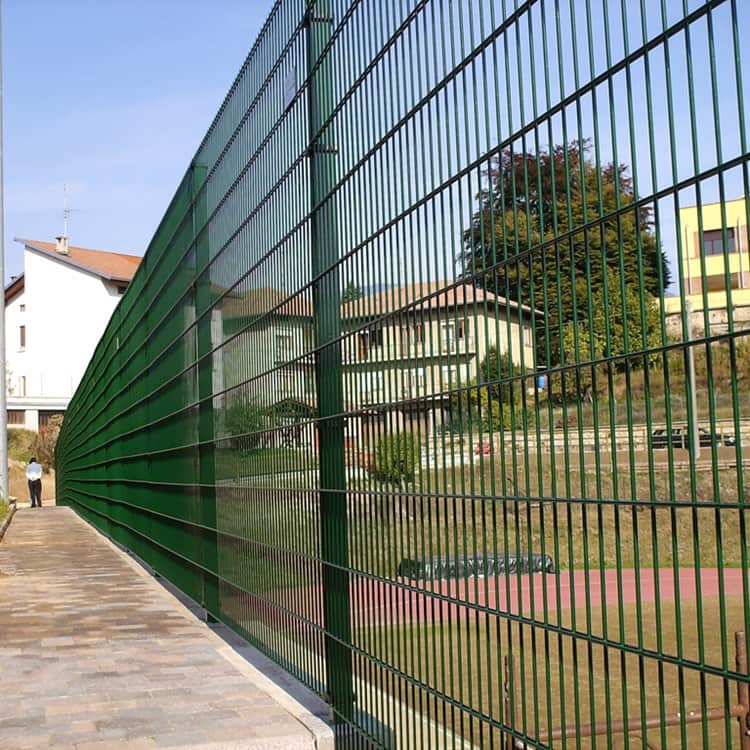
Double wire fence, also known as twin wire mesh fence, is one of the most popular welded mesh perimeter barriers widely used for industrial parks, residential compounds, schools, warehouses and public infrastructure. It features two horizontal wires paired with one vertical wire, delivering high rigidity and neat appearance. Among all specifications, 868 and 656 double wire fences are the two most common options for global fencing projects.
Many buyers get confused when selecting between 868 and 656 double wire fences. They look visually similar but differ dramatically in wire diameter, mesh size, structural strength, security grade and total cost. Picking the wrong specification may lead to insufficient protection or unnecessary budget waste.
Giant Fence manufactures both 868 and 656 double wire fence systems. All mesh panels, posts and fittings comply with UNE‑EN‑10223‑7:2013. We provide ISO 9223:2012 graded anti-corrosion treatments including hot-dip galvanizing and polyester powder coating. Under proper installation and without severe vandalism or heavy impact, the double wire fence can maintain stable performance for decades.
This article compares 868 and 656 double wire fences in mesh dimension, strength, application scenarios, cost and installation notes, helping contractors and distributors choose the right double wire fence for their projects.
Basic Definition of 868 & 656 Double Wire Fence
The numbers 868 and 656 stand for the wire diameter combination:
868 double wire fence: 8mm horizontal wires + 6mm vertical wire + 8mm horizontal wires
656 double wire fence: 6mm horizontal wires + 5mm vertical wire + 6mm horizontal wires
Both adopt the classic twin-wire welded structure: two parallel horizontal wires clamp a single vertical wire, welded firmly at every intersection. This special structure gives double wire fence higher stiffness than ordinary single welded mesh.
Core Parameter Comparison Table
|
Item |
868 Double Wire Fence |
656 Double Wire Fence |
|
Wire spec |
8.0mm (horizontal) + 6.0mm (vertical) +8.0mm (horizontal) |
6.0mm (horizontal) +5.0mm (vertical)+6.0mm (horizontal) |
|
Standard mesh size |
200mm × 50mm |
200mm × 50mm |
|
Panel height options |
1.0m,1.2m,1.5m,1.8m,2.0m,2.4m |
1.0m,1.2m,1.5m,1.8m,2.0m |
|
Rigidity & Impact resistance |
Heavy-duty, high stiffness, strong anti-bending performance |
Medium duty, good rigidity, lower impact resistance |
|
Security Level |
Medium-high security |
Medium security |
|
Weight per panel |
Heavier |
Lighter |
|
Unit Cost |
Higher |
More economical |
Key Differences Between 868 and 656 Double Wire Fences
1. Structural Strength & Security
868 double wire fence uses thicker horizontal wires. The panel is rigid and hard to bend or deform under impact. It can resist prying and kicking attacks better. Even under strong wind or accidental collision, the mesh panel keeps its original shape. It is the preferred option for sites requiring stronger perimeter protection.
656 double wire fence has thinner wires. It still maintains good flatness for general boundary separation, but it is easier to bend under heavy force. It works well for low-risk areas without heavy impact or vandalism threats.
2. Weight, Transport & Installation
868 panels are heavier, which requires more labour for handling and installation. Transport cost is slightly higher.
656 panels are lighter and easier to carry. Installation speed is faster and labour cost is lower for large quantity projects.
3. Service Life & Maintenance
With the same coating treatment (hot-dip galvanized + powder coating), both types have excellent anti-rust performance. However, 868’s thicker wire means longer usable life when facing vandalism and repeated impact. 656 may deform earlier if subjected to continuous brute force.
4. Price
656 double wire fence is more cost-effective for general boundary marking. 868 involves more raw steel material, so the price is higher, suitable when higher security is mandatory.
Recommended Application Scenarios
✅ 868 Double Wire Fence
*Industrial zones, manufacturing plants, logistics warehouses
*Data centres, utility sites, substations
*Residential high-end communities, villa compounds
*Schools, colleges and public facilities requiring stronger perimeter security
*Sites with high vandalism risk or strong wind load
*Height above 2.0m perimeter projects
✅ 656 Double Wire Fence
*General residential communities and housing estates
*Parks, green belts and landscape boundary separation
*Light industrial yards with low vandal risk
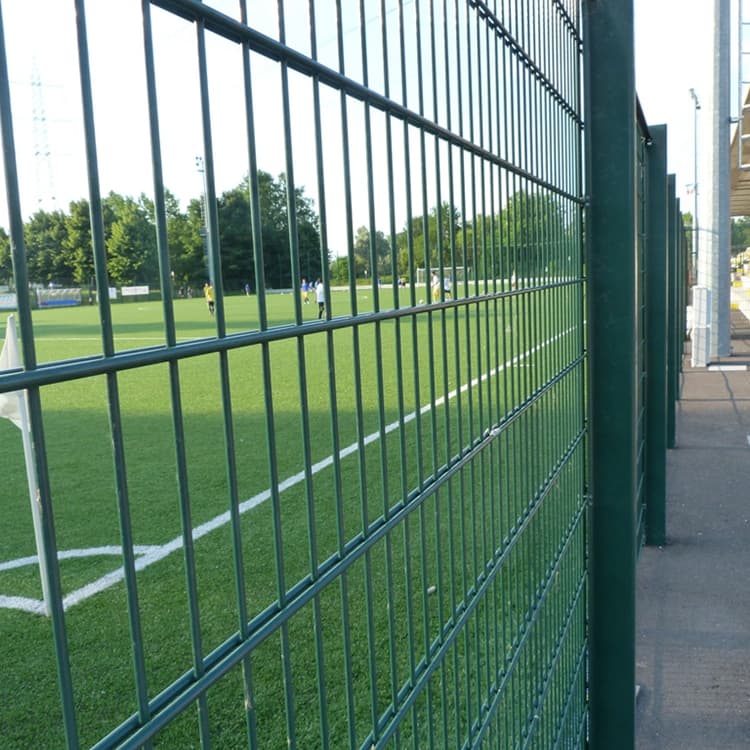
*Sports auxiliary isolation, commercial plaza boundary
*Projects with budget constraints and medium security requirements
*Fence height ≤2.0m

Anti-Corrosion Coating Options (ISO 9223:2012)
Both double wire fence types support the same surface treatments:
C1–C3 (inland normal environment): Polyester powder coating, common RAL6005 green, RAL7016 anthracite grey. Low maintenance, widely used.
C4–CX (coastal / high humidity / chemical environment): High weather-resistant powder coating to resist salt spray and chemical corrosion.
Important reminder: The theoretical service life depends on proper installation and normal environment. Heavy impact, deliberate vandalism and coating scratches will shorten service life. Regular inspection of mesh and fixings is recommended.
Procurement Guidance
1. Judge the site risk level first. If vandalism and forced entry risks exist, select 868 double wire fence. For simple boundary separation, 656 is enough.
2. Match post specification accordingly. Heavier 868 panels require thicker posts and closer post spacing to support the panel weight and wind load.
3. Unify coating standard for the whole project. Do not mix different coating grades if the site has consistent climate conditions.
4. Match supporting gates: Use 868 gate panels with 868 fence; use 656 gate panels with 656 fence, to keep consistent security and appearance.
5. Confirm panel height before ordering. 868 is available up to 2.4m while 656 is mostly supplied up to 2.0m.
Frequently Asked Questions
Q1: What does 868 / 656 mean for double wire fence?
A1: The numbers represent wire diameters in mm. 868 = 8mm horizontal +6mm vertical +8mm horizontal; 656 =6mm horizontal +5mm vertical +6mm horizontal. This naming rule is widely accepted in European fencing industry for double wire fence.
Q2: Can I mix 868 and 656 panels in one perimeter project?
A2: Not recommended. They differ in stiffness, weight and visual thickness. Mixed installation causes uneven appearance and inconsistent security performance.
Q3: Which one is better for school projects?
A3: 868 double wire fence is more recommended for school perimeters. Its high rigidity provides better vandal resistance and safety protection.
Conclusion
Both 868 and 656 belong to double wire fence systems with clean welded mesh appearance and simple installation. The core difference lies in wire thickness, mechanical strength and security grade.
Choose 868 double wire fence for high vandal risk, industrial, utility and high-security sites where rigidity and impact resistance are priorities.
Choose 656 double wire fence for general boundary separation, landscape and low-risk residential projects to save budget while maintaining decent perimeter protection.
Giant Fence supplies both 868 and 656 double wire fence, complete with matching posts, gates and accessories. All products comply with UNE‑EN‑10223‑7:2013, with ISO9223 anti-corrosion coating options for inland and coastal sites.
If you need double wire fence quotation for your project, tell us your required specification, fence height, total length and site environment. We will send technical drawings, sample info and competitive bulk price.