



Introduction
A roll top fence is one of the most popular perimeter solutions for residential areas, schools, parks and light industrial zones. Featuring a smooth curved top design, roll top fence delivers decent security, anti-climb performance and clean visual effects at a friendly budget. However, many project issues do not come from product quality itself, but from improper field installation. Even high-quality roll top panels will fail early if installed incorrectly, leading to leaning fences, loose connections, coating damage and premature rusting.
As a professional manufacturer, Giant Fence supplies standardized roll top fence complying with UNE‑EN‑10223‑7:2013. We strictly control wire gauge, welding firmness and coating uniformity during production. To adapt to different global environments, we match anti-corrosion solutions based on ISO 9223:2012 atmospheric corrosion grades, covering C1‑C3 inland mild corrosion areas and C4‑CX coastal & heavy industrial high-corrosion areas. Qualified products paired with standard installation can maximize the service life of roll top fence.
We have summarized the most frequent installation mistakes found in actual projects, as well as practical avoidance tips. This guide helps contractors and distributors standardize on-site construction, reduce after-sales problems and ensure stable fence performance.
Unstable Post Foundation Construction
Mistake
Many construction teams save time by using shallow post holes, insufficient concrete filling or loose soil backfilling. In the short term, the fence looks straight; but after wind erosion, rain soaking and slight external impact, the posts will tilt or even sink gradually. This is the main cause of uneven fence lines and collapsed panels.
How to Avoid
Reserve enough depth for post holes according to fence height. Fill and compact concrete firmly, and wait for complete solidification before installing panels. For soft or sandy soil sites, enlarge the foundation properly to enhance stability. Standard foundation construction ensures the long-term flatness and firmness of the entire roll top fence system.
Irregular Panel & Post Connection
Mistake
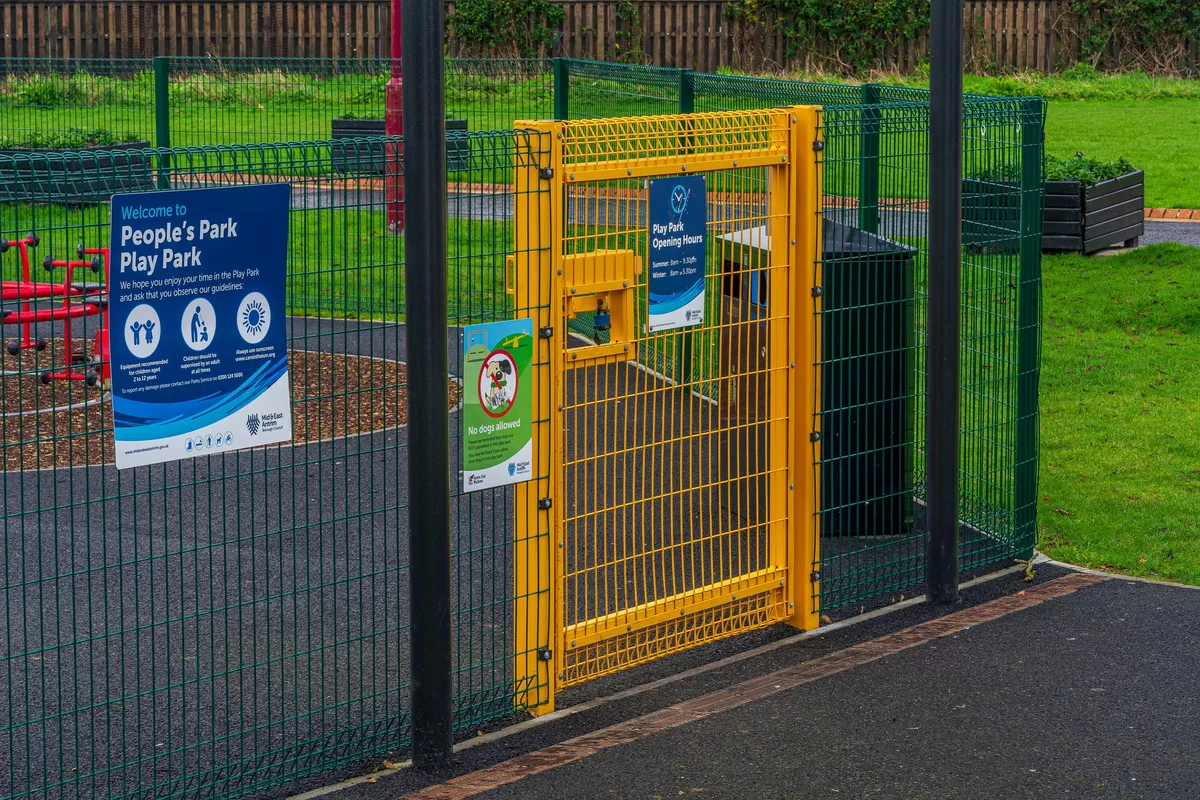
On-site workers often use mismatched accessories, missing bolts or uneven locking force during installation. Some panels are not fully clamped, resulting in gaps between panels and posts. In the later stage, shaking will occur under wind load, causing continuous friction at connection points, loose bolts and even detached panels.
How to Avoid
Support all installation with complete matching accessories supplied with theroll top fence. Check every bolt and clamp one by one during construction to ensure full fitting and uniform locking force. Avoid forced assembly that leads to structural distortion. Firm connections effectively reduce fence shaking and extend overall service life.
Coating Damage Without Timely Repair
Mistake
Roll top fence relies on galvanized and powder-coated layers for anti-corrosion protection. During on-site cutting, drilling and collision, the protective coating is easily scratched or peeled off. Most teams ignore minor coating damage and leave it untreated. These tiny damaged points will gradually oxidize and rust, eventually spreading to large areas and destroying the whole protective layer.
How to Avoid
Handle panels gently during construction to avoid violent collision. For necessary cutting and drilling work, repair the damaged coating with touch-up paint immediately after operation. Especially for C4‑CX coastal high-corrosion areas, coating protection is extremely critical. Timely repair can effectively prevent rust diffusion of roll top fence.

Uneven Fence Height & Sloped Installation Errors
Mistake
On sloped or undulating terrain, many construction teams install the fence rigidly in a horizontal line, resulting in uneven gaps, inclined panels or distorted roll top curves. This not only affects the overall appearance, but also causes local stress concentration and reduces structural stability.
How to Avoid
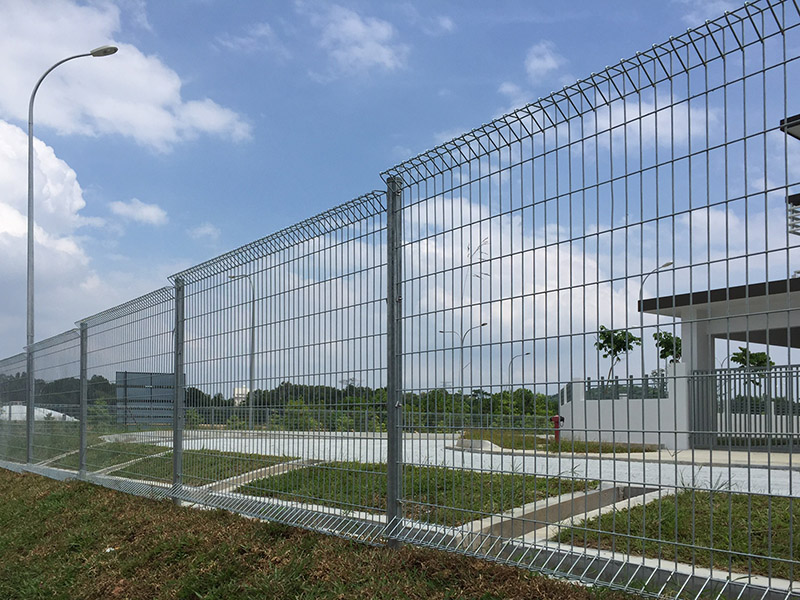
For sites with terrain height differences, adopt stepped installation according to the actual slope. Adjust post height one by one to keep each roll top fence panel flat and the top curve smooth. Standard slope installation maintains both aesthetic effect and structural stability.
Ignoring Environment-Matched Installation Standards
Mistake
Many installers use unified installation methods for all sites, ignoring regional corrosion differences. For coastal and heavy industrial C4‑CX areas, insufficient attention to coating protection and loose installation standards will greatly shorten the service life of roll top fence.
How to Avoid
Classify construction standards based on ISO 9223:2012 corrosion grades. For C1‑C3 inland conventional environments, follow conventional standard installation; for C4‑CX high-corrosion sites, strengthen on-site protection, reduce coating damage, and strictly check the tightness of all connection parts to resist harsh environmental erosion.
Overlooking Post-Installation Cleaning & Inspection
Mistake
Most projects are delivered immediately after installation without overall inspection. Problems such as loose fasteners, minor coating scratches and unsmooth panel lines are not rectified in time, forming hidden dangers for later use.
How to Avoid
Complete a full inspection after all roll top fence installation is finished. Check foundation firmness, connection tightness, coating integrity and overall flatness. Rectify all minor problems before project delivery to ensure zero hidden dangers.
FAQ
Q1: Why do roll top fences tilt after long-term use?
A1: Most tilting problems are caused by shallow foundations, uncompacted concrete or loose backfilling. Standard foundation construction is the key to maintaining long-term stability of roll top fence.
Q2: Can minor coating scratches cause large-area rust?
A2: Yes, especially in coastal and industrial high-corrosion areas. Small damaged points will be eroded by humid air and salt spray, gradually oxidizing and spreading. Timely touch-up repair is essential.
Q3: What standards do Giant Fence roll top fences follow?
A3: Our roll top fence is manufactured in accordance with UNE‑EN‑10223‑7:2013, with anti-corrosion solutions formulated based on ISO 9223:2012 atmospheric corrosion classification, adapting to all kinds of global terrain and climate environments.
Q4: How to install roll top fence on sloped ground correctly?
A4: Stepped installation is recommended. Adjust the height of each post according to the terrain slope to ensure each panel is flat and the roll top curve is neat and consistent.
Conclusion
The service life and stability of roll top fence depend on both product quality and standardized installation. Most common failures on construction sites are avoidable through standardized operations, including solid foundation construction, firm connection assembly, coating damage repair and terrain-adaptive installation.
Giant Fence provides high-quality roll top fence manufactured under UNE‑EN‑10223‑7:2013, with ISO 9223:2012 graded anti-corrosion treatment for different environments. We also support full installation guidance for distributors and contractors to help you reduce on-site errors and after-sales risks.
If you need stable-quality roll top fence and professional construction guidance, feel free to contact Giant Fence for bulk quotations and technical support.