



A football field, a basketball court and a tennis court may all need fencing, but that doesn't mean they should use the same fence.
Think about it. A football field needs enough height to keep the ball inside the playing area. A tennis court needs a mesh that can stop smaller balls without blocking visibility. A basketball court, on the other hand, may need stronger panels around areas where players and balls frequently make contact.
That's why choosing a Stadium Fence involves more than picking a height and color from a catalog.
The right fencing system should match the sport, the way the facility is used, the local weather and the amount of maintenance the owner is prepared to handle.
At Giant Fence, we manufacture welded mesh fencing systems for sports facilities, public spaces and commercial projects. We work with different panel sizes, wire diameters, mesh openings and surface treatments to help customers find practical fencing solutions for their specific applications.
Let's look at what really matters when customizing a Stadium Fence for different sports projects.
What Is a Stadium Fence?
A Stadium Fence is a fencing system designed to define playing areas, help contain balls, manage access and separate sports activities from surrounding spaces.
Depending on the facility, it may be installed around football pitches, basketball courts, tennis courts, school playgrounds, multi-sport facilities or stadium perimeters.
A typical welded mesh Stadium Fence system includes steel mesh panels, support posts, clamps or brackets, fixing accessories and access gates.
However, not every sports facility needs welded mesh panels. Chain link fencing is also widely used, especially for tennis courts and larger sports grounds where flexibility and ball impact performance are important.
The choice depends on the sport and how the fence will actually be used.
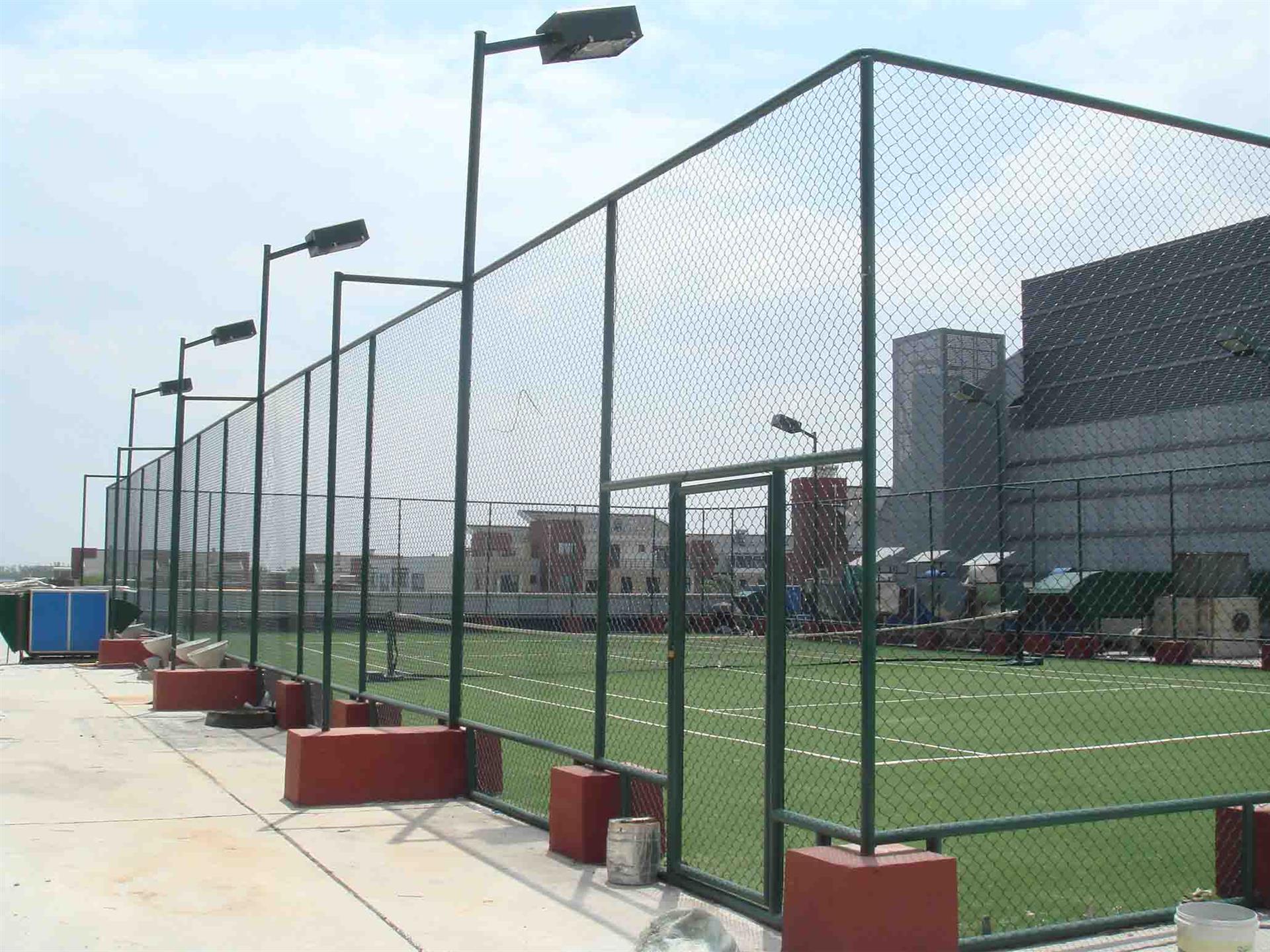
Why Custom Specifications Matter
Imagine installing a fence around a football pitch, only to discover that balls regularly fly over the top.
Or choosing a mesh opening for a tennis court that is too large to contain the balls.
Neither problem necessarily means the fence was poorly manufactured. It means the specification didn't match the application.
Before ordering, it is worth confirming the sport, playing area dimensions, expected ball impact, fence location and required security level.
A few decisions made early can save considerable time and expense during installation.
How Do Stadium Fence Requirements Differ Between Sports?
Different sports create different demands on fencing. Height, mesh opening, structural strength and visibility all need to be considered.
1. Football Field Fencing: Height and Ball Containment Come First
Football fields usually require fencing that can withstand regular outdoor use while helping prevent balls from leaving the playing area.
For community football grounds and school pitches, fence heights of approximately 3.0–5.0 m may be considered, depending on the layout and the location of surrounding roads, buildings or pedestrian areas.
A welded mesh system with suitable reinforcement can provide a stable perimeter. In some projects, chain link fencing or a combination of rigid lower panels and upper ball-stop netting may be more practical.
For example, a football pitch next to a busy road may need a taller ball containment system than one surrounded by open green space.
The post spacing, foundations and wind loading become particularly important as the fence height increases.
At Giant Fence, we recommend reviewing the overall fence layout rather than selecting panel height alone. A tall panel is only useful when the supporting structure is designed to handle the expected loads.
2. Basketball Court Fencing: Impact Resistance and Visibility
Basketball courts present a different challenge.
Players move quickly, balls frequently strike the surrounding fence, and people often stand close to the court boundary.
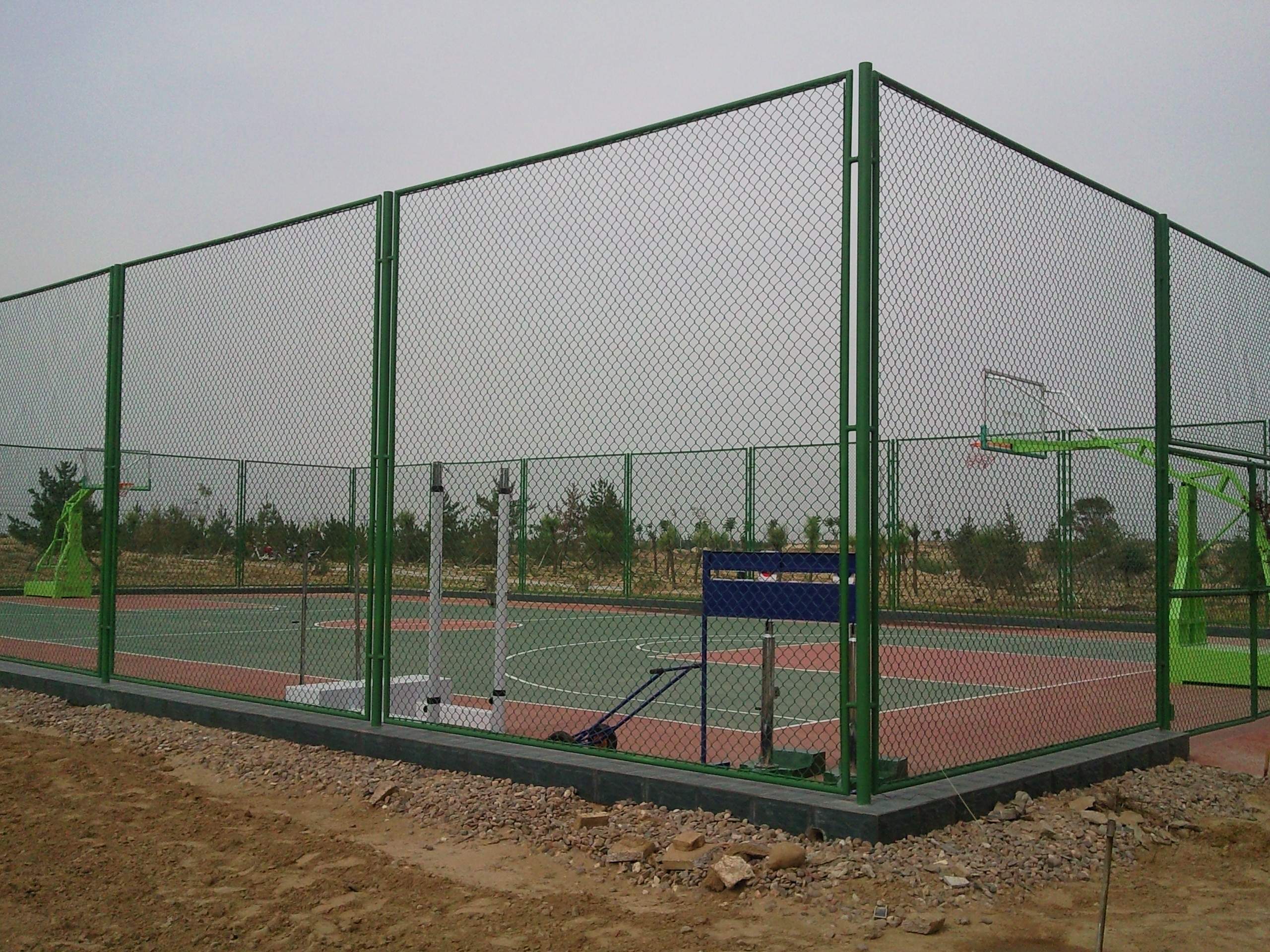
For many outdoor basketball courts, fencing around 3.0–4.0 m high may be suitable, although the final height depends on the court layout and local requirements.
Welded mesh panels can provide a neat appearance and good visibility, but the wire diameter, post strength and fixing system should be selected with repeated ball impacts in mind.
The lower section deserves particular attention because this is where contact is more likely.
Smooth edges, secure connections and properly positioned gates are also important for player safety.
A good basketball court fence should feel like part of the facility, not an obstacle players need to worry about.
3. Tennis Court Fencing: Smaller Mesh Openings Make a Difference
Tennis balls are smaller than footballs or basketballs, so mesh size becomes a more important consideration.
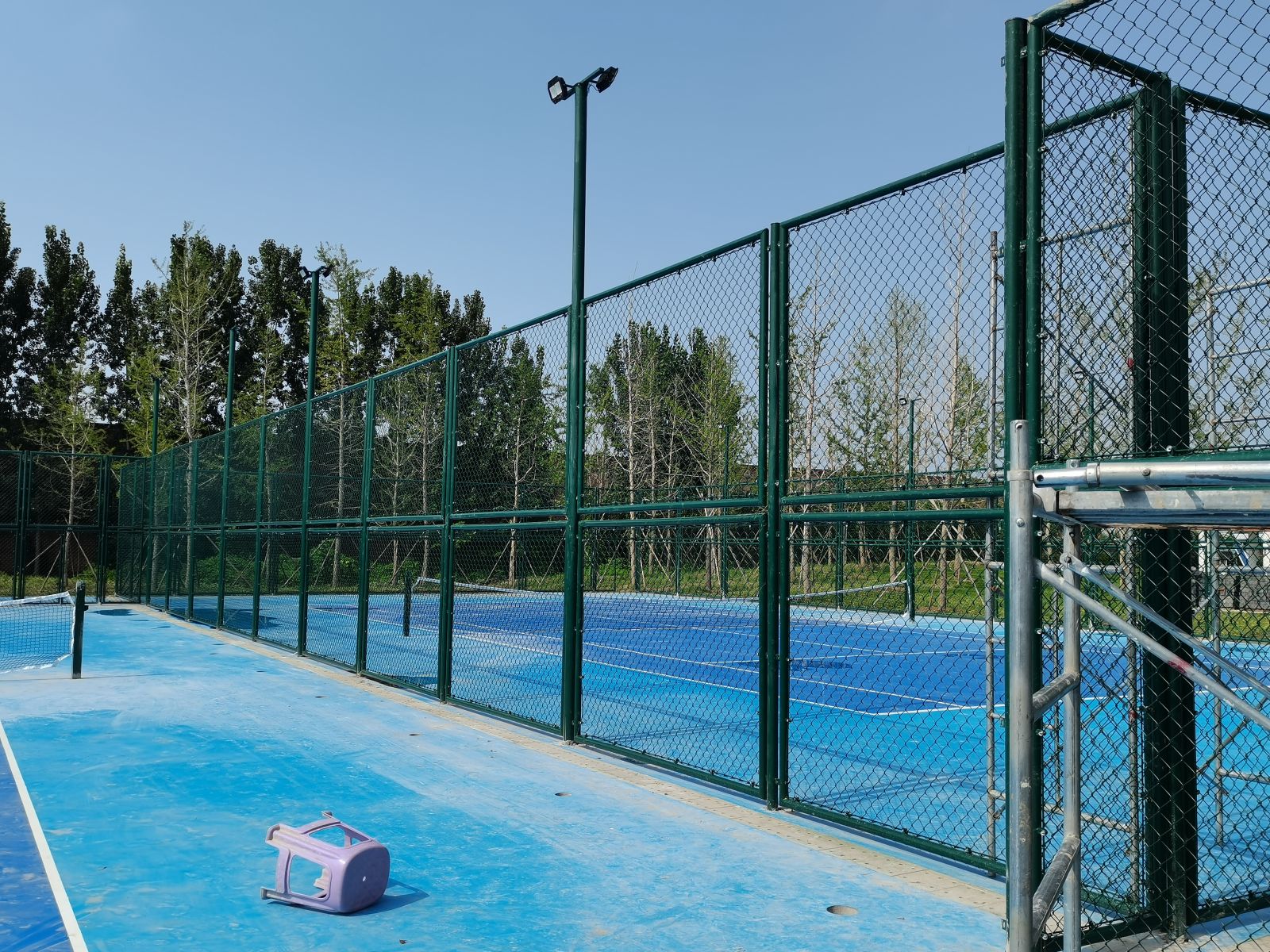
Chain link fencing is a common choice for tennis courts because it provides a relatively flexible surface, good visibility and practical ball containment.
Typical mesh openings around 40–50 mm may be considered, depending on the wire specification and court requirements.
Fence heights of approximately 3.0–3.6 m are common around many tennis facilities, with possible variations along the sides and behind the baselines.
Where rigid welded mesh panels are preferred, the design should account for ball rebound, noise and the potential for repeated impacts.
The finish also matters. Dark green and black fencing are popular choices because they can provide a less distracting background for players.
4. Multi-Sport Courts: One Fence, Several Activities
Multi-sport courts are increasingly common in schools, residential communities and public recreational areas.
A single court may be used for football, basketball, volleyball and other activities throughout the day.
This makes fence selection a little more complicated.
Instead of designing the enclosure around only one sport, the system should accommodate the most demanding ball containment and impact conditions expected.
A rigid welded mesh Stadium Fence with reinforced posts and suitable accessories may work well for these facilities.
However, some multi-sport projects benefit from impact-resistant lower sections, additional upper netting or specialized sports fencing systems.
Gates should also be positioned carefully so they do not interfere with active playing areas.
Which Stadium Fence Specifications Should You Check?
Two fencing quotations can look similar on paper while offering very different materials and structural performance.
Here are the details worth checking before placing an order.
Wire Diameter and Mesh Opening
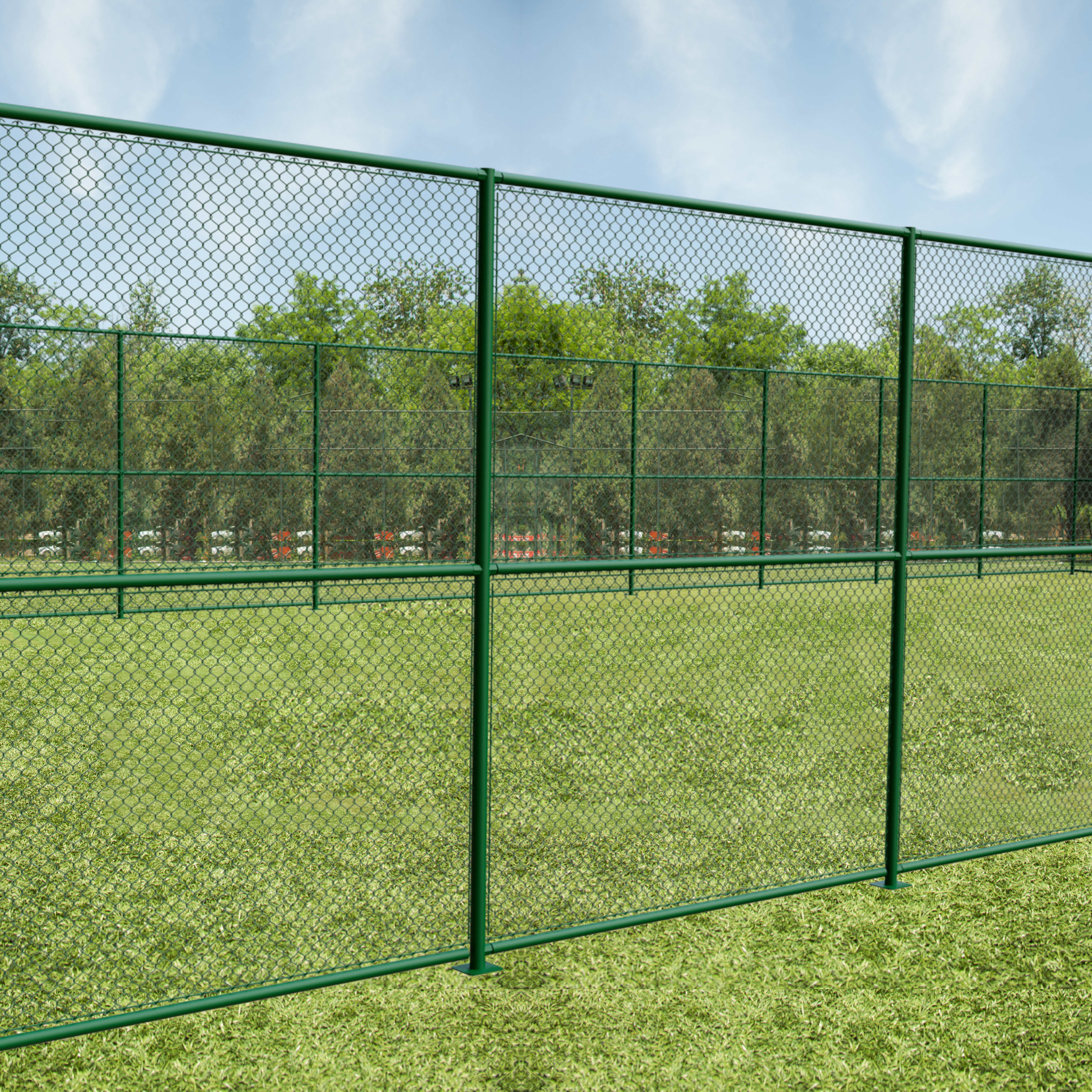
Common welded mesh fencing wire diameters include 4.0 mm, 5.0 mm and 6.0 mm, with heavier specifications available for more demanding applications.
A mesh opening of 50 × 200 mm is often used for general welded panel fencing, while smaller openings may be required for certain sports.
The right combination depends on the ball size, expected impact, fence height and structural design.
Thicker wire can improve panel strength, but it doesn't automatically make the entire system stronger. Posts, fixings and foundations need to work together.
Panel Height and Width
Standard welded mesh panels are available in various heights and widths, and customized dimensions can be produced for specific projects.
For taller sports enclosures, the structure may require additional horizontal reinforcement, stronger posts or a different panel arrangement.
It is especially important to consider wind loads on tall fencing systems and any attached windscreen or advertising material.
Posts, Foundations and Accessories
Posts do much of the work in a Stadium Fence system.
Their dimensions, wall thickness, spacing and installation method should be matched to the panel design and expected loads.
A fence installed into concrete foundations may require a different post arrangement from one fixed onto an existing concrete surface.
Clamps, bolts and brackets should also be selected for secure installation and resistance to loosening during normal use.
For public sports facilities, exposed sharp edges and accessible protruding fasteners should be avoided.
How Important Is Corrosion Protection for Outdoor Stadium Fencing?
Very important, especially when the sports facility is expected to remain in service for many years.
A fence installed at an inland school does not face the same environmental conditions as one installed near the ocean.
Salt-laden air, humidity, industrial pollution and repeated exposure to rain can all influence the corrosion rate of steel fencing.
At Giant Fence, our welded mesh fencing products are manufactured in accordance with UNE-EN 10223-7:2013, with production controls covering steel wire materials, metallic coating requirements and welding quality.
We also use the atmospheric corrosivity classification in ISO 9223:2012 as a reference when recommending corrosion protection solutions.
C1–C3: Low to Medium Corrosivity Environments
These categories generally cover environments ranging from very low corrosivity to moderate exposure, including many inland locations.
Depending on the actual conditions, suitable options may include galvanized wire with powder coating or other specified galvanized fencing systems.
For example, an outdoor basketball court in a relatively dry inland city may not require the same coating specification as a coastal sports complex.
However, rainfall, local pollution and maintenance conditions still need to be considered.
C4–CX: High to Extreme Corrosivity Environments
Coastal sports facilities and heavily polluted industrial areas can create much more aggressive conditions for steel fencing.
For these projects, stronger corrosion protection may be necessary.
Possible solutions include higher zinc coating weights, hot-dip galvanizing after fabrication or suitable duplex systems combining galvanizing and an organic coating.
The final choice depends on the required performance, manufacturing process and site conditions.
A powder-coated surface may look attractive when new, but its long-term performance also depends on the underlying metallic protection, surface preparation and coating quality.
How Long Can a Stadium Fence Last?
There is no single service life that applies to every Stadium Fence.
Under ideal conditions, without external damage and with proper installation, different coating systems can achieve their corresponding theoretical durability periods.
In actual use, corrosion resistance depends on the atmospheric environment, coating specification, installation quality, maintenance and damage caused by impacts or abrasion.
ISO 9223:2012 helps classify atmospheric corrosivity; it does not, by itself, guarantee a particular service life for a finished fence.
For long-term projects, it is better to agree on the coating specification and inspection requirements before manufacturing rather than relying on a general claim that a fence will last a certain number of years.
How Does Giant Fence Control Stadium Fence Quality?
For sports fencing, consistent manufacturing quality is particularly important because the panels are often installed in long, continuous runs.
At Giant Fence, our welded mesh production process includes material selection, wire straightening, mesh welding, panel forming where required, surface treatment and final inspection.
Our manufacturing facilities include automated welding equipment and powder coating production capabilities, allowing us to support different project specifications.
During production, attention is given to wire diameter, mesh dimensions, welding consistency, panel dimensions and surface treatment requirements.
Before shipment, panels, posts and accessories should be checked against the approved drawings and packing list.
For international orders, suitable protective packaging helps reduce the risk of scratching, bending and coating damage during transportation.
A well-manufactured panel matters, but so does receiving the correct posts, brackets and fittings when the installation team is ready to start.
What Should Buyers Confirm Before Ordering a Stadium Fence?
If you are purchasing fencing for a school, sports contractor, stadium operator or distribution business, a few practical questions can make the quotation process much easier.
First, what sports will be played inside the enclosure?
Next, how high does the fence need to be, and where will the highest ball containment areas be located?
Then consider the local environment. Is the facility inland, close to the coast or in an industrial area?
It is also useful to confirm whether the project requires pedestrian gates, maintenance entrances, vehicle access or additional ball-stop netting.
Finally, ask for the complete system specification rather than just the mesh panel price.
That should include panel dimensions, wire diameter, mesh opening, post dimensions, coating requirements, fixing accessories, packing details and installation considerations.
At Giant Fence, we encourage customers to share project drawings and application details before confirming production. This helps us recommend suitable products and identify potential specification issues early.
Choosing the Right Stadium Fence for Your Project
A Stadium Fence is not simply a barrier around a playing field. It helps keep activities within the designated area, supports safe movement around the facility and contributes to the overall appearance of the sports environment.
Football pitches may need taller ball containment systems. Basketball courts require attention to repeated impacts. Tennis courts need appropriate mesh openings and visibility. Multi-sport facilities have to balance several requirements at once.
There is no reason to make every sports fence identical.
With suitable materials, structural design and corrosion protection, a customized Stadium Fence can provide a practical solution for both new sports facilities and renovation projects.
Planning a sports fencing project?
Share your sports facility type, required dimensions, project location and preferred specifications with Giant Fence.
Our team can help review the requirements and recommend suitable welded mesh panels, posts, gates and accessories for your Stadium Fence project.
The goal is simple: a fence that fits the sport, works for the site and continues performing well long after installation.
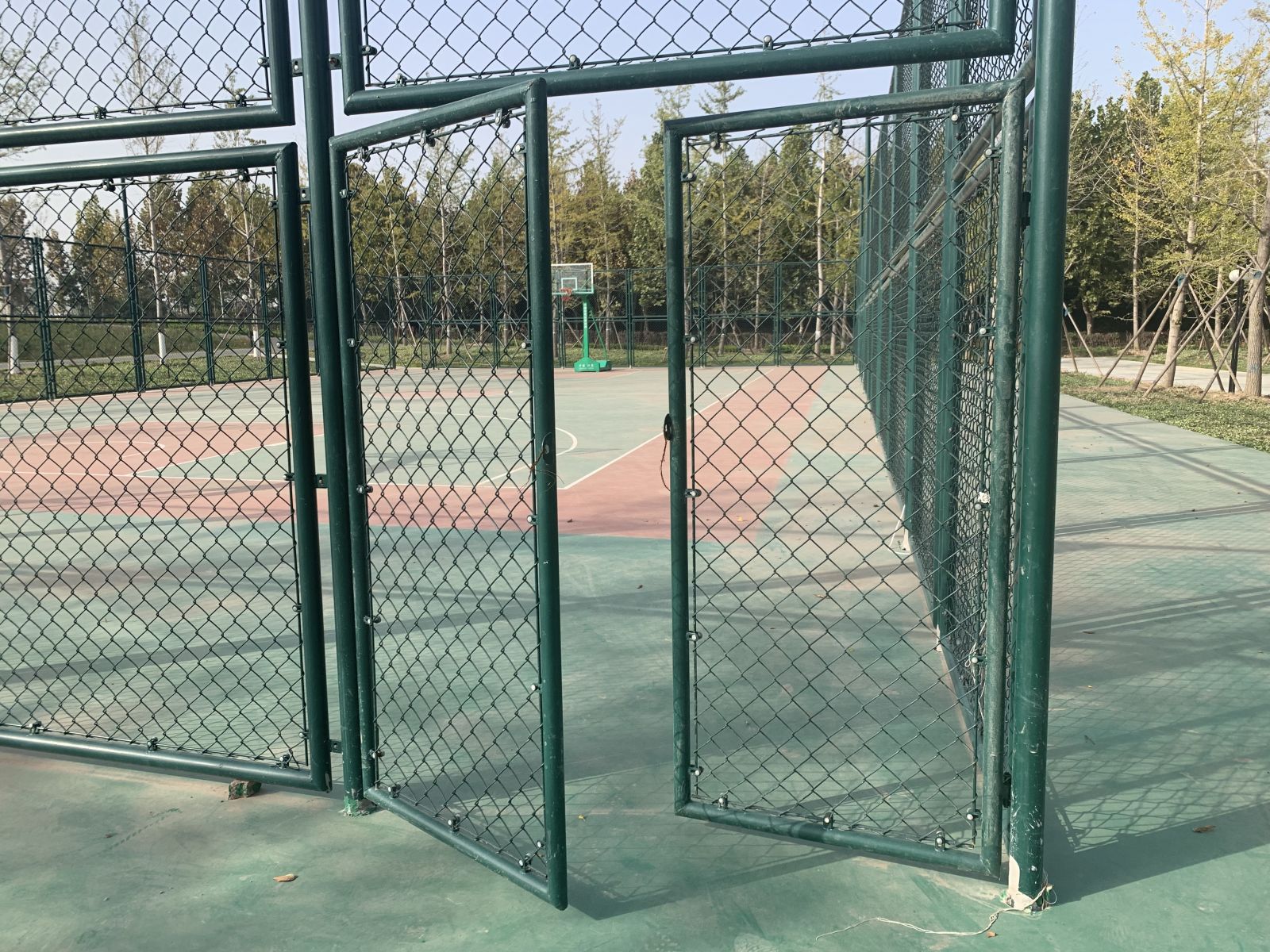
Frequently Asked Questions About Stadium Fence
Q1: What is the best fencing material for a sports stadium?
A1: Welded mesh and chain link fencing are both common choices. Welded mesh provides a rigid, neat-looking structure, while chain link offers flexibility and is widely used for tennis courts and sports grounds. The best option depends on the sport, expected impacts and project requirements.
Q2: What height should a Stadium Fence be?
A2: There is no universal height. Many basketball courts use fencing around 3–4 m, while football facilities may require approximately 3–5 m or taller ball-stop systems. Tennis court fencing is often around 3–3.6 m. Final heights should follow the project design and applicable sports facility requirements.
Q3: Can Giant Fence customize Stadium Fence specifications?
A3: Yes. Giant Fence can provide customized welded mesh panel dimensions, wire diameters, mesh openings, post specifications, colors and surface treatments according to project requirements.
Q4: Is welded mesh fencing suitable for coastal sports facilities?
A4: Yes, provided that a suitable corrosion protection system is selected. Coastal environments may fall into higher atmospheric corrosivity categories under ISO 9223:2012, so stronger metallic coatings or duplex protection systems may be required.
Q5: What standards does Giant Fence follow for welded mesh fencing?
A5: Giant Fence manufactures welded mesh fencing products in accordance with UNE-EN 10223-7:2013, with controls covering wire materials, coating requirements and welding quality. ISO 9223:2012 is used as a reference for evaluating atmospheric corrosivity and selecting appropriate corrosion protection solutions.
Q6: What information is needed to request a Stadium Fence quotation?
A6: Buyers should provide the sport or application, total fencing length, required height, preferred mesh and wire specifications, project location, installation conditions, gate requirements and any available drawings.