


Intro
If you’re a fencing contractor, property developer or facility procurement officer picking perimeter mesh for residential compounds, industrial parks, sports grounds or municipal projects, you’ll almost always face this tough call: double wire fence or 3D fence? At first glance they both look like simple welded mesh panels, but their structure, strength, installation cost and matching scenarios are totally different.
As a full-scale metal fence manufacturer with complete production lines for both styles, Giant Fence has supplied thousands of mixed projects across residential, commercial and industrial sectors. This down-to-earth, jargon-free comparison guide breaks down their structural differences, cost gaps, security levels, terrain adaptability, maintenance work and exact matching project types. By the end, you can quickly tell clients which option fits their budget and safety demands without second-guessing.
Basic Structural Differences Between Giant Fence Double Wire Fence & 3D Fence
Let’s start with the core design gap that decides all follow-up performance:
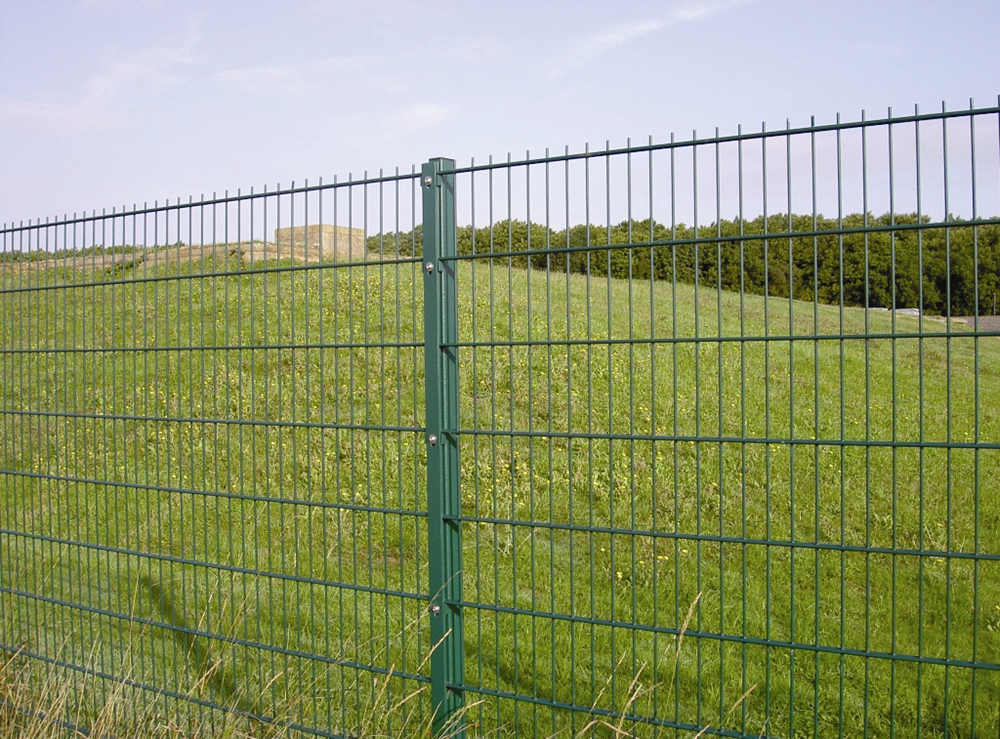
1.Giant Fence Double Wire Fence (Also called twin wire / 656 / 868 flat panel)
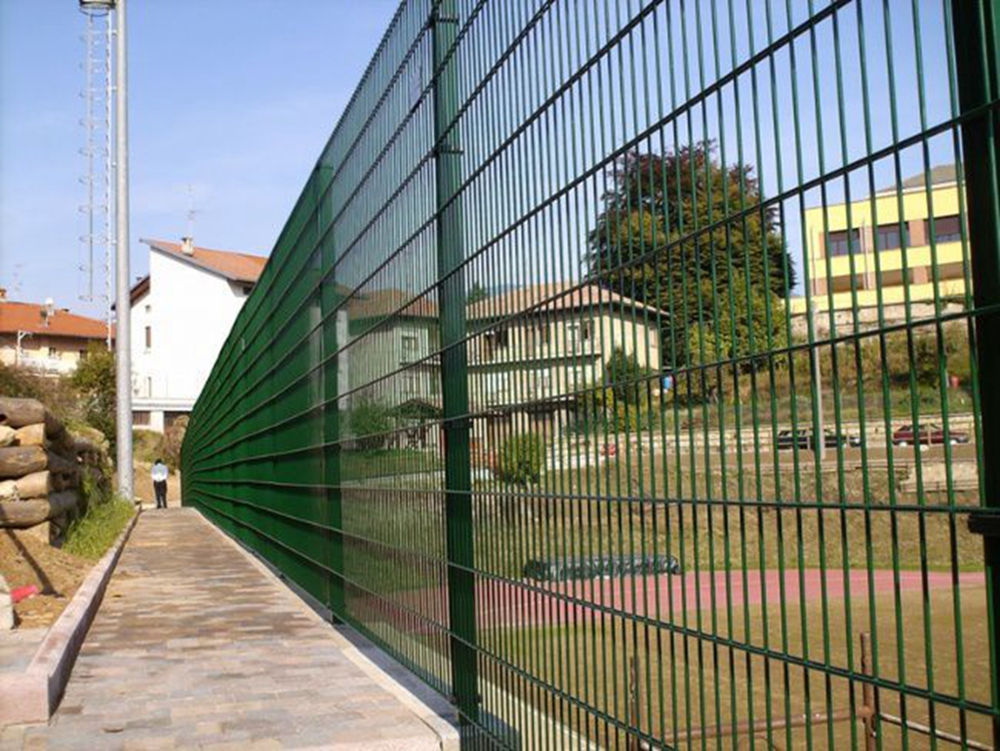
This is a flat welded mesh panel with two parallel horizontal steel wires welded onto single vertical wires. The most common specs from Giant Fence are 656 (6mm horizontal +5mm vertical) and heavy-duty 868 (8mm horizontal +6mm vertical). The whole panel stays completely flat without any curved ridges. We add full welded edge frames on all four sides to boost overall flatness and impact resistance.
*Core structural trait: Flat surface, double horizontal wires deliver concentrated anti-bend strength at every weld point
*Standard panel width: 2.0m / 2.5m, height range 1.0m–2.4m
2.Giant Fence 3D Fence
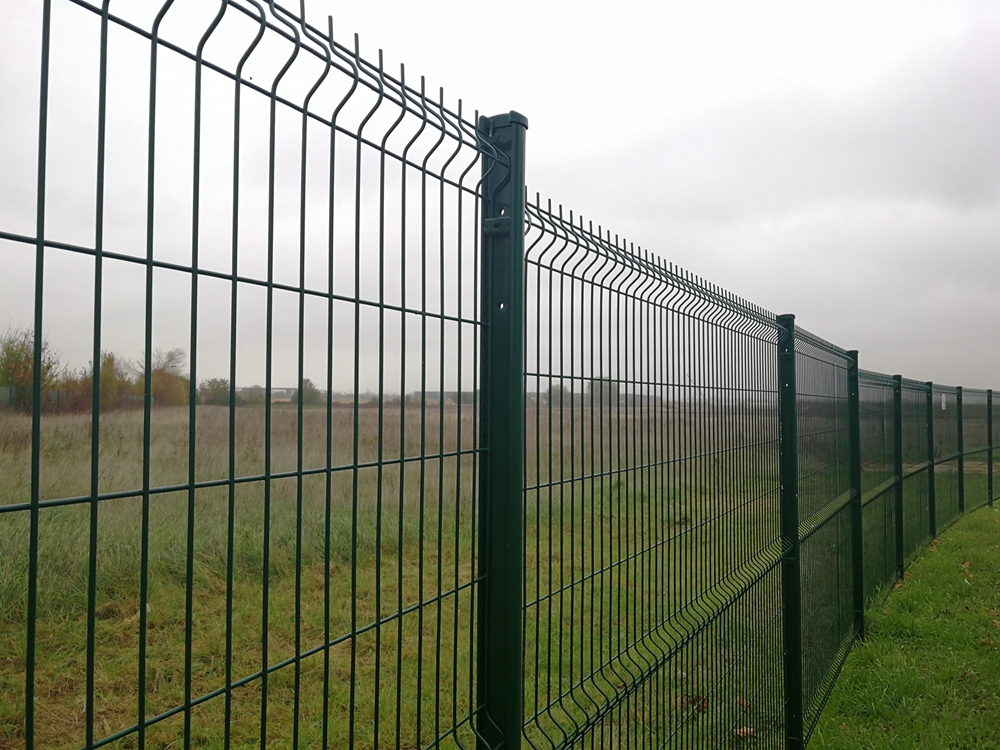
Single horizontal wires cross vertical wires to form basic mesh, then the whole panel is pressed with continuous vertical V-shaped curved ridges . No double horizontal wires here—the V bends act as built-in support beams to hold the panel rigid. Giant Fence makes 2–4 bend versions based on panel height.
*Core structural trait: Stereo curved ridges disperse wind and impact force evenly across the mesh
*Standard panel width: 2.5m, height range 1.0m–2.5m
Six Key Comparison Dimensions
1.Rigidity & Impact Resistance
*Giant Fence Double Wire Fence: The twin horizontal wires create thicker cross-sections at every weld joint. It handles repeated heavy impacts well—perfect for sports courts where balls slam the fence daily, or warehouse loading zones with frequent vehicle bumps. The flat surface won’t cave in under strong localized force. The 868 heavy double wire grade outperforms basic 3D fence in direct collision tests.
*Giant Fence 3D Fence: The V bends spread wind pressure evenly, great for open, windy sites. But single horizontal wires are thinner; hard concentrated hits will dent or warp individual mesh squares more easily than double wire panels.
2.Anti-Climb Performance
*Double Wire Fence: Flat surface has no raised curves to block footholds. Trespassers can press their feet flat against the panel, so anti-climb ability sits at medium level. If clients need higher security, Giant Fence can add top spear spikes as an extra upgrade.
*3D Fence: The protruding V ridges break smooth climbing lines. Intruders cannot get steady flat grips, so its passive anti-climb effect is naturally better than flat double wire panels without extra add-ons. Ideal for school perimeters and residential estate boundaries.
3.Cost & Material Budget
*Double Wire Fence: Extra horizontal steel wire raises raw material weight, so per linear meter material cost is 15%–30% higher than equal-height standard 3D fence (same coating grade). Giant Fence’s 656 model is mid-priced, while thick 868 double wire is a premium heavy-duty choice.
*3D Fence: Less steel consumption, lower base price. It’s the go-to budget pick for large-scale landscape, park and rural boundary jobs with tight overall spending limits.
4.Terrain & Installation Flexibility
*Double Wire Fence: Fully flat rigid panels. It works perfectly on straight, level ground. For sloped lots, you have to cut custom short panels and step posts section by section; on uneven curved boundaries, installation becomes cumbersome and time-consuming.
*3D Fence: The vertical V curves leave minor flexibility for gentle hills and soft bends. No need to custom-cut many small panels on slightly undulating terrain, cutting field labor hours significantly. Giant Fence’s install crews prefer 3D fence for mountain parks and winding residential roads.
5.Visual Appearance & Landscape Matching
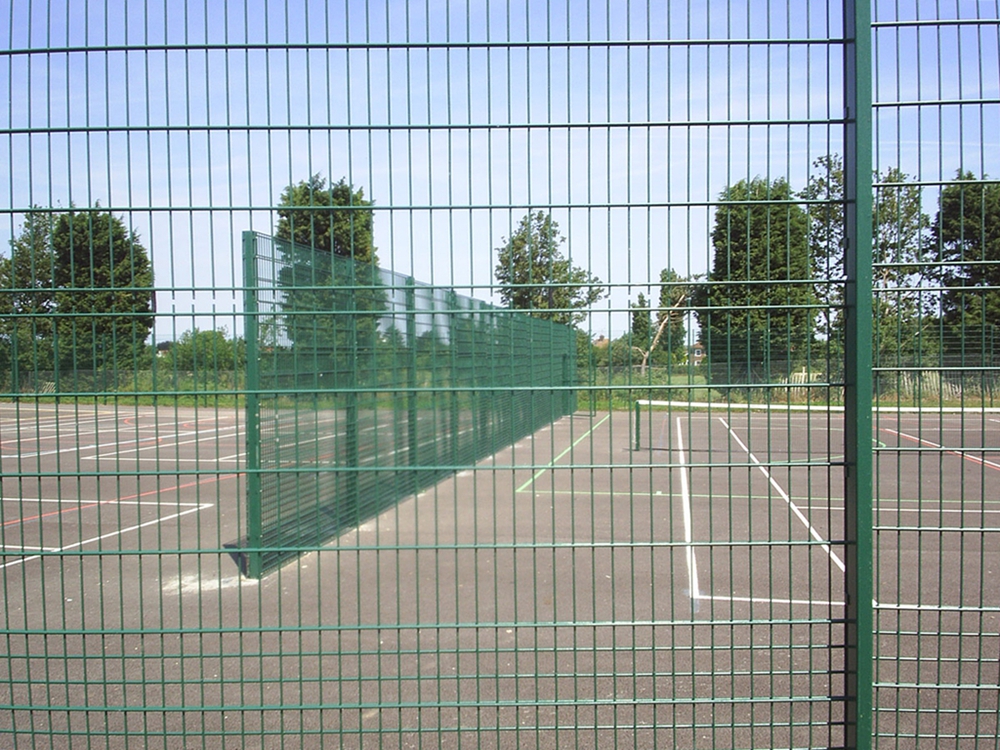
*Double Wire Fence: Clean, minimalist flat look with uniform mesh lines. It has a neat industrial aesthetic, matching warehouse, logistics park and stadium hardscape design.
*3D Fence: Distinct stereo curved texture with layered depth. It blends better with green belts, community gardens, scenic zones and villa districts, giving a softer, less rigid landscape vibe.
6.Long-Term Maintenance Burden
*Double Wire Fence: Thick double horizontal wires rarely deform. Only occasional surface washing required; broken single vertical wires can be spot-repaired without swapping the whole panel.
*3D Fence: If one V ridge gets dented by heavy impact, the whole panel loses its uniform shape, often needing full replacement. Annual inspection for bent curved sections is recommended for high-traffic public sites.
Exact Matching Project Scenarios For Each Giant Fence Product
Best Fits for Giant Fence Double Wire Fence
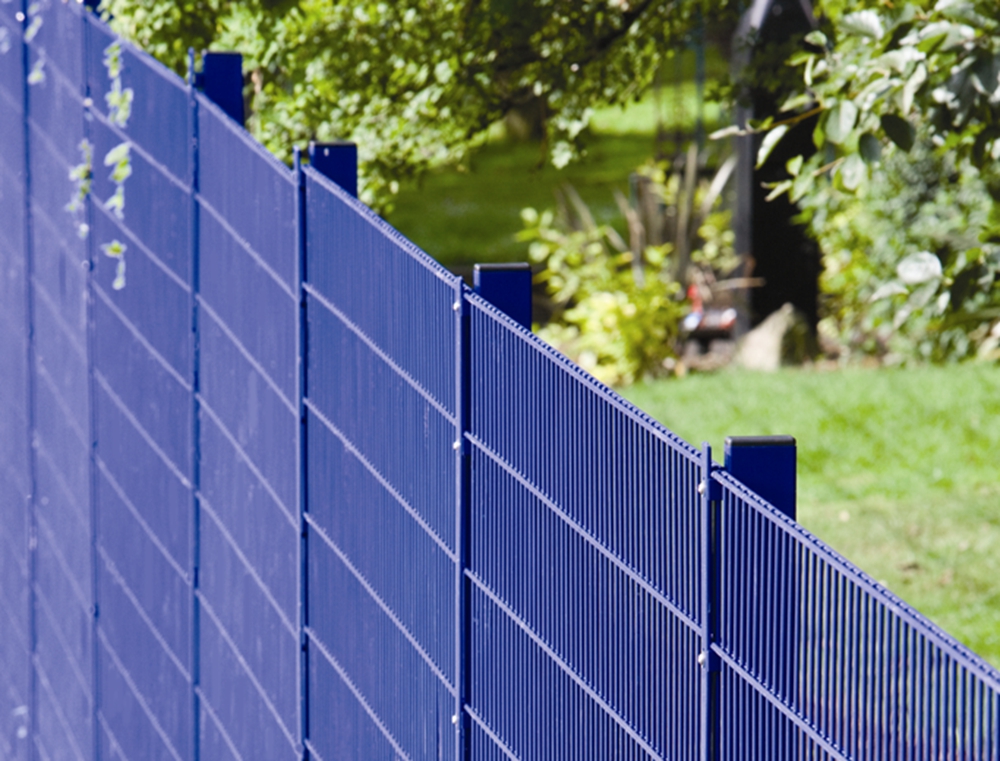
1.Sports stadiums, basketball/football courts (constant ball impact resistance)
2.Large logistics warehouses, freight loading yards (anti-collision demand)
3.Medium-high security industrial parks (868 heavy double wire grade)
4.School playground outer fences (656 model with rounded safe top caps)
5.Standardized industrial zone straight flat perimeters
Best Fits for Giant Fence 3D Fence
1.Residential housing estates, villa community landscape boundaries
2.Municipal parks, green belts, scenic area winding borders
3.Rural farmland, orchard long low-budget enclosures
4.Roadside green isolation fences along highways
5.Sloped, hilly construction sites and campus peripheral lines
Giant Fence Mixed Layout Cost-Saving Tip
Many clients want both neat visuals and impact resistance: Use 3D fence for visible front landscape boundaries, and switch cost-effective heavy double wire fence for rear warehouse/storage yard perimeters. We can supply matching black/green powder coating for both product lines to keep the whole site visually unified without mismatched colors.
Quick Comparison Table: Double Wire Fence VS 3D Fence
|
Comparison Item |
Giant Fence Double Wire Fence |
Giant Fence 3D V-Bend Fence |
|
Core Structure |
Flat panel, twin horizontal wires |
Flat mesh + vertical V curved ridges |
|
Anti-Impact Strength |
Excellent (868 heavy grade top tier) |
Good for wind, weaker against sharp hard hits |
|
Natural Anti-Climb |
Medium (flat grip surface) |
Better (V ridges block footholds) |
|
Unit Material Cost |
15–30% higher |
Lower raw material budget |
|
Terrain Adaptability |
Only flat straight ground |
Gentle slopes & soft curves friendly |
|
Landscape Look |
Minimalist industrial flat style |
Stereo soft landscape texture |
|
Long-Term Repair |
Spot wire repair available |
Dented panels need full replacement |
|
Top Ideal Projects |
Stadiums, warehouses, industrial zones |
Parks, residential estates, hilly sites |
Pre-Order Selection Checklist From Giant Fence
Run through these 4 simple questions to lock the right fence type for your client:
1.Is the site flat straight, or sloped/winding? Pick 3D fence for uneven terrain, double wire for level industrial ground.
2.Will the fence take frequent heavy impacts (sports, loading bays)? Choose Giant Fence 656/868 double wire.
3.Does the project prioritize landscape beauty or strict industrial security? 3D fence for scenic front zones, double wire for back storage yards.
4.What’s the total perimeter budget? Large low-budget long boundaries lean toward standard 3D fence.
Conclusion
Choosing between double wire fence and 3D fence all boils down to three core project factors: terrain shape, impact exposure and budget limits. Flat industrial yards with frequent collisions gain maximum value from Giant Fence double wire fence (656/868 grades). Sloped scenic sites, residential communities and long low-cost boundaries are perfectly served by our 3D fence, thanks to its flexible installation and softer landscape look.
As a one-stop fence manufacturer supplying both series, Giant Fence can deliver single-type full kits or customized mixed layout packages to match any project’s unique needs. Before placing bulk orders, share your site terrain, perimeter length, impact risks and budget range with our sales team—we’ll provide itemized quotations and free layout drawings to help you pick the most cost-effective, durable mesh solution without overspending on unnecessary heavy specs.
Frequently Asked Client & Contractor Questions
Q1:Is double wire fence always stronger than 3D fence?
A1:Not in all conditions. Giant Fence heavy 868 double wire resists concentrated collisions way better, but standard thin 656 double wire only matches basic 3D fence wind resistance. For windy hills without heavy vehicle contact, 3D fence performs equally well at a lower price.
Q2:Can I mix Giant Fence double wire and 3D fence posts on one project?
A2:Yes! Our square perforated supporting posts have universal hole spacing that fits both panel clip sets, so you can combine the two fence styles on the same site without buying separate post models.
Q3:Which option is safer for kindergarten playgrounds?
A3:Both work if you select rounded non-spear tops. If kids often kick or hit the fence, pick Giant Fence 656 double wire for better deformation resistance.
Q4:Does Giant Fence offer matching gates for double wire and 3D fence?
A4:Absolutely. We manufacture pedestrian swing gates and vehicle cantilever gates with identical mesh as each fence type, so gate strength and appearance perfectly match the surrounding perimeter panels.