


Retaining walls play an important role in construction. They help hold back soil, manage changes in ground elevation, and protect slopes, roads, and landscaped areas.
But not every project needs a solid concrete wall. In some situations, good drainage, flexibility, and practical installation are just as important as structural strength.
This is why Gabion Walls are widely used in retaining and civil engineering projects.
Made from wire mesh baskets filled with natural stones, gabion walls combine the weight of stone with the flexibility of a mesh structure. Let's look at how they work and what buyers should consider when choosing the right system.
1. What Are Gabion Walls?
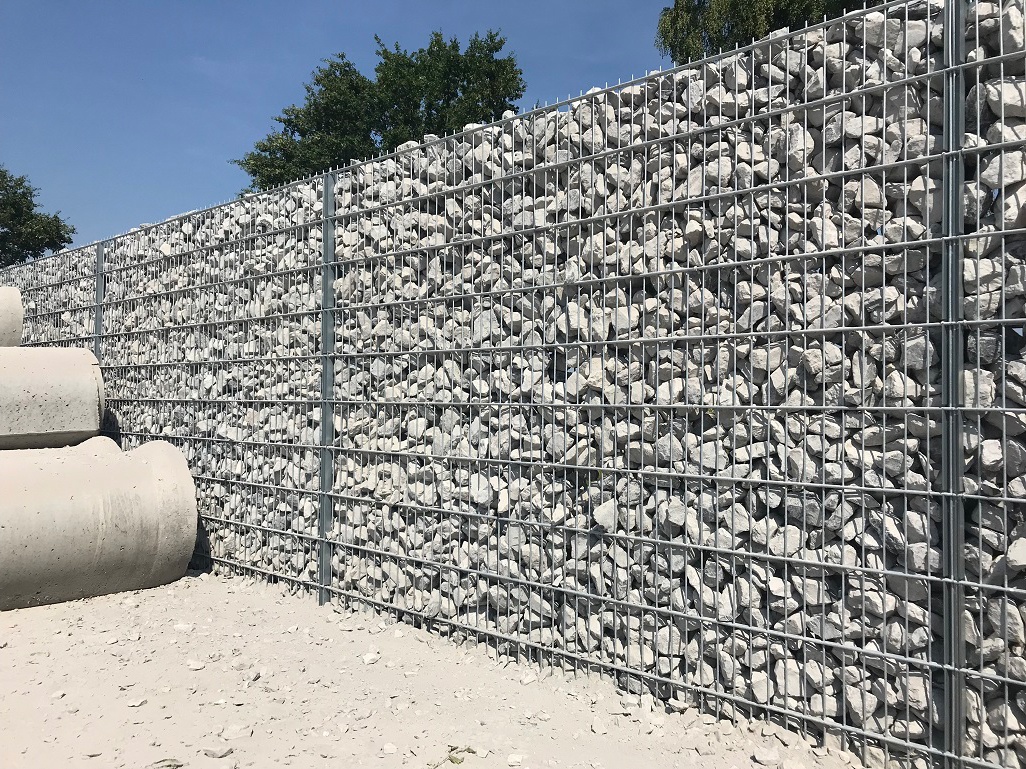
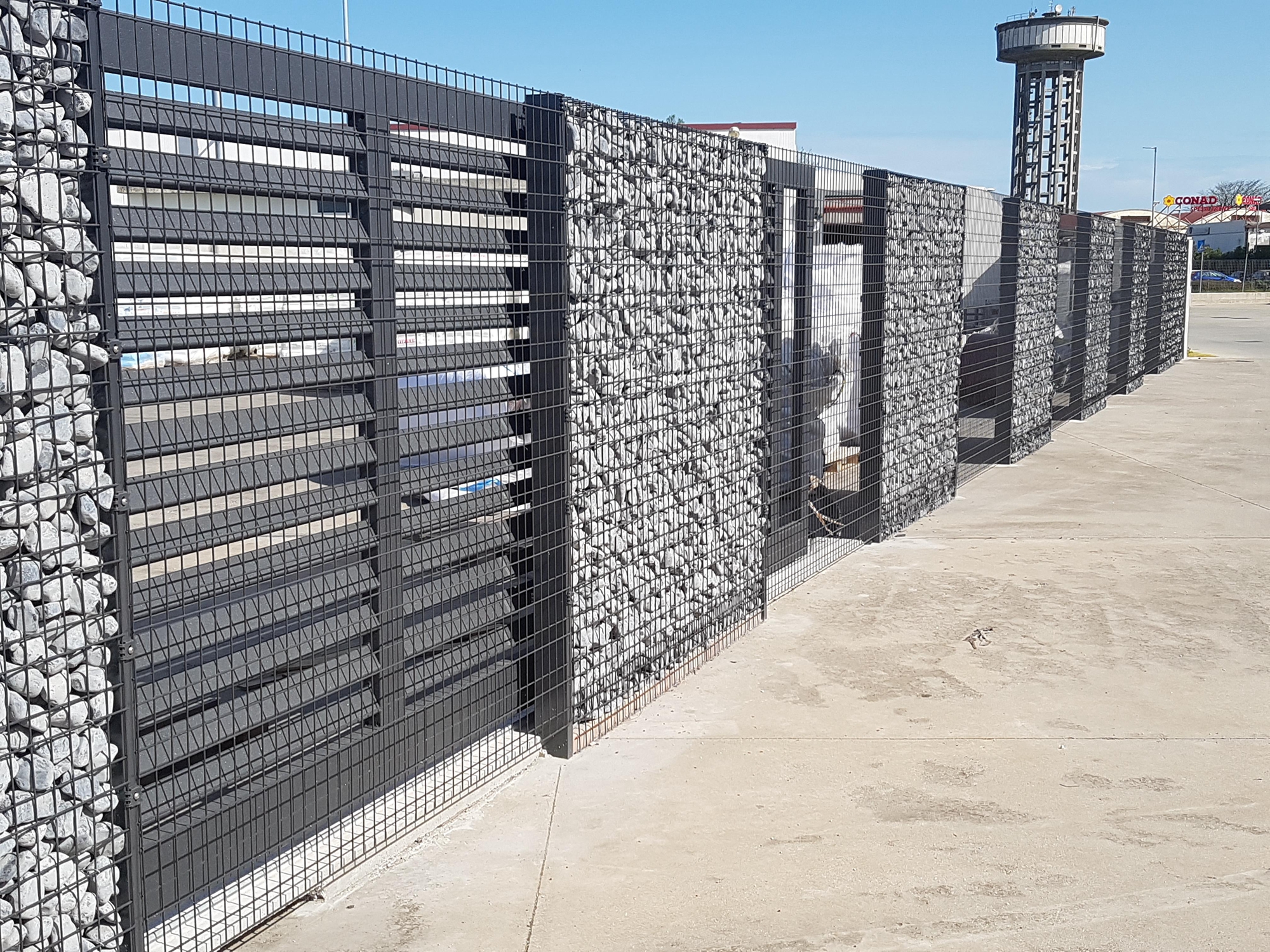
Gabion walls are structures made from wire mesh containers filled with stones. Multiple baskets are connected and arranged to form a retaining or protective structure.
A typical gabion system includes:
Wire mesh baskets: Hold the stones in place.
Internal diaphragms: Help maintain basket shape.
Connectors and lacing wire: Secure panels and adjacent baskets.
Stone filling: Provides the weight needed for stability.
Unlike concrete walls, gabion structures consist of individual connected units. Their stability depends on the combined weight of the stones, basket arrangement, foundation, and engineering design.
2. Why Are Gabion Walls Suitable for Retaining Walls?
Gabion walls offer several practical advantages for suitable construction projects.
2.1 Strength Through Stone Weight
The stones inside gabion baskets create a heavy structure that helps resist lateral soil pressure.
The mesh holds the filling in place, while the overall wall configuration provides the required stability.
2.2 Natural Drainage
Water can pass through the gaps between stones, helping reduce water pressure behind the wall.
This is particularly useful in areas where drainage is an important design consideration. Depending on soil conditions, geotextile filters and additional drainage measures may still be necessary.
2.3 Flexibility
Because gabion walls consist of connected mesh units, they can accommodate certain localized ground movements better than rigid structures.
However, proper foundation preparation and engineering assessment remain essential.
2.4 Practical Installation
Gabion baskets can be assembled and filled on site. Their modular design makes them convenient for projects with different layouts and ground conditions.
Locally available stones may also help reduce material transportation costs when they meet project requirements.
3. What Determines Gabion Wall Strength and Stability?
The performance of a gabion wall depends on more than the weight of its stone filling. Several details need attention.
3.1 Wire Diameter and Mesh Opening
Wire diameter affects the mechanical strength of the mesh, while mesh opening must be suitable for the selected stone size.
When purchasing gabion baskets, confirm:
Wire diameter and material.
Mesh opening dimensions.
Basket size and configuration.
Connection and fastening details.
3.2 Stone Quality
Stone filling should be durable, weather-resistant, and appropriately sized to prevent stones from escaping through the mesh.
Angular stones are often preferred because they can interlock more effectively and create stable packing.
3.3 Connections and Diaphragms
Secure connections help keep individual baskets together, while internal diaphragms reduce excessive bulging during filling.
These components are essential parts of a complete gabion system and should be included in the purchasing specification.
4. Welded Gabions vs. Woven Gabions
Which type should you choose?
Both are used in construction, but their structures and characteristics are different.
|
Feature |
Welded Gabions |
Woven Gabions |
|
Structure |
Welded wire mesh panels |
Double-twisted wire mesh |
|
Appearance |
Regular and uniform |
Flexible hexagonal mesh |
|
Shape |
Relatively rigid |
More flexible |
|
Typical applications |
Landscaping and suitable retaining projects |
Riverbanks and erosion control |
|
Main advantage |
Consistent dimensions |
Flexibility |
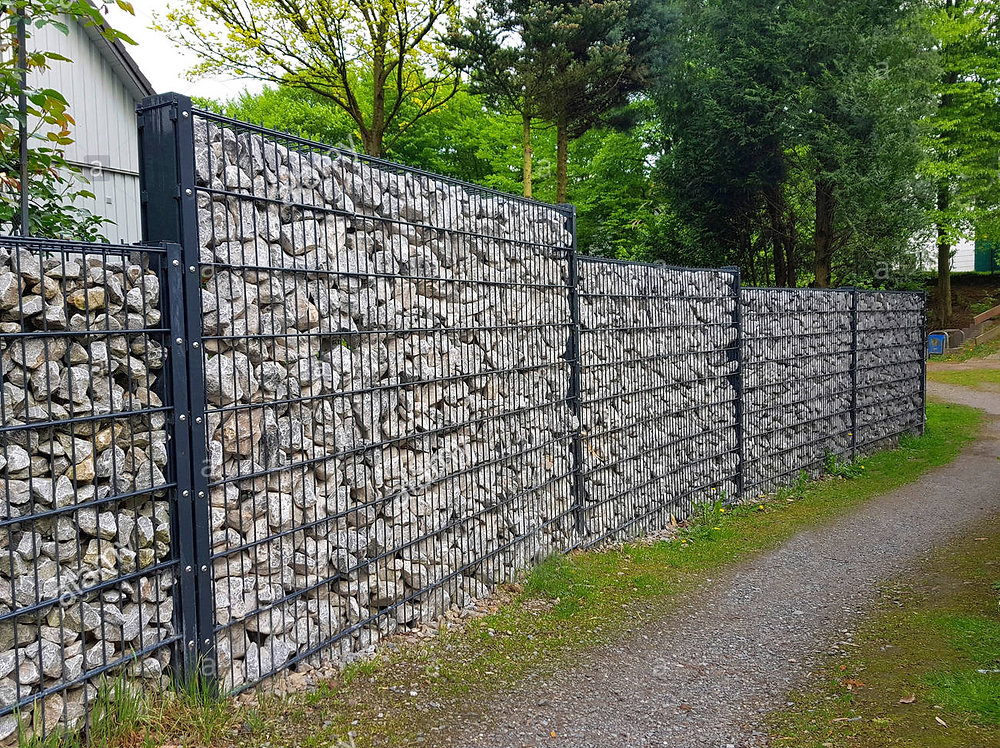
Welded gabions are often selected when regular dimensions and a neat appearance are important. Woven gabions may be more suitable for applications requiring greater mesh flexibility.
The right choice depends on the engineering design and actual site conditions, not simply which type appears stronger.
5. Surface Treatment and Corrosion Protection
Since gabion baskets are exposed to outdoor conditions, corrosion protection is an important purchasing consideration.
Common options include:
Galvanized wire: Provides zinc-based corrosion protection.
Zinc-aluminum alloy coating: An alternative coating option for applications requiring enhanced corrosion resistance.
PVC-coated wire: Adds a polymer protective layer over the metallic coating.
The appropriate treatment depends on environmental exposure, soil and water conditions, coating requirements, and project design life.
ISO 9223:2012 provides guidance on atmospheric corrosivity classification, while ISO 12944-2 addresses environmental corrosivity categories for protective paint systems. Neither standard should be treated as a direct specification for every gabion wire coating.
Buyers should confirm coating type, coating mass, and relevant inspection requirements before ordering.
6. Common Applications of Gabion Walls
Gabion systems are used in a range of construction and landscaping projects.
Roadside retaining walls: Support changes in ground elevation and roadside slopes.
Riverbank protection: Help protect riverbanks and channels against erosion.
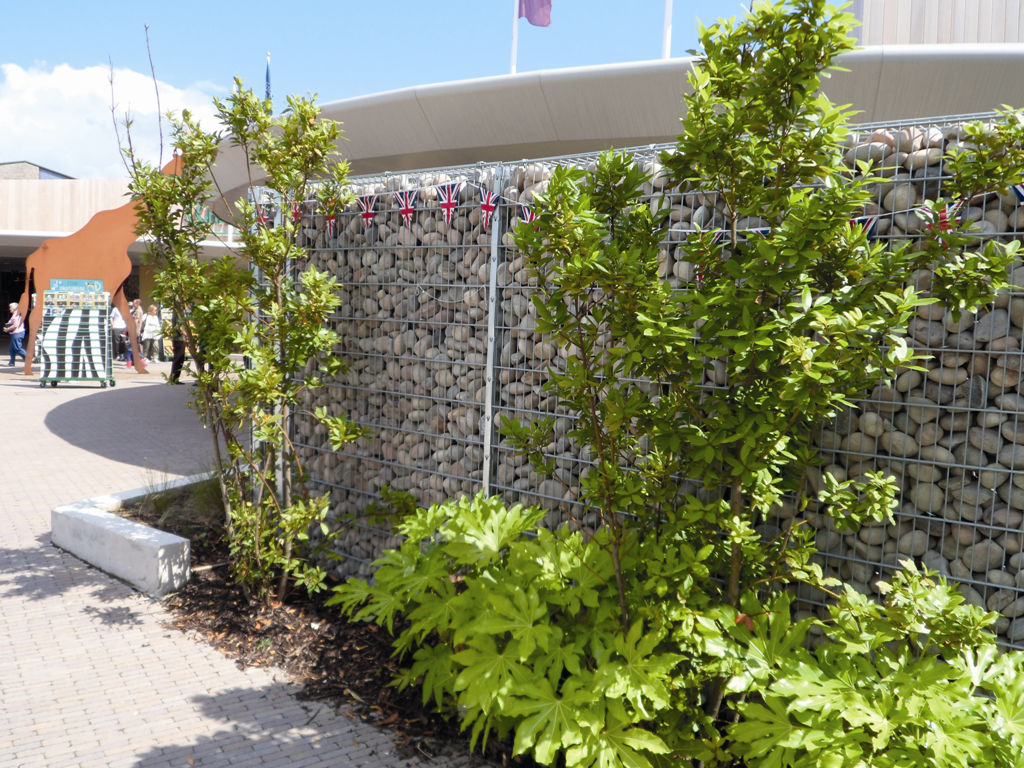
Landscape projects: Create decorative retaining walls, garden borders, and terraced areas.
Slope protection: Form part of erosion-control and slope stabilization systems.
For projects involving high water flow, unstable slopes, or significant retaining heights, proper hydraulic and geotechnical assessments are essential.
7. What Should Buyers Check Before Ordering?
For distributors, contractors, and EPC companies, comparing gabion products requires more than checking the unit price.
Here are the main details to confirm:
|
Item |
Key Requirements |
|
Gabion type |
Welded or woven |
|
Wire diameter |
Required diameter and tolerance |
|
Mesh opening |
Exact mesh dimensions |
|
Basket size |
Length, width, and height |
|
Diaphragms |
Quantity and arrangement |
|
Surface treatment |
Galvanized, alloy-coated, or PVC-coated |
|
Accessories |
Lacing wire and connectors |
|
Packaging |
Bundle dimensions and loading |
|
Delivery |
Quantity and required delivery schedule |
Two suppliers may offer similar-looking baskets but use different wire diameters, mesh openings, coatings, or accessories.
Always compare complete technical specifications before making a purchasing decision.
8. Gabion Solutions from Giant Fence
Hebei Giant Metal Products Technology Co., Ltd. (Giant Fence) is an integrated metal fencing manufacturer and exporter, supplying metal mesh products and related solutions to international markets.
With experience in welded wire mesh manufacturing, Giant Fence can support gabion product inquiries based on different project requirements.
To help us evaluate your needs, please provide:
Gabion type and application.
Mesh opening and wire diameter.
Basket dimensions.
Required surface treatment.
Estimated order quantity.
Project drawings, if available.
Clear specifications help ensure that the proposed product matches your project requirements and purchasing expectations.
9. Frequently Asked Questions
Q1: Are gabion walls suitable for retaining walls?
Yes. Their stone-filled structure provides weight and stability, while the mesh holds the stones in place. Suitability depends on soil conditions, wall dimensions, and engineering design.
Q2: Are gabion walls better than concrete walls?
Not necessarily. Gabion walls offer flexibility and drainage advantages, while concrete walls provide a different structural solution. The choice depends on project requirements.
Q3: Do gabion walls need drainage pipes?
Not always. Their stone-filled structure allows water to pass through, but additional drainage or filtration systems may be required depending on soil conditions.
Q4: Which is better, welded or woven gabions?
Welded gabions offer regular dimensions and a rigid structure, while woven gabions provide greater flexibility. The application determines the suitable option.
Q5: Can gabion baskets be customized?
Yes. Dimensions, mesh openings, wire diameters, and surface treatments can be discussed according to manufacturing capabilities and project specifications.
Final Thoughts
Gabion walls offer a practical combination of strength, flexibility, and natural drainage for many retaining and civil engineering applications.
However, reliable performance depends on choosing the right mesh, wire specifications, stone filling, corrosion protection, and installation method.
At Giant Fence, we understand that every project has different requirements.
Looking for gabion baskets for your next project? Contact Giant Fence with your drawings or technical specifications, and let's discuss a suitable solution.