



How to Choose a Peach Post Fence Supplier: 12 Checks for Importers
Choosing a peach post fence supplier looks easy when quotations are reduced to a price per panel or per meter. Then the container arrives. A panel edge will not seat in its post, green coating rubs off between bundles, half the end caps are missing, and the “saving” disappears into installation labor. The useful number is the price of one coordinated system—mesh panels, peach-shaped posts, caps, connection parts, gates, coating, packing, drawings, inspection records and a delivery plan that survives a calendar check.
Use this guide if you buy for a fence distributorship, a contracting job or an import program covering housing, schools, parks, commercial boundaries or light industry. The test throughout is deliberately practical: what should appear on the drawing, what can be measured, and what proof belongs in the order file before money changes hands. The last sections contain a weighted scorecard and an RFQ list that can be pasted into an enquiry.

What is a peach post fence?
A peach post fence is a modular welded-mesh fencing system named for the shaped cross-section of its steel post. The post profile includes grooves or returns that receive the panel edge and its fastener or locking component. Depending on the design, the connection can present fewer exposed brackets than a conventional square-post system. Buyers also encounter the terms peach-shaped post fence, peach column fence, V-mesh fence and peach post 3D fence.
The panel is usually made from welded vertical and horizontal wires. Many versions have V-shaped horizontal bends, often called reinforcing folds, that give the flat mesh additional depth. The system can be installed with posts embedded in concrete or with base-plated posts fixed to an existing concrete surface. These are families of configurations, not a single universal specification. One supplier's 50 × 70 mm post, panel edge and clip should never be assumed to fit another supplier's system.
Peach post fencing is commonly considered where the buyer wants an open view, a neat boundary and a repeatable panel installation. In practice, three requests turn up again and again: stock for residential and landscape dealers, a school or public-space package for a contractor, and a visible boundary around a warehouse or car park. Move into anti-climb work or a site with serious attack risk and this fence family may be the wrong starting point. A useful manufacturer will say so, then explain which mesh and post detail better fits the brief.
Start with a complete specification, not a catalogue label
“1.8 m green peach post fence” is not enough information for a comparable quote. The phrase leaves unanswered the panel width, actual wire diameter, mesh spacing, number and position of bends, post section, post wall thickness, attachment method, embedment allowance, coating sequence, accessories and packing. Two products carrying the same label can have visibly different steel content and very different installation behavior.
The following table is a procurement framework rather than a universal recommendation. Final values should come from the project drawings, local codes, terrain, wind exposure, security objective and installation method.
| Specification item | What the RFQ should state | Why it changes risk or cost |
|---|---|---|
| Panel height and width | Finished dimensions and permitted tolerance | Controls post spacing, layout, pallet size and installed quantity |
| Wire diameter | Whether measured before or after coating; horizontal and vertical wires if different | Small diameter changes materially affect steel weight and stiffness |
| Mesh aperture | Center-to-center or clear opening definition | Affects visibility, climb resistance, material use and compatibility |
| Reinforcing bends | Number, depth and approximate position | Influences panel rigidity and the appearance of adjacent panels |
| Peach post | Cross-section, wall thickness, length, cap and panel connection | Determines support, foundation allowance and system fit |
| Installation | Embedded post or base plate, footing assumptions, slope treatment | Changes post length, hardware, installation time and engineering needs |
| Finish | Galvanizing route, pretreatment, coating type, color and measurable acceptance criteria | Controls appearance, corrosion protection, handling damage and price |
| Accessories | Type, material, finish and quantity per post or panel | Missing or mismatched parts can stop installation |
| Gates | Opening, leaf arrangement, frame, hinges, latch, posts and finish | Gates carry different loads and should not be treated as ordinary panels |
| Packing | Units per pallet, separators, edge protection, bundle dimensions and gross weight | Influences container utilization, coating damage and unloading method |
For a visual introduction to the panel family, see Giant Fence's 3D fence panel guide. For a quotation, use the dedicated peach post 3D fence product page as the starting point, then add the project-specific requirements discussed below.
1. Check panel-to-post compatibility as a system
The first audit is a fit check. Ask for an assembly drawing that shows the panel edge inside or against the peach post, the fastener or locking strip, cap, ground line, post length and fixing intervals. A useful drawing has dimensions and part references; a product photograph alone cannot confirm fit.
Request one physical assembled sample when the order is large, the system is new to your installers, or the supplier proposes a substitute post. A short panel section, one post and the actual accessories can answer practical questions that email cannot: Can a worker engage the clip without scratching the coating? Is there enough adjustment for normal site variation? Does the post cap seat properly? Can the panel be removed from the outside using common tools? How will a corner, end or change in level be handled?
Also ask whether the quoted post is an intermediate post only. Corners, ends and gates may need different post lengths, sections, reinforcement or drilling. A low unit price that omits these positions is not a complete perimeter price.
2. Verify wire diameter, mesh geometry and steel input
Wire diameter should be written with its measurement stage. A nominal “5 mm coated wire” does not necessarily contain the same steel as a 5 mm wire measured before coating. For a fair comparison, ask for the steel-core diameter and, separately, the finished coated diameter where relevant. The purchase specification should also say how diameter will be sampled and what tolerance applies.
Confirm the mesh aperture definition. Buyers sometimes quote a clear opening while factories quote center-to-center spacing. The error repeats across an entire panel and can affect attachment points, privacy-slats compatibility and project takeoff. The drawing should show vertical spacing, horizontal spacing, wire orientation, outer dimensions, cut-edge treatment and the location of every V-bend.
A useful pre-production record includes the agreed drawing revision, raw-wire reference, first-piece dimensions and buyer approval. If production wants to alter the wire, mesh, bend layout or width, stop there: the proposed change should be written down, checked against the assembled system and approved against a new revision. “Almost the same” is not change control.
3. Inspect weld quality and panel geometry
Step back five meters and most green panels look fine. Put two of them in the same post bay and the faults become obvious: a drifting edge, a shallow bend, a broken weld, or a bow that fights the clips. Ask how the factory checks those details, including sharp projections, cut ends, squareness and overall size. Write numbers and defect rules into the approval. “Good welding” is an opinion; a sampling plan leaves a record.
During sample review, put the panel on a flat reference—or, better, into a simple post frame. Sight down the edge. Compare bend depth from one side to the other. With a protective glove, feel the accessible cuts for burrs and needles. Pay particular attention to welds beside a formed bend, where a weak joint may reveal itself, and inspect coating around intersections and freshly cut ends.
For repeat orders, ask the supplier to retain the approved sample or a signed “golden sample.” Photos are helpful, but a controlled reference sample and revision number are better when production continues months later.
4. Audit the peach post itself
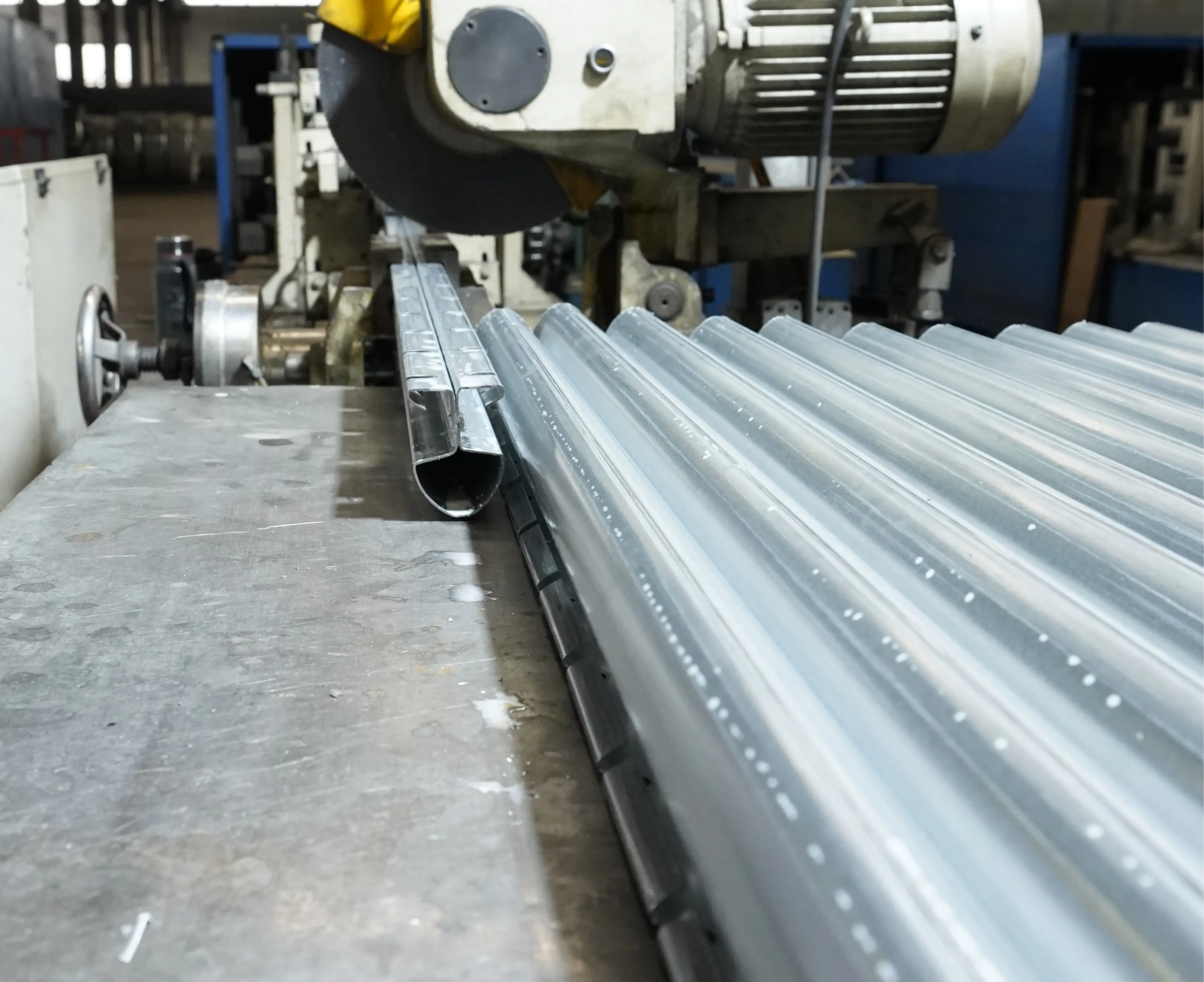
The post is not a decorative accessory. It transfers panel loads to the ground or concrete support and governs alignment along the run. Request the post cross-section drawing, wall thickness, total length, coating route, seam position, slot or groove details, cap design and base plate data when applicable.
Wall thickness should be measured on the steel substrate, not inferred from finished outside dimensions. Check straightness over the full length and look for distortion around formed grooves. The longitudinal seam and any punched features deserve attention because they may be coating or corrosion weak points if preparation is poor. For base-plated posts, specify plate dimensions, thickness, hole layout, weld configuration and the anchor system supplied or assumed.
Embedded posts need enough additional length for the approved foundation detail. Do not copy a generic embedment depth from a catalogue into a project. Soil, wind, fence height, terrain, frost and local design rules all matter. The fence manufacturer can supply component information, but project foundation adequacy may require a locally qualified engineer.
5. Confirm clips, locking parts, caps and security details
Accessories are inexpensive compared with the container, yet they are a frequent source of site delay. The bill of materials should name every clip, insert, locking strip, bolt, nut, washer, security head, cap and touch-up item. It should state the quantity per panel or post plus any agreed spare percentage. Hardware material and surface finish should also be defined; an outdoor fence is only as serviceable as its least durable exposed component.
Ask the supplier to demonstrate installation using production parts, not hand-selected prototypes. Time the sequence and note the tools required. No ordinary bit fits the fastener? Put the required driver in the shipment and record how the installer can replace it. Then stand on the attack side and try to reach the connection with common hand tools. Concealment looks tidy; by itself, it is not a security rating.
Caps should remain secure after transport and normal thermal movement while allowing the post design to manage water appropriately. Do not accept a loose cap merely because it can be pressed back in at the factory. Hundreds of caps replaced after installation become a real labor cost.
6. Treat gates as engineered system components
Do not treat a pedestrian or vehicle gate as a panel with hinges added. Every opening cycle pulls on the frame, post, hinge and foundation, while the latch still has to meet its keeper after weather and use. Give the supplier the clear opening, height, leaf arrangement, swing, likely operating frequency, lock and any automation interface.
Ask for a gate drawing before production. It should show leaf dimensions, frame sections, infill, post sizes, hinge positions, latch and drop-bolt details, opening direction and ground clearance. Confirm whether gate posts, hold-open devices, stops, anchors and locks are included. The coating and color should match the fence unless the project intentionally specifies otherwise.
For a repeat distribution program, stocking a standard gate family can simplify sales. For a project order, however, the safest route is to reconcile every opening against the site schedule. One reversed swing or missing gate post can erase the apparent saving from a cheaper supplier.
7. Specify corrosion protection without relying on slogans
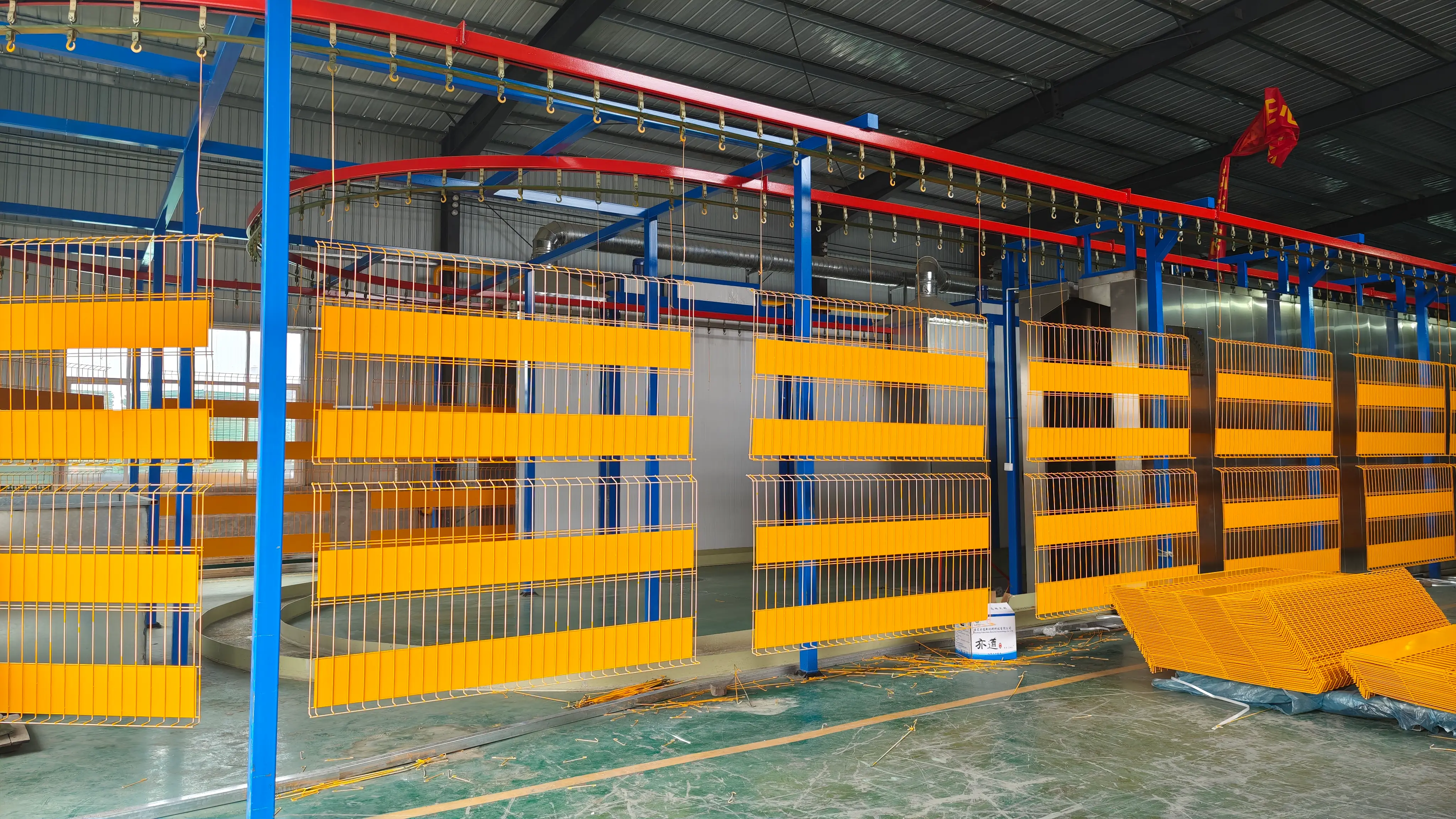
“Galvanized and powder coated” names two processes but still leaves the buying question open. Begin with blunt questions. Which component is galvanized, and at what production stage? What happens between welding and coating? Where is thickness measured? What would cause the inspector to reject the finish? There is no single winning route for every project; exposure, handling, component design and budget change the answer.
If a supplier reports a salt-spray result, ask which method was used, what specimen was tested, how it was prepared, how long it was exposed and what counted as a pass. Treat the result as one controlled quality check, not as a direct promise of outdoor service life.
Write the coating requirement beside each component rather than putting one finish description across the whole shopping list. Posts, welded panels, caps and fasteners may use different substrates and production routes. The quotation and inspection plan should make those differences visible.
| Coating question | Evidence to request | What the evidence does not prove by itself |
|---|---|---|
| What is the coating sequence? | Process flow for wire/panel, post and hardware | That every production batch followed the flow |
| What thickness or coating mass is required? | Agreed test method, sampling points and batch record | Outdoor life in every climate |
| Was salt-spray testing performed? | Laboratory report naming method, sample, duration and acceptance result | A direct number of years in service |
| Is powder color controlled? | RAL reference or approved physical color sample | Gloss and texture unless separately specified |
| Will coating survive transport? | Packing design, separators, edge protection and loading photos | Damage-free unloading without an agreed method |
8. Ask for a quality plan, traceability and honest documents
A certificate belongs in the qualification file, not on a pedestal. Open it. Is this factory the named holder? Does the scope cover the work being bought? Is the issuer traceable and the document still valid? Once those boxes are checked, follow the trail into this purchase order—from incoming steel and first-piece sign-off to shop-floor checks, rejected material, final sampling and the person who releases the load.
A practical inspection plan lists the characteristic, requirement, method, sample size, responsible person and record. For a peach post fence, the list may cover wire diameter, aperture, panel size, bend position, post section, wall thickness, hole or slot position, coating measurement, color, assembly fit, accessory count, labels and packing. High-risk characteristics deserve either larger samples or 100 percent checks.
Traceability does not have to be complicated. A purchase order, drawing revision, production batch, pallet label and inspection report should point to each other. If a claim arises, that chain helps isolate the affected material instead of treating the entire shipment as unknown.
Giant Fence's company and factory timeline states that it established a product-testing laboratory in 2012, introduced a peach-shaped post line in 2016 and imported Schlatter welding equipment in 2017. These are useful first-party qualification signals. A buyer should still request the records that apply to the specific order, because general capability and batch acceptance are different questions.
9. Use samples and pre-shipment inspection strategically
A sample is most valuable when it tests the uncertain part of the deal. If the risk is color, approve a coated color plate and define gloss or texture. If the risk is fit, obtain an assembled post-panel section with production hardware. If the risk is a custom gate, review the gate drawing and, where practical, a first completed unit before the rest are made.
Record sample approval with photos, dimensions, date and revision. Do not leave an unlabeled sample in a showroom and expect both companies to remember which order it represents. State whether the production shipment must match the sample in appearance only or also in measured construction.
Pre-shipment inspection should occur when enough goods are complete to represent the batch and while corrections are still possible. The inspector needs the purchase specification, approved drawings, sample reference, packing requirements and defect rules. A generic visual check cannot identify an undersized wire or missing accessory buried inside a bundle. Consider independent inspection for a new supplier, a new product, an unusually large order or a project with expensive delay exposure.
10. Design packing and container loading before production ends
Fence panels use a large footprint, have exposed edges and can rub through coating if restrained poorly. Posts are dense and can create concentrated pallet loads. Ask for the proposed pack count, pallet or steel-frame construction, separators, wrapping, edge guards, bundle dimensions, gross and net weights, lifting points and container layout.
Loading efficiency should not be optimized at the expense of damage or unsafe unloading. The receiver needs to know whether a forklift, crane, spreader bar or manual breakdown is expected. Confirm maximum package weight and fork entry before shipment. Photos of a previous similar load are helpful; an order-specific loading plan is better.
Accessory control deserves its own packing list. Separate and label parts by fence section, gate or product code. Include a visible count sheet in a protected location and send an electronic copy before arrival. Small components should not be distributed randomly across multiple containers unless the documents say exactly where they are.
11. Validate capacity, lead time and change control
A confident delivery promise should break down material procurement, wire straightening and welding, post forming, surface treatment, curing, inspection, packing and port movement. Mark each step “in house” or “outside.” Outside processing is common and need not be a red flag; what matters is who reserves the slot, checks the returned work and owns the delay if it misses the plan.
For a project deadline, request milestone dates rather than one final date: drawing approval, material ready, first article, production completion, coating completion, inspection, loading and estimated departure. Identify which dates depend on buyer approval. Late drawing confirmation should not be hidden inside a factory delay, and a supplier should not start custom production from an unresolved specification.
Capacity evidence should be relevant to the product. Overall factory output for all fencing says little about the peach-post forming bottleneck or the available coating slot. Ask what is already booked on the line, whether the right tooling is free, and whether maintenance falls inside the proposed window. The answer you need is weekly output for this configuration, not an all-factory headline. Regular distributors can make that answer more dependable by sharing a forecast and agreeing a call-off rhythm.
12. Compare commercial terms and export support, not only EXW price
Normalize every quotation before choosing a supplier. Build one comparison sheet and pin down the currency, Incoterm with named place, validity date, tax, payment milestones, tooling, sample, packing, documents, inspection, spares, warranty and claim route. Check the unit twice. A panel, a set, a linear meter and a square meter can make four prices look comparable when they are not.
The landed commercial risk includes more than freight. A cheaper system may require more clips, more installation labor, local fabrication of omitted ends, or touch-up after poor packing. A clear supplier can help with layout drawings, product data, packing lists, installation guidance, container planning and document review. These services are valuable when they prevent a site interruption.
Use this simple structure when comparing offers:
| Cost layer | Include in comparison | Common hidden difference |
|---|---|---|
| Fence system | Panels, posts, connections, caps, corners, ends and gates | Low quote omits special posts or sufficient accessories |
| Order preparation | Drawings, tooling, samples, testing and inspection | Testing mentioned but not priced or defined |
| Packing and logistics | Export packing, inland transport, origin charges and ocean freight | Package dimensions make actual utilization worse than assumed |
| Import and receipt | Insurance, destination charges, duty, tax, storage and unloading | Heavy bundles require equipment not available on site |
| Installation | Foundations, anchors, labor, tools, touch-up and waste | Mismatched parts or tight tolerances slow every bay |
| Risk allowance | Damage, shortage, delay, rework and local replacement | No agreed claim evidence or spare-part plan |
Landed system cost = product price + preparation + logistics + import/receipt + installation + a quantified risk allowance. The formula is simple; the discipline is in using the same scope for every bidder.
How to compare peach post fence suppliers with a weighted scorecard
A scorecard prevents the lowest visible number from dominating the decision. Adjust the weights to the project. A distributor buying repeat stock may give more weight to consistency and flexible reorder support. A contractor with a fixed completion date may emphasize drawings, gate coordination, inspection and delivery control.
| Category | Suggested weight | Scoring evidence |
|---|---|---|
| Technical compliance and system fit | 25% | Marked drawings, deviation list, assembled sample |
| Manufacturing and quality control | 20% | Process map, equipment, inspection plan, traceability |
| Coating and outdoor durability evidence | 15% | Coating route, measurable criteria, test records, packing protection |
| Delivery and capacity | 15% | Product-specific capacity, milestones, current loading |
| Packing and export execution | 10% | Bundle data, loading plan, labels, export documents |
| Commercial clarity and landed cost | 10% | Complete scope, normalized Incoterm, transparent exclusions |
| Communication and after-sales response | 5% | Response accuracy, revision control, claim procedure |
Give every category a 1–5 mark, then apply the weight. Reserve 4 and 5 for evidence you can file. A glossy deck without a dimensioned drawing remains a weak technical answer. At the other extreme, an excellent factory still loses points if nobody will own the delivery dates or record a revision.
Red flags when selecting a peach post fence manufacturer
- The supplier quotes from a photograph without returning a specification or deviation list.
- Wire diameter is listed without saying whether it is measured before or after coating.
- The panel and post are quoted, but caps, clips, corners, ends, gates or spare parts are vague.
- A salt-spray hour claim appears without the method, sample preparation, acceptance criteria or report.
- One vague coating statement is applied broadly to posts, wire, mesh and hardware without a component-level explanation.
- The supplier will not provide a drawing until after the deposit, although the product is custom.
- Production photos show the general factory but cannot be tied to the quoted product or current order.
- Package dimensions and weights are missing, so freight and unloading cannot be checked.
- The quotation has a short lead time but no milestones, current capacity check or coating slot.
- Price changes are explained only as “steel increased” without a quotation validity period or change mechanism.
Copy-ready RFQ checklist for a faster, more accurate quotation
Send the following information to shortlisted suppliers. If an item is undecided, write “supplier to recommend” and explain the application. That is better than leaving the field invisible.
- Buyer and destination: company, country, destination port or delivery city.
- Application: residential development, school, park, warehouse, distribution stock or other use.
- Total quantity: linear meters, number of runs and expected repeat-order volume.
- Panel: height, width, steel-core wire diameter, mesh aperture, number of V-bends and color.
- Post: peach-post section, wall thickness, total length and cap.
- Installation: embedded or base-plated; terrain, corners, changes in level and available drawings.
- Connections: preferred clip or locking system, security requirement and spare quantity.
- Gates: quantity, clear opening, height, leaves, swing, lock and automation interface.
- Finish: proposed galvanizing/coating route, RAL color, environment and required evidence.
- Inspection: required dimensions, coating checks, sample approval and third-party inspection if any.
- Packing: unloading equipment, maximum bundle weight, label language and private branding.
- Commercial: Incoterm and named place, desired shipment date, payment preference and quotation validity.
- Order file: list the drawing, data sheet, packing list and any origin or compliance paper that must travel with the goods.
Do not accept the price sheet on its own. Ask for four companions: the filled specification, a candid deviation list, a preliminary pack/load sketch and dated delivery milestones. Those four pages tell you more about the likely shipment than a dozen reassuring adjectives.
Frequently asked questions
What determines peach post fence price?
The main product drivers are steel content, wire diameter, panel dimensions, mesh spacing, bend geometry, post section and wall thickness, coating route, accessory design, gate quantity, order volume and packing. Destination and Incoterm add logistics and import-cost differences. Compare a complete landed system rather than a panel-only number.
What is a normal minimum order quantity?
There is no universal MOQ. It depends on standard sizes, color, tooling, production scheduling and packing efficiency. A supplier may accept a small sample or trial order at a different price from a container-scale order. State both the trial requirement and the forecast repeat volume so the commercial proposal can separate them.
Can I order a sample before mass production?
Yes, and the sample should target the main risk. For system fit, request a post with a short panel section and production accessories. For appearance, approve a coated physical sample under agreed lighting. Record the approved dimensions, color reference, date and drawing revision.
Is a peach post fence the same as a 3D fence?
The terms overlap but are not identical. “3D fence” usually describes a welded panel with reinforcing bends. A 3D panel may be installed with peach, square, rectangular, round, I-shaped or other post systems. “Peach post fence” emphasizes the shaped post and connection. Confirm both panel and post rather than relying on the label.
How do I specify the coating?
Describe the substrate and process sequence for each component, the pretreatment, zinc or other metallic layer where applicable, powder or PVC finish, color, measurable coating requirement, sampling method and acceptance criteria. Add the actual exposure environment. Do not convert a salt-spray result directly into promised outdoor years.
What should a salt-spray test report include?
Request the test method, specimen identity, surface preparation, exposure duration, observations and pass/fail rule. Make sure the tested sample represents the ordered coating system. Do not convert a laboratory-hour result directly into a promised number of outdoor years.
Should the same coating requirement be used for every fence component?
Not automatically. Panels, fabricated posts, caps and fasteners can use different substrates and manufacturing routes. Ask the supplier to identify the coating process and measurable acceptance requirement for each component in the system.
How should I inspect a shipment before loading?
Use the approved specification and drawing. Sample dimensions and wire diameter, inspect welds and panel geometry, measure agreed coating characteristics, assemble representative panels and posts, count accessories, verify labels, and review packing and container layout. Define defect categories and sampling before the inspection day.
What information is needed for gates?
Provide clear opening, overall height, single or double leaves, swing direction, operating frequency, frame and infill expectation, hinge and lock requirements, ground clearance, automation interface and foundation constraints. Ask for a gate drawing and bill of materials before production.
How can distributors reduce repeat-order variation?
Maintain controlled product codes, approved drawings, a physical reference sample, color standard, packing specification and revision history. Forecast repeat demand and agree how proposed changes will be approved. Consistency comes from configuration control, not from asking for “the same as last time.”
Final recommendation
The best peach post fence supplier is not simply the factory with the lowest quoted panel price. It is the partner that turns an application into a controlled system: compatible parts, measurable construction, suitable coating, inspectable quality, protected packing and a delivery plan that the buyer can verify. Twelve disciplined checks before the deposit are cheaper than one stopped installation after the container arrives.
Begin with the drawing and the bill of materials. Confirm how dimensions and coating will be measured. Approve the uncertain parts by sample. Normalize landed cost. Then use a weighted scorecard and keep the final specification attached to the purchase order. That process creates a fence shipment that is easier to receive, sell and install—and gives both buyer and manufacturer a clear definition of success.
To discuss a distributor program or project order, review Giant Fence's fencing product range and send the project details to the technical sales team. Include the RFQ checklist above to receive a more precise response.