



Introduction
When shopping for reliable, cost-effective perimeter fencing, chain link fences are always a top pick for all kinds of projects. They are flexible, durable, easy to install, and work for residential yards, sports courts, industrial zones, farmland and temporary construction sites alike. However, many project buyers make a simple mistake: choosing mesh sizes randomly without matching their actual site needs.
The mesh size directly decides a chain link fence’s safety level, anti-climb performance, wind permeability, overall lifespan and final project cost. Pick a mesh that is too small, and you will overspend unnecessarily. Pick one that is too large, and you will face security risks and safety hazards.
As a professional manufacturer specializing in customized chain link fences, Giant Fence has rich practical experience in matching standard mesh specifications for global projects. We will break down the five most common mesh sizes: 40×40mm, 50×50mm, 60×60mm, 75×75mm and 100×100mm, sharing their unique features and exclusive application scenarios. This guide uses plain, conversational language to help you find the perfect mesh size for your project.
Why Mesh Size Matters for Chain Link Fences
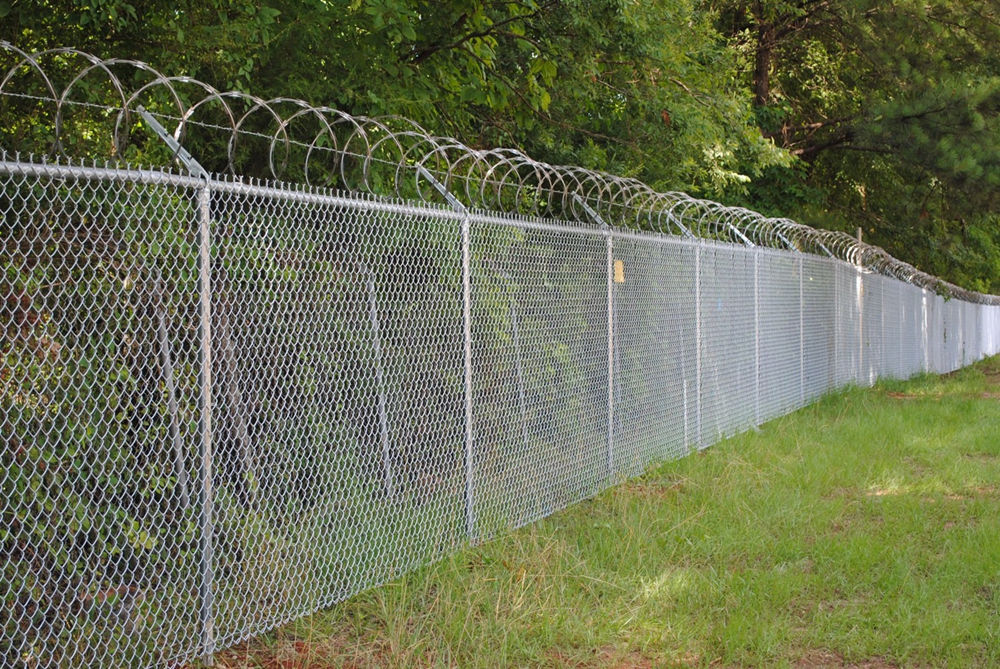
For chain link fences, mesh size refers to the inner diamond opening of the woven mesh. There is a clear rule for reference: the smaller the mesh opening, the denser the mesh surface, the higher the safety and anti-intrusion performance, and the higher the material cost. Larger mesh sizes feature better air permeability, lower material consumption and more budget-friendly prices, but they sacrifice partial safety and anti-climb ability.
Every mesh size provided by Giant Fence is matched with professional wire diameter and surface coating solutions. We avoid mismatched specifications that cause loose mesh, easy deformation or poor protection, ensuring every fence fits its usage scenario perfectly.
Full Guide to 5 Common Chain Link Fence Mesh Sizes
1. 40×40mm Mesh – Premium High-Safety & Anti-Climb Option
The 40×40mm mesh is the densest specification among mainstream chain link fences. The ultra-tight diamond openings leave no effective footholds or gripping points for trespassers to climb over. Meanwhile, it completely prevents kids, pets and small animals from squeezing through the mesh gaps, eliminating potential safety risks.
Giant Fence 40×40mm chain link fences adopt thickened wire weaving technology. The dense mesh structure enhances overall tension and impact resistance, not easy to deform or loosen after long-term use. It is the best choice for high-safety and medium-security scenarios.
Best application scenarios: Kindergartens, school playgrounds, community activity areas, pet breeding zones, high-security residential boundaries and public facility enclosures.
2. 50×50mm Mesh – Versatile Commercial & Sports Standard
50×50mm is the most popular universal mesh size for standard chain link fences. It strikes a perfect balance between safety, permeability and cost. The mesh holes are moderate in size, effectively preventing climbing and piercing, while maintaining smooth air circulation and clear visibility, without forming stuffy blind spots.
Durable and adaptable, Giant Fence 50×50mm chain link fences support galvanized and PVC coated finishes, with strong weather resistance. It is stable enough for daily high-frequency use and will not affect the movement of sports equipment or personnel.
Best application scenarios: Tennis courts, basketball courts, sports stadiums, commercial parks, office building perimeters, ordinary factory isolation zones.
3. 60×60mm Mesh – General-Purpose Balanced Choice
60×60mm mesh is a classic general-purpose specification for chain link fences. Compared with 50×50mm mesh, it has better air permeability and lower cost, while retaining basic anti-climb and isolation capabilities. It avoids the over-performance and high cost of small mesh sizes, and solves the safety loopholes of extra-large mesh sizes.
Giant Fence 60×60mm chain link fences feature uniform mesh and tight weaving. The overall structure is stable and wind-resistant, ideal for most conventional isolation and protection projects with no extreme security requirements.
Best application scenarios: Urban green belt isolation, community peripheral fences, light industrial workshops, warehouse non-core areas, municipal basic isolation projects.
4. 75×75mm Mesh – Economical Residential & Rural Isolation
75×75mm mesh belongs to medium-large specifications for chain link fences. The mesh holes are wider with excellent ventilation and perspective effects, and the material consumption is significantly reduced, bringing obvious cost advantages for large-area laying. Its basic isolation performance is fully qualified for daily conventional protection needs.
Giant Fence optimizes the wire diameter matching for 75×75mm mesh, preventing the common problem of loose and sagging large-mesh fences. It maintains good flatness and toughness in outdoor open environments.
Best application scenarios: Ordinary rural courtyard enclosures, villa peripheral isolation, scenic area zoning, roadside green belt protection, small-scale farm zoning.
5. 100×100mm Mesh – Ultra-Cost-Effective Large-Area Zoning
100×100mm is the largest conventional mesh size for chain link fences. It features ultra-high air permeability, minimal wind resistance and ultra-low comprehensive cost, specially designed for large-area, low-risk boundary zoning projects. It focuses on regional isolation rather than high-level anti-intrusion security.
Giant Fence 100×100mm chain link fences are tough and tensile, suitable for long-distance continuous laying. The installation speed is fast, and the later maintenance is extremely simple, which greatly saves the total investment of large-scale projects.
Best application scenarios: Farmland, orchards, pastures, large construction site temporary isolation, long-distance road boundary protection, wasteland and mountain land zoning.
Core Factors to Choose the Right Mesh Size
1. On-site safety and crowd activity
If the site has frequent activities of children, pedestrians and small animals, prioritize 40×40mm and 50×50mm small and medium mesh sizes to ensure safety. For pure zoning scenarios with few people, 60×60mm, 75×75mm and 100×100mm mesh are more cost-effective.
2. Local wind and weather environment
Coastal, open and high-altitude windy areas are suitable for large mesh sizes (75×75mm, 100×100mm) to reduce wind pressure and prevent fence deformation. Urban enclosed environments with low wind pressure can choose dense small mesh for higher safety.
3. Project budget and laying area
Small-area, high-standard security projects can bear the cost of 40×40mm and 50×50mm mesh. For large-area, long-distance boundary projects, choosing 60×60mm to 100×100mm mesh can effectively control the total budget without wasting resources.
4. Long-term maintenance cycle
Small mesh chain link fences have denser weaving, stronger overall tension and less tendency to sag, with lower maintenance frequency. Large mesh fences need regular tension inspection, making them suitable for sites with simple maintenance requirements.
Common Purchasing Mistakes to Avoid
Many customers blindly pursue ultra-small mesh for all projects, resulting in serious budget waste. Others choose oversized mesh for public activity sites, bringing hidden dangers of climbing and piercing. In addition, mismatched wire diameter and mesh size will lead to poor fence stability. Giant Fence provides one-on-one customized specification matching to help you avoid these pitfalls.
Final Conclusion
There is no one-size-fits-all best mesh size for chain link fences—only the most suitable one for your project. 40×40mm excels in high safety and anti-climb performance, 50×50mm and 60×60mm meet most daily commercial and public needs with balanced performance, while 75×75mm and 100×100mm are the most cost-effective options for large-area zoning and rural projects.
If you are confused about mesh size selection for your new fencing project, feel free to contact theGiant Fence professional team. We will combine your site environment, safety requirements and budget to recommend the most reasonable chain link fences solution and provide a detailed formal quotation.