



Before buying fence panels from China, importers should verify the manufacturer's identity, steel-wire dimensions, mesh openings, panel tolerances, welding quality, corrosion protection, post compatibility, inspection documents, export packaging, and total landed cost. Buyers should also confirm applicable import regulations, delivery responsibilities, and the complete supply scope before paying a deposit or authorizing bulk production.
For international fence distributors, contractors, and building material wholesalers, the lowest factory price does not necessarily represent the best purchasing decision.
Differences in steel specifications, coatings, accessories, container loading, and import charges can significantly affect the final cost and commercial value of a fencing order.
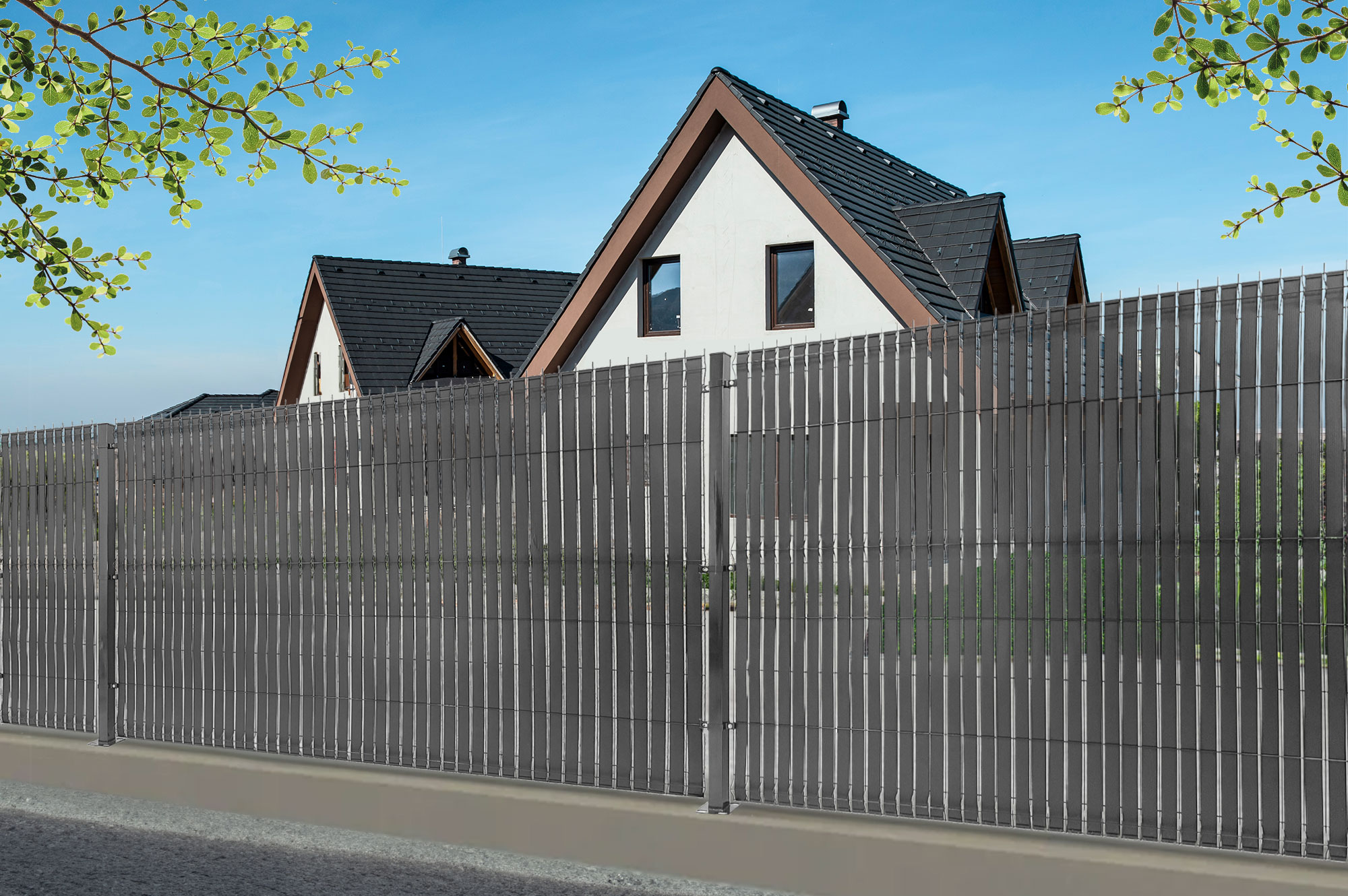
Key Takeaways for International Fence Importers
-
Verify the supplier's manufacturing facilities and legal identity before making payments.
-
Confirm steel-core wire diameters, mesh openings, panel dimensions, and coating specifications.
-
Approve matching posts, clamps, fasteners, and gates as part of the complete fence system.
-
Request representative samples and agree on measurable inspection requirements.
-
Confirm packaging dimensions, shipment weight, and container loading arrangements.
-
Check customs classification, applicable duties, and destination-market requirements.
-
Compare landed costs rather than factory prices alone.
1. What Should Importers Check Before Buying Fence Panels from China?
A structured purchasing checklist helps importers identify technical and commercial risks before production begins.
| Purchasing Requirement | What Importers Should Verify | Risk if Overlooked |
|---|---|---|
| Manufacturer identity | Registration, factory location and contracting entity | Supplier or payment disputes |
| Product specifications | Wire diameter, mesh, panel dimensions | Nonconforming products |
| Manufacturing capability | Welding, forming, post production and coatings | Inconsistent production |
| Surface treatment | Zinc protection, coating material and color | Premature corrosion |
| Supporting components | Posts, clamps, bolts and gates | Installation incompatibility |
| Quality inspection | Sampling, testing and acceptance criteria | Undetected defects |
| Customization | Drawings, samples and production feasibility | Incorrect product configuration |
| Production schedule | Material preparation and shipment milestones | Delivery delays |
| Export packaging | Pallets, protection and package identification | Transport damage |
| Container loading | Package sizes, cargo weight and loading plan | Unexpected freight costs |
| Import requirements | Classification, duties and product compliance | Customs clearance delays |
| Commercial terms | Incoterms, payments and claim procedures | Unplanned costs and disputes |
Each requirement should be incorporated into the purchase agreement or supporting technical documentation.
Verbal promises and general product descriptions are not substitutes for approved specifications.
2. How Can Importers Identify a Reliable Fence Panel Manufacturer in China?
China has an established wire mesh manufacturing industry, including specialized production facilities in Anping County, Hebei Province.
However, manufacturers, trading companies, and export intermediaries may offer apparently similar fencing products.
When buying fence panels from China, importers should establish who manufactures the products, who controls production quality, and which legal entity is responsible for the contract.
Manufacturer Verification Checklist
| Verification Item | Recommended Evidence |
|---|---|
| Legal identity | Business registration and company details |
| Production facilities | Factory audit or live production demonstration |
| Welding equipment | Machinery information and representative production |
| Post manufacturing | Equipment, samples and technical drawings |
| Surface treatment | Process descriptions and facility information |
| Quality management | Valid certificates and inspection records |
| Export experience | Relevant shipment and project documentation |
| Payment security | Independently verified company bank details |
A supplier may subcontract certain manufacturing processes. This is not necessarily a problem, provided the arrangements are disclosed and the supplier remains responsible for product conformity.
GIANT MESH Manufacturing Background
GIANT MESH, operating as Giant Fence under Hebei Giant Metal Technology Co., Ltd., is located in Anping County, Hebei Province, China.
The company specializes in wire mesh fencing, gabion products, chain-link fencing, and coordinated gate systems.
Its published manufacturing history identifies several relevant developments:
| Year | Manufacturing Development |
|---|---|
| 2014 | Establishment of Hebei Giant Metal Technology Co., Ltd. |
| 2016 | Introduction of a peach-shaped fence post production line |
| 2017 | Introduction of Swiss Schlatter welding equipment |
| 2022 | Development of the BD post and addition of a production line |
| 2024 | Addition of a powder-coating production line |
These investments provide useful manufacturing background for importers evaluating fencing suppliers.
However, buyers should still verify the available production processes and quality requirements for their individual orders.
Learn more about the company's fence manufacturing facilities and development history.
3. What Fence Panel Specifications Should Importers Confirm?
Technical specifications are essential when comparing products from different suppliers.
Two fence panels may have similar appearances but differ considerably in steel consumption, protective coatings, dimensions, and installation compatibility.
3D vs. 2D Welded Mesh Fence Specifications
| Parameter | 3D Welded Mesh Fence | 2D Double Wire Fence |
|---|---|---|
| Panel structure | Welded mesh with V-shaped bends | Flat mesh with double horizontal wires |
| Published wire diameter | 4–6 mm | 6/5/6 or 8/6/8 mm |
| Published panel height | 0.8–2.4 m | 0.83–2.4 m |
| Published panel width | 2.0 / 2.2 / 2.5 m | Confirm selected model |
| Mesh opening | 50 × 100 / 50 × 200 mm | 50 × 100 / 50 × 200 mm |
| Surface treatment | Powder coating, PE coating, hot-dip galvanizing | Powder coating or hot-dip galvanizing options |
| Supporting posts | Compatible model-specific posts | Compatible model-specific posts |
| Typical applications | Residential communities, gardens and general boundaries | Commercial sites, shared facilities and parking boundaries |
These specifications reflect product-family information published by GIANT MESH. Available combinations, measurement conventions, tolerances, and individual model dimensions must be confirmed before purchasing.
Importers can review the GIANT MESH 3D and 2D fencing systems as a starting point for product selection.
Steel-Core Diameter vs. Finished Wire Diameter
Importers should clarify whether the quoted wire diameter refers to the steel core or the finished coated wire.
A coating can increase the measured outside diameter without increasing the amount of structural steel.
For example, a nominal 5 mm finished wire and a nominal 5 mm steel-core wire are not necessarily equivalent products.
The purchase specification should clearly define the measurement method and applicable tolerances.
Mesh Opening and Panel Dimensions
Confirm whether the mesh opening is measured as the clear space between wires or the center-to-center spacing.
Also verify panel height, overall width, forming geometry, edge details, and installed post-center spacing.
These measurements affect product compatibility, material quantities, and installation costs.
4. Which Fence Panels Should Importers Purchase for Their Local Market?
The right product selection depends on customer demand and the intended application.
| Target Market | Fence System to Evaluate | Main Purchasing Priority |
|---|---|---|
| Residential developers | 3D welded mesh fence | Appearance and coordinated perimeter systems |
| Fence distributors | Standardized 3D and 2D panels | Repeat-order compatibility |
| Commercial contractors | 2D double-wire fence | Panel configuration and installation requirements |
| Villa and garden suppliers | 3D privacy fencing | Appearance and visual screening |
| Construction rental companies | Temporary fencing | Modularity and accessory availability |
| Security project contractors | Specialized security mesh fencing | Project-specific security specifications |
Importers supplying distributors should consider standardizing their most frequently ordered panel dimensions, post systems, coatings, and connection accessories.
A wider product range may attract more customers, but excessive variation can increase inventory complexity and replacement-part requirements.
5. How Should Importers Evaluate Welding and Corrosion Protection?
Manufacturing quality is particularly important when buying fence panels from China in large quantities.
The finished panel should match the approved drawing and meet the agreed inspection requirements.
Manufacturing and Quality-Control Process
| Manufacturing Stage | What Importers Should Verify |
|---|---|
| Incoming steel inspection | Material specifications and wire dimensions |
| Wire mesh welding | Welded intersections and mesh consistency |
| Panel forming | V-bend geometry and finished dimensions |
| Post manufacturing | Profile, wall thickness and fixing locations |
| Galvanizing | Coating process, coverage and agreed requirements |
| Powder coating | Pretreatment, appearance and adhesion |
| Trial assembly | Panel, post and clamp compatibility |
| Final inspection | Product conformity and shipment quantities |
| Export packaging | Protection against deformation and abrasion |
These are recommended order-specific inspection controls. The exact testing and documentation included in the order should be agreed with the manufacturer.
Galvanized vs. Powder-Coated Fence Panels
Importers should distinguish between galvanized-only steel, powder-coated steel, and compatible galvanized-and-powder-coated systems.
A quotation should identify the actual coating sequence, including whether galvanizing takes place before or after welding.
For coastal or humid markets, the protective system must be selected for the actual environmental exposure.
Do not accept general claims such as rustproof or maintenance-free without supporting technical evidence.
6. What Quality Documents Should Importers Request Before Shipment?
A factory certificate alone cannot establish the conformity of every product in a bulk order.
Buyers should request documentation connected to the selected product model, manufacturing batch, and agreed acceptance criteria.
Quality Documentation Checklist
| Document | Purpose |
|---|---|
| Approved technical drawings | Establish product dimensions and configurations |
| Material documentation | Identify specified steel materials |
| Dimensional inspection report | Verify panel and post measurements |
| Welding inspection records | Demonstrate agreed weld-quality checks |
| Coating inspection report | Verify relevant protective coating requirements |
| Representative sample approval | Establish the agreed product reference |
| Final inspection report | Confirm batch acceptance |
| Packing list | Identify products, accessories and quantities |
BS EN 10223-7:2012 is a relevant technical reference for applicable welded steel wire fencing panels, including product characteristics, coatings, properties, and tolerances.
The appropriate standard and its acceptance requirements should be specified in the purchase contract.
GIANT MESH displays management-system and product-related documentation in its technical resource center.
Importers should request the original relevant documents and verify their validity, scope, and applicability to the ordered products.
7. Should Importers Request Samples Before Placing a Bulk Order?
Yes. A representative sample can help identify specification differences before they are repeated across hundreds or thousands of products.
For a welded mesh fencing system, sample approval should ideally include the following:
-
The selected fence panel or an appropriate representative sample.
-
The matching post profile.
-
Clamps, bolts, brackets, and connection accessories.
-
The specified coating and color.
-
Relevant gate connections where applicable.
A trial assembly can reveal compatibility problems that may not be apparent when examining individual components.
GIANT MESH publishes information about standard sample support and customized samples for project enquiries.
Importers should confirm sample charges, transportation costs, availability, approval procedures, and any differences between the sample and planned mass production.
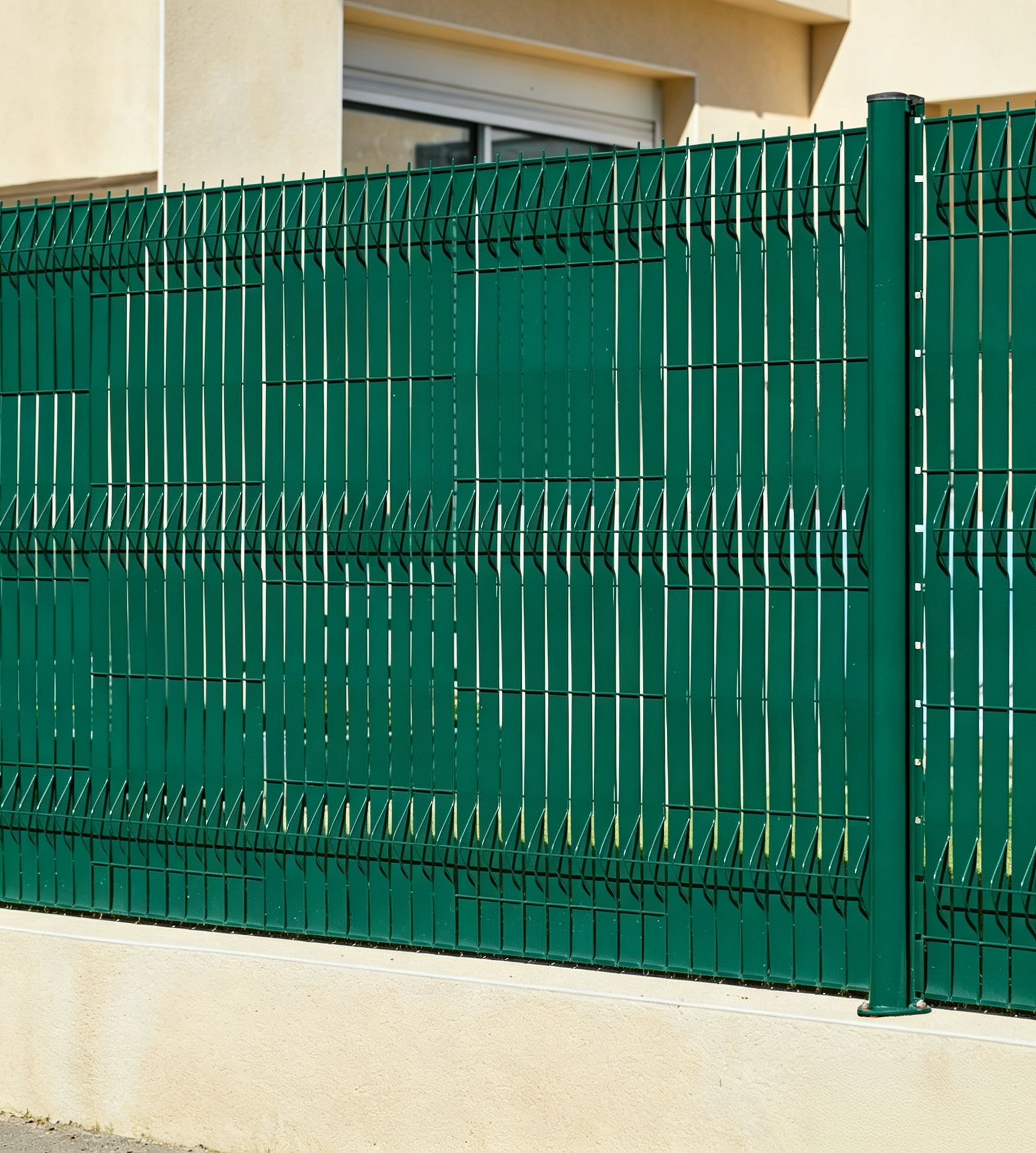
8. How Should Fence Panels Be Packed and Loaded for Export?
Export packaging is an essential consideration when buying fence panels from China.
Large steel panels may become deformed, scratched, or damaged if they are inadequately supported during transportation.
Export Packaging Requirements
| Component | Main Transport Risk | Recommended Protection |
|---|---|---|
| Welded mesh panels | Bending and coating abrasion | Suitable supports and separators |
| Steel posts | Scratches and damaged ends | Secure bundling and protective materials |
| Gate frames | Distortion and edge damage | Stable support and corner protection |
| Clamps and bolts | Missing or mixed accessories | Separate labeled packages |
| Custom panels | Incorrect identification | Product codes and drawing references |
| Coated components | Surface damage | Compatible protective materials |
What Should a Container Loading Plan Include?
Request package dimensions, estimated gross weight, loading quantities, container type, cargo-securing arrangements, and unloading requirements.
A loading plan must consider both cargo volume and permissible weight limits.
The container's nominal capacity does not establish how many fence panels can be safely transported.
Where regulated solid-wood pallets, crates, or dunnage are used, buyers should confirm destination-country phytosanitary requirements, including ISPM 15 where applicable.
9. Real GIANT MESH Export Experience: 550 Temporary Fence Sets for the United States
GIANT MESH has published a project involving the export of 550 sets of chain-link temporary fencing and matching gate equipment to an American customer.
The manufacturer describes a modular fence system with removable bases, connecting clips, and compatible gates.
Manufacturer-Published Project Details
| Project Item | Reported Information |
|---|---|
| Destination | United States |
| Product | Chain-link temporary fencing |
| Order quantity | 550 sets |
| Supporting components | Removable bases and connecting clips |
| Access equipment | Matching gates |
| Shipping arrangement | Three 40HQ containers |
| Reported production period | 25 days |
| Installation support | English operating guidance and installation videos |
The report states that the shipment was completed within the agreed delivery period.
This case illustrates how fencing, gates, accessories, packaging, and shipment arrangements can be coordinated within one export order.
It concerns temporary chain-link fencing rather than rigid 3D or 2D welded mesh panels. Consequently, its loading quantity and production schedule should not be applied to other fencing products.
Explore additional GIANT MESH international fencing project cases.
10. Which Shipping Terms and Import Documents Should Buyers Confirm?
International commercial terms determine important delivery responsibilities, but they do not replace a complete purchase agreement.
Common Incoterms 2020 Options
| Trade Term | Main Seller Responsibility | Main Buyer Consideration |
|---|---|---|
| EXW | Makes goods available at the named location | Collection, export formalities and transportation |
| FCA | Delivers export-cleared goods to the designated carrier or point | Main carriage and import arrangements |
| FOB | Delivers goods on board the vessel at the named shipment port | Ocean freight and subsequent risks |
| CIF | Arranges ocean freight and required insurance to the named destination port | Risk transfers when goods are on board at shipment |
| DAP | Delivers goods to the named destination, ready for unloading | Import clearance, duties and unloading |
FCA is often worth considering for containerized shipments handed to a carrier or container terminal before vessel loading.
The agreed Incoterm should include the named place or port and the applicable rules edition.
Essential Import and Shipping Documents
Depending on the destination market and transaction, importers may require:
| Document | Main Purpose |
|---|---|
| Commercial invoice | Customs valuation and transaction details |
| Packing list | Package contents, quantities and weight |
| Bill of lading or transport document | Shipment and transport information |
| Certificate of origin | Origin evidence where required |
| Product inspection report | Agreed quality acceptance evidence |
| Insurance certificate | Evidence of cargo insurance where applicable |
| Product conformity documentation | Destination-specific compliance |
| Wood packaging documentation | Applicable phytosanitary requirements |
What About Customs Duties and Anti-Dumping Measures?
Import requirements differ between countries and can change over time.
Before buying fence panels from China, importers should confirm the correct customs classification and applicable duties, taxes, trade-remedy measures, and import restrictions.
A supplier's proposed HS code should not be accepted without verification.
Consult the destination country's customs authority or a qualified customs broker to determine whether the specific steel fencing product is subject to additional requirements.
11. Practical Procurement Scenario: Calculating the Landed Cost of 1,000 Fence Sets
Consider a hypothetical distributor purchasing 1,000 welded mesh fence sets for its local building materials market.
The distributor receives two quotations for technically equivalent panels, posts, and accessories under the same FCA delivery point.
Landed Cost Comparison
| Cost Component | Supplier A | Supplier B |
|---|---|---|
| Complete fence set price | $28.00 | $29.00 |
| Product cost for 1,000 sets | $28,000 | $29,000 |
| International freight and insurance | $5,000 | $3,600 |
| Destination handling and inland delivery | $1,500 | $1,400 |
| Inspection costs | $500 | $500 |
| Subtotal before import duties and taxes | $35,000 | $34,500 |
| Subtotal per fence set | $35.00 | $34.50 |
Supplier A initially appears cheaper by $1 per set.
However, Supplier B has a $500 lower total cost before import duties and taxes in this example, because of the assumed transportation and handling differences.
These figures are illustrative assumptions, not actual GIANT MESH prices, freight rates, or customer quotations.
How Should Importers Calculate the Complete Landed Cost?
Landed Cost = Product Cost + Transport + Insurance + Customs Duties + Non-Recoverable Import Taxes + Clearance + Destination Handling + Inland Delivery + Other Applicable Costs
Costs already included in the agreed supplier quotation should not be counted twice.
Recoverable import taxes should be considered separately when assessing working capital and cash flow.
When buying fence panels from China, importers should use the actual freight quotation, customs assessment, and commercial terms to calculate their expected landed cost before approving the purchase order.
12. What Should Be Included in a Fence Panel RFQ?
A complete request for quotation helps importers receive more accurate and comparable offers.
Bulk Fence Panel Purchasing Checklist
| RFQ Requirement | Information to Provide |
|---|---|
| Destination market | Country, port or delivery location |
| Product type | 3D, 2D, temporary or other fencing system |
| Panel dimensions | Height, width and geometry |
| Wire specification | Steel-core diameter and tolerances |
| Mesh opening | Dimensions and measurement convention |
| Post system | Profile, dimensions and installation arrangement |
| Accessories | Clamps, fasteners, caps and brackets |
| Gates | Type, opening width and included hardware |
| Coating | Galvanizing, powder coating or other approved system |
| Order quantity | Required panels, posts and accessories |
| Customization | Drawings, colors and special requirements |
| Inspection | Applicable standards and acceptance criteria |
| Packaging | Protection, labels and loading requirements |
| Commercial terms | Incoterm, payment and delivery schedule |
For wholesale and repeat orders, importers should also confirm product-code consistency, replacement-part availability, and the approval procedure for manufacturing changes.
A clear RFQ can reduce repeated clarification, prevent misunderstandings, and improve quotation accuracy.
Frequently Asked Questions
Q1: Is buying fence panels from China a good option for international wholesalers?
China can be a suitable sourcing market for wholesalers requiring standardized or customized metal fencing products in bulk. However, purchasing value depends on manufacturing capability, product conformity, freight, customs costs, and delivery reliability. Importers should compare complete technical specifications and landed costs rather than assuming that a lower factory price guarantees better profitability.
Q2: How can importers verify fence panel quality before shipment?
Importers should approve technical drawings, request representative samples, and establish measurable inspection requirements. Relevant checks include steel-wire dimensions, mesh geometry, welded intersections, panel dimensions, coating quality, post compatibility, and packaging. Independent third-party inspection may provide additional verification when agreed as part of the purchasing contract, particularly for large or customized orders.
Q3: What is the minimum order quantity for importing fence panels?
The minimum order quantity depends on the selected fence system, dimensions, coating, customization requirements, and available stock. GIANT MESH identifies container-based purchasing and mixed-model orders as options for distributors. Importers should confirm the actual minimum quantity, packaging configuration, sample requirements, and available product combinations before approving a commercial order.
Q4: Can Chinese fence manufacturers supply panels, posts, and gates together?
Yes, manufacturers with suitable production capabilities may provide coordinated fence panels, supporting posts, gates, and connection accessories. Buyers should approve complete assembly drawings and a detailed bill of materials before production. The quotation should clearly identify included hardware, coatings, installation documentation, and any separately supplied components to prevent compatibility problems or unexpected purchasing costs.
Q5: How can importers reduce shipping costs when purchasing fence panels?
Importers should request a suitable packaging and loading plan based on actual product dimensions, package sizes, cargo weight, and container restrictions. Standardizing frequently ordered models may simplify handling and inventory management. Compare freight quotations and delivery terms while ensuring that reduced packaging costs do not compromise product protection, shipment safety, or unloading efficiency.
Q6: What documents are required to import fence panels from China?
Common documents include the commercial invoice, packing list, and transport document. Certificates of origin, insurance documents, inspection reports, and product conformity evidence may also be required depending on the transaction and destination market. Importers should verify customs classification, trade restrictions, duties, and documentation requirements with their customs broker before the goods are dispatched.
Conclusion
Buying fence panels from China can provide international importers with access to different fencing systems, manufacturing configurations, and bulk supply options.
However, successful procurement depends on much more than finding a competitive unit price.
Importers should evaluate manufacturing capability, confirm technical specifications, approve matching components, establish quality inspection requirements, and review export packaging and container loading before production begins.
Customs requirements, trade terms, transportation costs, and complete landed costs should also be assessed before committing to a large order.
GIANT MESH, operated by Hebei Giant Metal Technology Co., Ltd., supplies welded mesh fencing systems, matching gates, posts, and other metal fencing products for distributors and project buyers.
With published capabilities covering mesh welding, panel forming, post manufacturing, surface treatment, customized production, and international delivery coordination, GIANT MESH is a manufacturer that importers can evaluate for their fencing requirements.
Looking for a fence panel manufacturer in China for your next wholesale order or engineering project?
Contact GIANT MESH with your required fence specifications, order quantities, destination market, and packaging requirements to request technical information and an itemized project quotation.