


The right welded mesh fence for residential developments should balance perimeter protection, visibility, privacy, architectural appearance, corrosion resistance, and installation costs. A 3D welded mesh fence is often suitable for general community boundaries, while 2D double-wire fencing is worth evaluating for areas requiring a heavier, flatter panel construction. Privacy fencing and matching pedestrian or vehicle gates can be incorporated according to the function of each residential zone.
For property developers, engineering contractors, and international fence distributors, the best solution is not necessarily the strongest or most expensive panel. It is a coordinated fencing system that meets the project's technical, architectural, and commercial requirements.
Key Takeaways for Residential Fence Buyers
-
3D welded mesh fencing: A practical starting point for general residential boundaries and landscaped areas.
-
2D double-wire fencing: Suitable for evaluation where a heavier flat-panel configuration is preferred.
-
Privacy fencing: Useful for private gardens and areas requiring visual screening.
-
Matching gates: Pedestrian and vehicle entrances should be planned together with the perimeter fence.
-
Corrosion protection: Select surface treatments according to the actual installation environment.
-
Bulk procurement: Compare complete panel, post, gate, and accessory systems rather than individual panel prices.
1. What Should a Welded Mesh Fence for Residential Developments Achieve?
A successful residential fencing system should meet several requirements simultaneously.
Unlike a purely industrial perimeter, a housing development must consider how fencing interacts with residents, visitors, landscaping, vehicles, and architectural design.
Essential Residential Fencing Requirements
| Project Requirement | Selection Consideration |
|---|---|
| Perimeter protection | Suitable panel height, mesh structure and connections |
| Architectural appearance | Consistent color, panel profile and post design |
| Visibility | Open mesh where clear sightlines are required |
| Privacy | Compatible screening in designated areas |
| Access management | Coordinated pedestrian and vehicle gates |
| Outdoor durability | Exposure-specific corrosion protection |
| Installation efficiency | Compatible posts, clamps and panel dimensions |
| Maintenance | Accessible components and replacement availability |
| Budget control | Complete supply and installed costs |
Residential developers should establish these requirements before selecting product models.
A single fence configuration may not be appropriate for every area of a large housing development.
2. Which Welded Mesh Fence Type Is Best for Residential Projects?
The most relevant product options include 3D welded mesh fencing, 2D double-wire fencing, and compatible privacy fencing systems.
3D Welded Mesh Fence
A 3D welded mesh fence uses formed V-shaped bends to reinforce its panel geometry.
Its profiled structure creates a modern appearance while maintaining visibility through the fence.
Typical applications include:
-
Residential community boundaries.
-
Villa and townhouse developments.
-
Landscaped gardens.
-
Shared residential pathways.
-
General perimeter protection.
For projects prioritizing architectural consistency and practical material use, 3D fencing is often a suitable starting point.
2D Double Wire Fence
A 2D double-wire fence uses paired horizontal wires combined with vertical wires to create a flat welded panel.
Common configurations include 656 and 868 double-wire fencing.
These configurations may be evaluated for residential shared facilities, parking boundaries, and other areas requiring a heavier panel structure.
However, actual rigidity and security depend on the complete fence assembly, including wire dimensions, posts, fixings, and foundations.
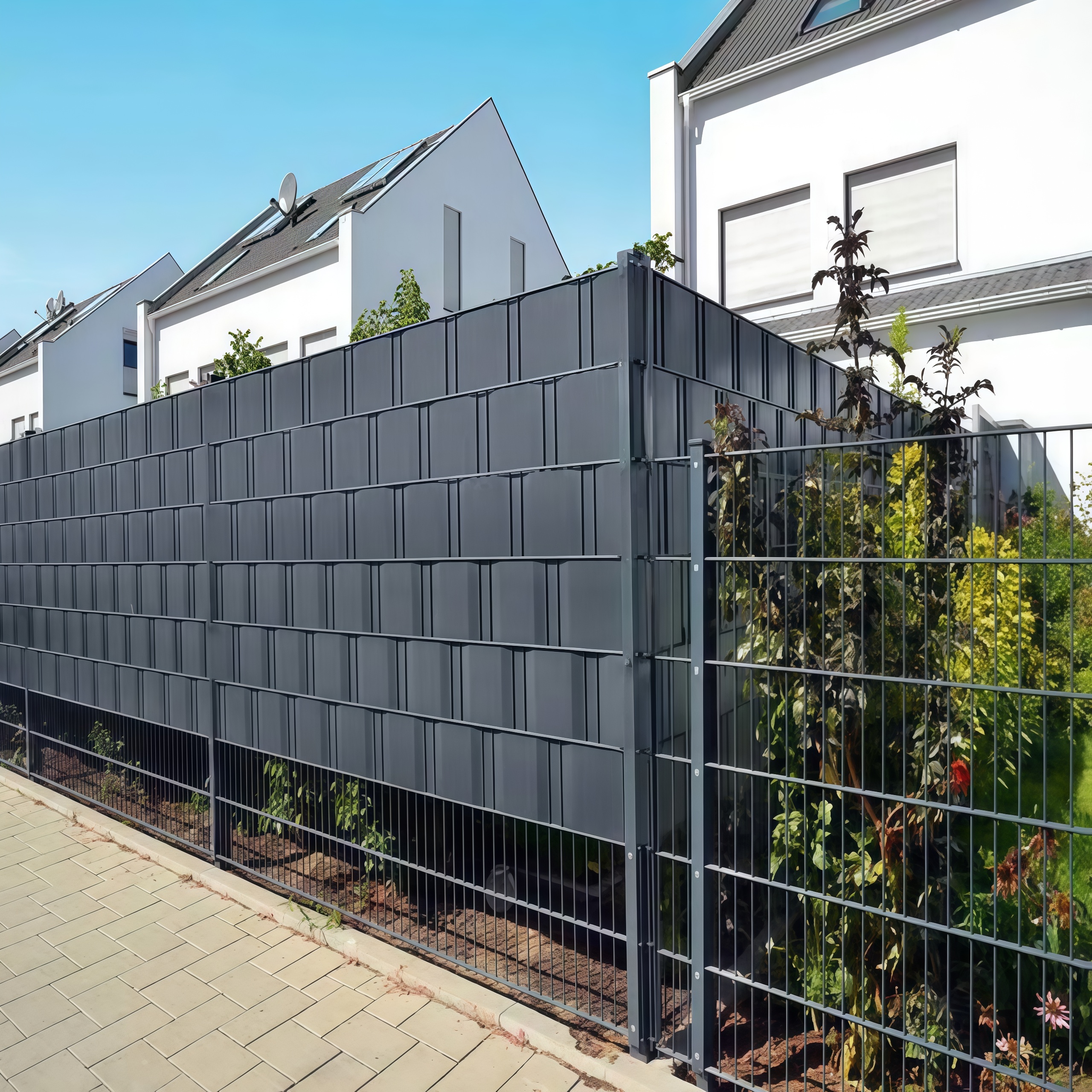
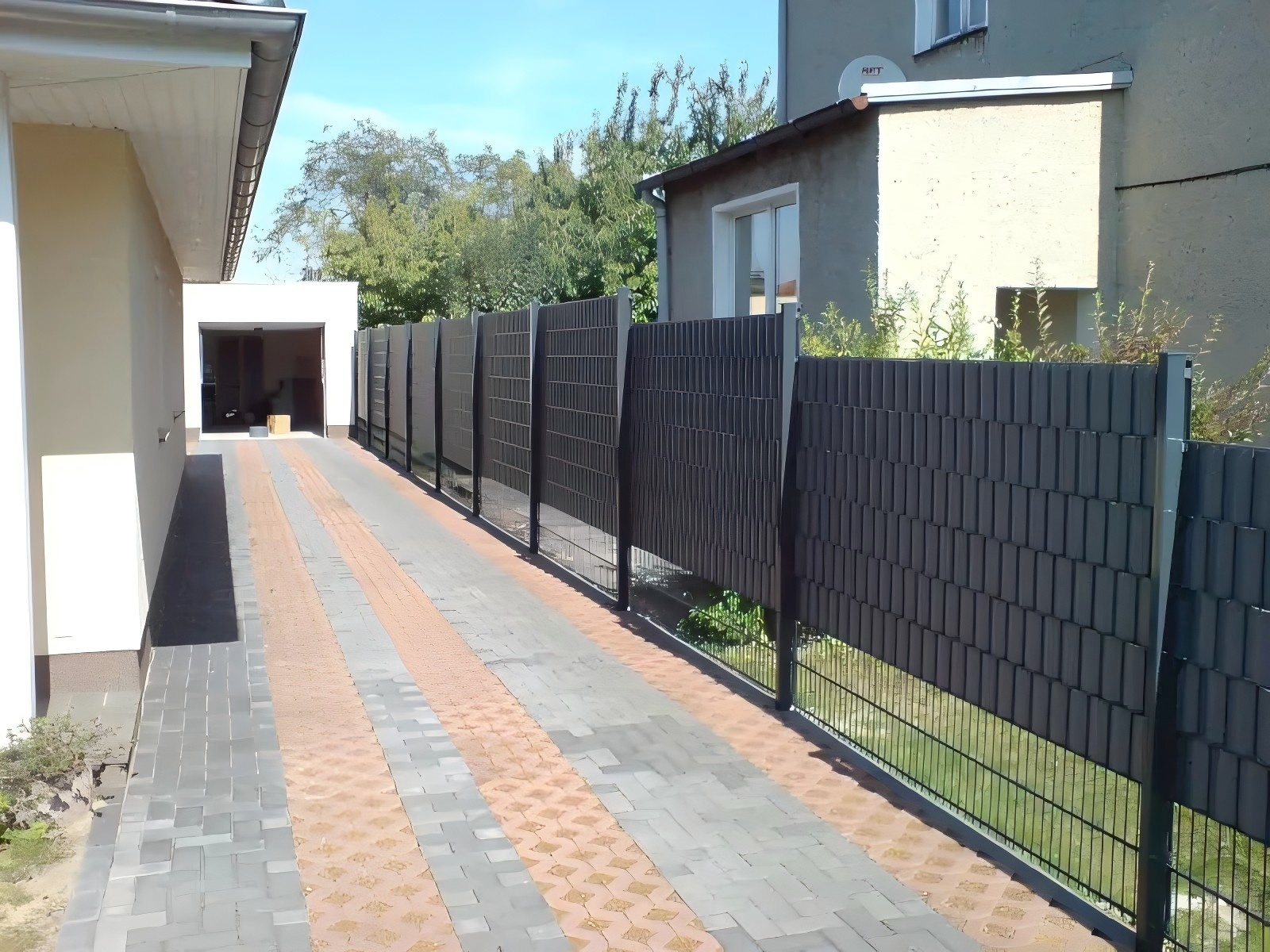
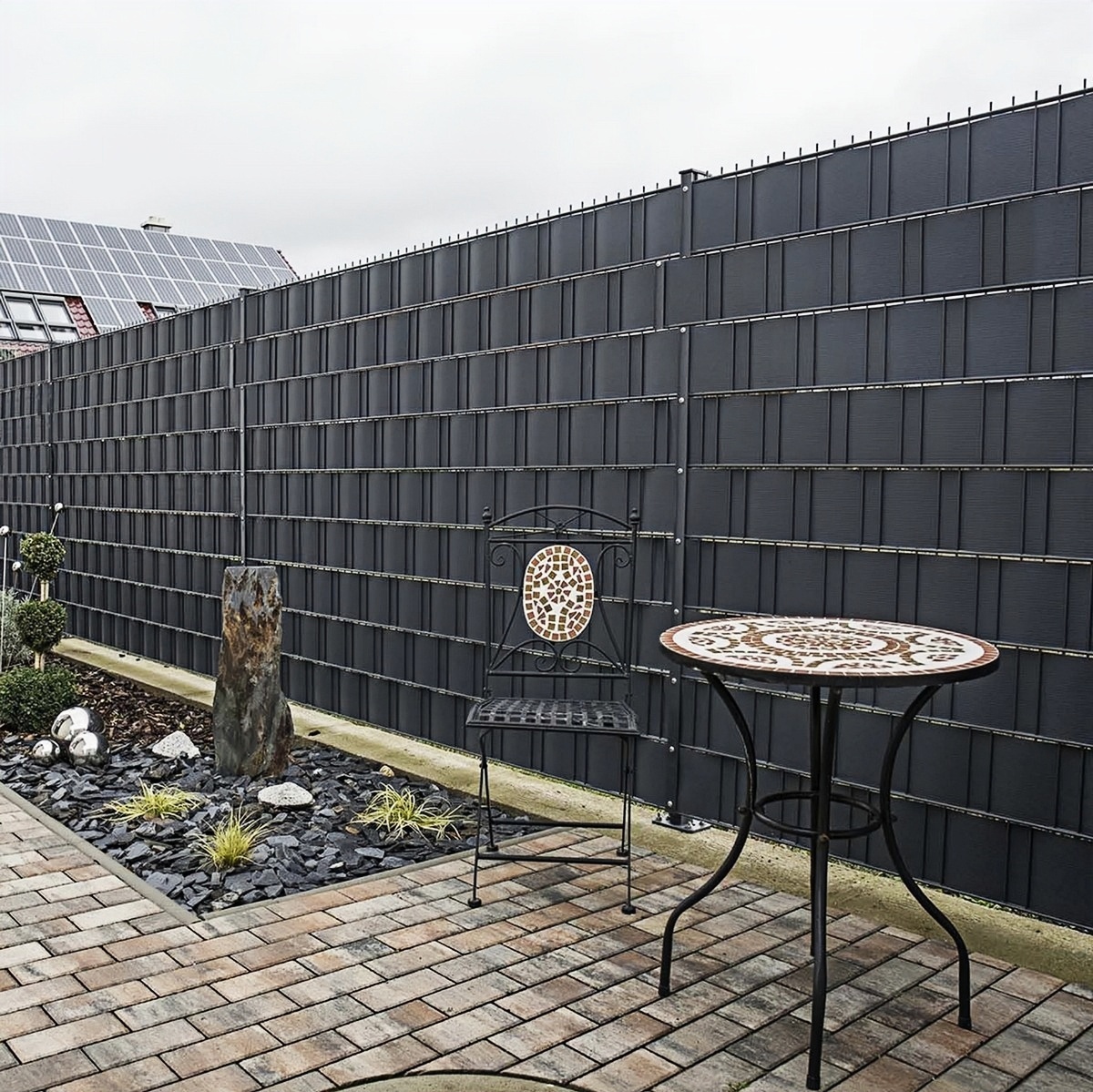
3D Privacy Fence
A compatible privacy fencing system combines welded mesh panels with screening materials to reduce visibility.
It may be appropriate for private gardens, townhouse divisions, and selected residential boundaries.
Privacy screening increases the effective wind-exposed area of a fence. Therefore, the designer should verify the supporting posts, connections, and foundations before specifying screening components.
Technical Specification Comparison
| Parameter | 3D Welded Mesh Fence | 2D Double Wire Fence |
|---|---|---|
| Panel structure | Formed V-bend welded mesh | Flat double-horizontal-wire mesh |
| Wire configuration | Model-dependent | 6/5/6 or 8/6/8 mm |
| Published panel height | 0.8–2.4 m | 0.83–2.4 m |
| Published 3D panel widths | 2.0 / 2.2 / 2.5 m | Confirm selected model |
| Published mesh options | 50 × 100 / 50 × 200 mm | 50 × 100 / 50 × 200 mm |
| Surface treatment options | Galvanizing, powder coating and PE coating | Galvanizing and powder coating |
| Appearance | Profiled and open | Flat and uniform |
| Supporting components | Compatible posts and fixings | Compatible posts and fixings |
| Typical residential application | General boundaries and gardens | Shared facilities and selected perimeter zones |
The dimensional ranges and coating options are based on GIANT MESH's published product-family information. They are not universal specifications for every model. Buyers should confirm the available combinations, wire dimensions, tolerances, and measurement conventions before ordering.
Explore the GIANT MESH fencing systems to review residential perimeter solutions and available product families.
3. How Should Fence Systems Be Selected for Different Residential Zones?
When specifying a welded mesh fence for residential developments, divide the property into functional areas.
This helps developers avoid unnecessary material costs while addressing different requirements for privacy, visibility, and access.
Residential Fence Selection Matrix
| Residential Zone | Recommended System to Evaluate | Main Selection Priority |
|---|---|---|
| Main community boundary | 3D welded mesh fence | Appearance and perimeter definition |
| Villa gardens | 3D mesh or compatible privacy fence | Privacy and landscape integration |
| Shared recreation areas | 3D or 2D double-wire fence | Appropriate enclosure and user safety |
| Residential parking boundary | 2D double-wire fence | Panel rigidity and access coordination |
| Main vehicle entrance | Matching fence and vehicle gate | Controlled access and clearance |
| Pedestrian pathways | Welded mesh with single gates | Visibility and pedestrian circulation |
| Premium landscape boundary | Mesh fencing with compatible gabion sections | Architectural appearance |
Why Not Use the Same Fence Everywhere?
Specifying heavier panels throughout a residential development may increase material and transportation costs without delivering a justified benefit in every location.
Conversely, selecting a decorative fence for every boundary may fail to address specific privacy or operational requirements.
A zone-based configuration allows buyers to compare complete solutions according to actual project needs.
Special applications such as swimming pool enclosures, playground boundaries, and vehicle-impact protection require separate assessment against applicable safety and design requirements.
4. What Fence Height, Mesh Opening and Wire Configuration Should Buyers Choose?
These technical parameters influence appearance, material consumption, visibility, installation compatibility, and perimeter performance.
Fence Panel Height
The appropriate installed height depends on the boundary function, surrounding architecture, site conditions, and applicable local requirements.
Buyers should distinguish between the panel's physical height and the completed installation height.
Ground clearance, post arrangements, slopes, and retaining walls may affect the final configuration.
Mesh Opening
Mesh openings influence visibility and the physical characteristics of the panel.
Common options include 50 × 100 mm and 50 × 200 mm, but buyers must confirm which opening is available for the selected product.
The specification should also define whether the mesh dimensions refer to clear openings or center-to-center wire spacing.
Wire Diameter and Double-Wire Configuration
For a 2D double-wire panel:
-
656: Two nominal 6 mm horizontal wires and one nominal 5 mm vertical wire.
-
868: Two nominal 8 mm horizontal wires and one nominal 6 mm vertical wire.
A heavier wire configuration typically increases material consumption, but it does not independently establish a particular security or structural rating.
The correct specification should reflect the actual requirements of the residential development.
5. How Should Fence Posts, Gates and Installation Conditions Be Coordinated?
A welded mesh panel cannot function as a complete perimeter system without compatible supporting components.
Fence Post Selection
The buyer should confirm:
| Post Parameter | Required Verification |
|---|---|
| Post profile | Square, rectangular, round or other approved design |
| Post dimensions | Section, wall thickness and length |
| Connection method | Compatible clamps, brackets and fasteners |
| Installed spacing | Actual center-to-center distance |
| Foundation arrangement | Embedded or base-plated installation |
| Special posts | Corner, terminal and gate support requirements |
| Surface treatment | Compatibility with panel and gate finishes |
Foundation dimensions and anchorage should be determined by the responsible designer according to ground conditions and expected loads.
Pedestrian and Vehicle Gates
Residential developments commonly need separate pedestrian and vehicle access.
Double swing gates are worth evaluating where sufficient opening clearance exists. Sliding gates may be more appropriate when swing space is limited but adequate lateral travel space is available.
Powered vehicle gates require project-specific safety assessment, suitable operating equipment, protective devices, and commissioning.
Sloping Ground and Corner Connections
Large developments may include changes in elevation, retaining walls, and irregular boundary shapes.
Before production, identify sections requiring stepped installation, different post lengths, custom panels, or special connections.
Do not assume that standard rigid mesh panels can be modified on-site without affecting their geometry or protective coatings.
6. Which Surface Treatment Is Suitable for Residential Fencing?
For buyers sourcing a welded mesh fence for residential developments, corrosion protection should be evaluated alongside architectural appearance.
Surface-Treatment Comparison
| Surface Treatment | Main Function | Procurement Consideration |
|---|---|---|
| Galvanizing | Zinc-based corrosion protection | Confirm process and coating requirements |
| Powder coating | Colored protective surface | Confirm substrate, pretreatment and outdoor suitability |
| Galvanizing + powder coating | Combined protective layers and color | Verify compatibility and adhesion |
| PE coating | Protective polymer finish | Confirm substrate and coating specifications |
Environmental Selection Guide
| Installation Environment | Main Concern | Recommended Evaluation |
|---|---|---|
| Inland housing development | General outdoor weathering | Suitable galvanized or coated system |
| Humid residential community | Repeated moisture exposure | Enhanced corrosion-protection requirements |
| Coastal development | Airborne salt and moisture | Exposure-specific protective system |
| Landscaped garden | Irrigation and ground moisture | Appropriate coating and ground clearance |
| Premium architectural project | Color consistency | Approved finish samples and matching components |
Powder coating does not automatically provide the same corrosion resistance as every galvanized system.
Similarly, a combined galvanized-and-coated finish should not be specified without confirming the actual manufacturing process.
Buyers should request measurable coating requirements and relevant inspection methods instead of relying on generic weatherproof or anti-rust descriptions.
7. Practical Procurement Scenario: Selecting Fencing for a 600-Meter Housing Development
Consider a hypothetical residential development requiring 600 meters of net fence length, excluding its gate openings.
The developer needs general perimeter protection, a heavier fencing configuration near shared facilities, and greater privacy around selected townhouse gardens.
Step 1: Divide the Project Into Three Functional Zones
| Zone | Net Fence Length | Preliminary Product Selection |
|---|---|---|
| Community perimeter | 360 m | 3D welded mesh fence |
| Shared facilities and parking boundary | 140 m | 2D double-wire fence |
| Townhouse garden boundaries | 100 m | Compatible 3D privacy fence |
| Total | 600 m | Mixed residential fencing system |
Step 2: Estimate Preliminary Panel Quantities
Assume the selected systems can each accommodate an approved installed module of 2.5 m.
| Zone | Calculation | Preliminary Panel Positions |
|---|---|---|
| General perimeter | 360 ÷ 2.5 | 144 |
| Shared facilities | 140 ÷ 2.5 | 56 |
| Privacy boundaries | 100 ÷ 2.5 | 40 |
| Total | 240 |
These quantities are provisional. Actual installation runs, corners, slopes, transitions, and connection dimensions may change the final order.
Step 3: Compare Three Procurement Strategies
| Procurement Strategy | Advantage | Potential Limitation |
|---|---|---|
| Use 3D fencing throughout | Simplified sourcing and inventory | May require additional privacy or special configurations |
| Use 2D fencing throughout | Consistent flat-panel structure | Potentially higher material use |
| Use a mixed fencing system | Matches products to different functions | Requires more detailed component coordination |
The goal of selecting a welded mesh fence for residential developments is to achieve the required project performance without unnecessary specification or avoidable installation complexity.
Step 4: Evaluate the Complete Project Cost
A useful purchasing framework is:
Total Installed Cost = Panels + Posts + Gates + Fixings + Freight + Foundations + Installation + Inspection
A lower panel price does not necessarily produce a lower installed cost.
The developer should request comparable quotations based on the same layout, coating requirements, gate schedule, delivery conditions, and acceptance criteria.
This scenario is an illustrative procurement example, not an actual GIANT MESH customer order or approved engineering design.
8. What Does GIANT MESH Manufacturing Experience Mean for Residential Projects?
GIANT MESH, operating as Giant Fence under Hebei Giant Metal Technology Co., Ltd., is based in Anping County, Hebei Province, China.
The company's published development history identifies several manufacturing milestones relevant to residential fencing:
| Year | Manufacturer-Published Development |
|---|---|
| 2013 | Development of CM post production equipment with a French partner |
| 2016 | Introduction of peach-shaped post production |
| 2017 | Introduction of Swiss Schlatter welding equipment |
| 2022 | Development of the BD post and addition of a production line |
| 2024 | Addition of a powder-coating production line |
These capabilities provide relevant background for manufacturing coordinated fencing components.
However, the quality and availability of a particular configuration should be confirmed through technical drawings, production information, and order-specific inspection evidence.
Manufacturing Process
The relevant production stages may include steel-wire preparation, mesh welding, panel forming, post fabrication, surface treatment, trial assembly, final inspection, and export packaging.
Each stage influences the consistency and compatibility of the completed fence system.
Manufacturing Quality-Control Checklist
| Manufacturing Stage | What Buyers Should Verify |
|---|---|
| Incoming materials | Steel-wire specifications and dimensions |
| Mesh welding | Weld quality and opening geometry |
| Panel forming | Dimensions and reinforcing bend configuration |
| Post fabrication | Profile dimensions and fixing positions |
| Surface treatment | Coating requirements and appearance |
| Trial assembly | Compatibility of panels, posts and clamps |
| Final inspection | Product conformity and quantities |
| Export packaging | Surface protection and component identification |
For more information about the company's production development, visit GIANT MESH About Us.
Export Packaging and Project Delivery
Large residential orders may include several fence types, post profiles, gate assemblies, and accessory packages.
Buyers should request packing lists that identify individual components and their quantities.
Where required, packaging can be discussed according to installation zones or delivery phases.
The agreed production schedule, customization requirements, packaging arrangements, and delivery terms should be confirmed before releasing the purchase order.
9. Real GIANT MESH Residential Project Experience
Case Study: Residential Fencing and Automated Gates in Australia
GIANT MESH published a residential fencing project in Australia on October 10, 2024.
According to the manufacturer's report, the project involved 650 sets of 3D welded mesh fencing and four motorized sliding gate assemblies.
| Project Item | Published Configuration |
|---|---|
| Project location | Australia |
| Application | Residential perimeter |
| Fence quantity | 650 sets |
| Fence dimensions | 3.0 m wide × 1.8 m high |
| Fence material and finish | Galvanized steel with PVC coating |
| Fence posts | Pre-embedded steel posts |
| Sliding gate quantity | 4 sets |
| Gate dimensions | 4.0 m wide × 1.8 m high |
| Gate finish | Galvanized steel with powder coating |
| Gate operation | Motorized sliding system |
The project demonstrates the importance of specifying fencing and access systems together.
It also illustrates how panels and gates may require different surface-treatment arrangements within the same development.
Case Study: Customized 3D Residential Fencing in Costa Rica
A second manufacturer-published project, dated December 25, 2024, involved 1,000 sets of 3D fencing for a residential community in Costa Rica.
The reported configuration included 2.0 m high × 2.5 m wide panels, five reinforcing bends, anti-theft screws, and pre-embedded posts. The report identifies hot-dip galvanizing and describes dimensional and surface-quality inspection.
This project illustrates why custom panel geometry and connection requirements should be confirmed before manufacturing.
Both examples are based on manufacturer-published project reports. Their configurations are specific to those orders and do not establish universal performance ratings, certification, or service-life guarantees.
10. What Should Buyers Include in a Residential Fence RFQ?
A complete request for quotation helps the manufacturer identify suitable product configurations and prepare an accurate commercial offer.
Residential Fence Procurement Checklist
| RFQ Requirement | Information to Provide |
|---|---|
| Project type | Villa, townhouse or apartment community |
| Project location | Country and environmental conditions |
| Boundary layout | Measured lengths, slopes and corners |
| Fence zones | Perimeter, garden, parking and privacy areas |
| Panel type | 3D, 2D or compatible privacy system |
| Technical dimensions | Height, width, mesh and wire configuration |
| Post system | Profile, length and installation method |
| Gate requirements | Type, clear opening and hardware |
| Surface treatment | Galvanizing, coating and color |
| Quantity | Panels, posts, gates and accessories |
| Quality requirements | Drawings, samples and inspection criteria |
| Packaging | Component identification and surface protection |
| Delivery | Destination, Incoterm and required schedule |
Before authorizing mass production, buyers should approve product drawings, review representative samples where appropriate, and confirm the complete bill of materials.
Customization feasibility, minimum order quantity, production schedules, and delivery conditions depend on the individual order.
Frequently Asked Questions
Q1: What is the best welded mesh fence for a residential community?
A 3D welded mesh fence is often a practical starting point for general residential boundaries because it combines a profiled appearance with an open mesh structure. A 2D double-wire system may be appropriate for selected areas requiring a heavier panel configuration. The final choice should consider perimeter requirements, privacy, installation conditions, and complete project costs.
Q2: What fence height is suitable for residential developments?
There is no universal fence height suitable for every residential development. Buyers should consider the intended boundary function, surrounding architecture, applicable local requirements, and site conditions. GIANT MESH publishes multiple panel-height options for its 3D and 2D product families. Final dimensions and supporting components should be confirmed through approved project drawings.
Q3: Can 3D and 2D fence panels be combined in one residential project?
Yes, different fence systems can be specified for different functional areas within the same residential project. For example, 3D fencing may be evaluated for landscaped boundaries and 2D fencing for shared facilities. Buyers should confirm transitions, post compatibility, coating consistency, and component identification to avoid unnecessary installation and maintenance complications.
Q4: Can a welded mesh fence for residential developments provide privacy?
A conventional open welded mesh panel provides limited visual privacy. Compatible privacy tape, slats, or another approved screening system may be used where visual separation is required. Adding screening can increase wind loads, so the selected posts, connections, and foundations should be assessed before the privacy configuration is approved.
Q5: Can fence panels, posts and gates be supplied as a complete system?
GIANT MESH offers coordinated residential fence and entrance solutions. Buyers should provide their site layout, required fence types, gate dimensions, and installation conditions to confirm suitable components. A complete quotation should identify panels, support posts, fixings, gates, hardware, and finishes, including any exclusions or components that require separate supply.
Q6: What documents should developers request before placing a bulk fence order?
Developers should request dimensioned product drawings, installation details, a complete bill of materials, coating specifications, inspection requirements, and export packing information. Representative samples and product-specific test documentation may also be appropriate. The final purchase specification should identify approved configurations, quantities, drawing revisions, delivery conditions, and any agreed customization requirements.
Conclusion
Choosing the right welded mesh fence for residential developments requires a coordinated approach to perimeter protection, appearance, privacy, access, corrosion resistance, and procurement costs.
3D fencing is often a practical option for general residential boundaries, while 2D double-wire fencing can be evaluated for selected areas requiring a heavier flat-panel configuration. Compatible privacy systems and matching gates can address additional architectural and operational requirements.
For large housing developments, buyers should define functional zones, approve technical specifications, confirm supporting components, and compare complete project quotations before ordering.
GIANT MESH, operated by Hebei Giant Metal Technology Co., Ltd., provides welded mesh fencing systems and coordinated residential perimeter solutions supported by its published manufacturing capabilities and international project experience.
Planning a villa development, apartment community, or large residential fencing project?
Contact GIANT MESH with your site drawings, required fence specifications, gate schedule, estimated quantities, and delivery destination to request a project-specific fencing solution and itemized quotation.