



Introduction
Palisade fences are rigid vertical bar perimeter barriers widely specified for high-security sites. Unlike welded mesh or chain link systems, palisade fencing uses continuous vertical steel slats fixed to horizontal rails, delivering formidable physical resistance against climbing, impact and forced entry. Many specifiers, contractors and asset owners regard palisade fences as one of the most robust visual deterrents for protecting high-value premises.
Basic low-grade palisade products only provide simple boundary marking. Thin slats, poor crimping, weak rail connections and inadequate coating can be bent or pried open easily. Such defects compromise site safety, lead to premature rusting and incur expensive repair work for security projects.
Giant Fence manufactures heavy-duty palisade fences for high-security applications. All steel slats, rails and fittings comply with UNE‑EN‑10223‑7:2013. We strictly control slat thickness, crimp profile, welding/bolting quality and coating adhesion. With ISO 9223:2012 graded anti-corrosion treatments, our palisade systems maintain long-term performance under different atmospheric conditions. When installed correctly and free from severe vandalism or heavy impact, the fence can reach its designed service life.
This article explains the key design features that turn standard palisade fences into genuine high-security barriers, including product types, technical specs, coating options, installation notes and FAQs, helping buyers evaluate palisade solutions for critical perimeter projects.
Core High-Security Features of Palisade Fences
1. Anti-Climb Profile
The vertical slats are formed with sharp or angled tops (pointed, splayed or Y-profile). There are no flat horizontal ledges for foot or hand holds. Intruders cannot easily gain grip to climb over, making palisade fences inherently anti-climb without adding extra barbed wire in many cases.
2. High Impact & Anti-Pry Strength
Solid or heavy-gauge profiled steel slats are far harder to bend than wire mesh. Continuous horizontal rails and secure fixing methods prevent gaps from being forced open with crowbars. It resists brute-force prying and kicking attacks, the primary advantage over mesh fencing.
3. Strong Visual Deterrence
The solid vertical steel profile creates an imposing physical barrier. Potential intruders can immediately recognise the high level of protection, acting as a strong visual warning before any attack begins. Site operators can clearly see activity outside, while limiting easy hand access through the fence.
4. Low Vulnerability to Cutting
Chain link and 358 mesh can be attacked with bolt cutters. Palisade slats use thick steel sections that require heavy power tools to cut, raising the time, noise and equipment needed for intrusion. This greatly increases the risk of detection.
5. Long-Term Structural Rigidity
Profiled steel maintains shape over decades. It does not sag like chain link or warp easily under wind pressure. Once properly installed, the whole perimeter keeps its security geometry with minimal maintenance.
Typical application scenarios for high-security palisade fences:
✅ Power substations and water treatment plants
✅ Data centres, telecom sites and server facilities
✅ Prisons, detention centres and judicial compounds
✅ Oil refineries, chemical plants and fuel depots
✅ Military sites and government restricted zones
✅ Airport and port secured perimeters
✅ Warehouse yards, manufacturing plants and logistics hubs
✅ Schools, hospitals and public critical infrastructure
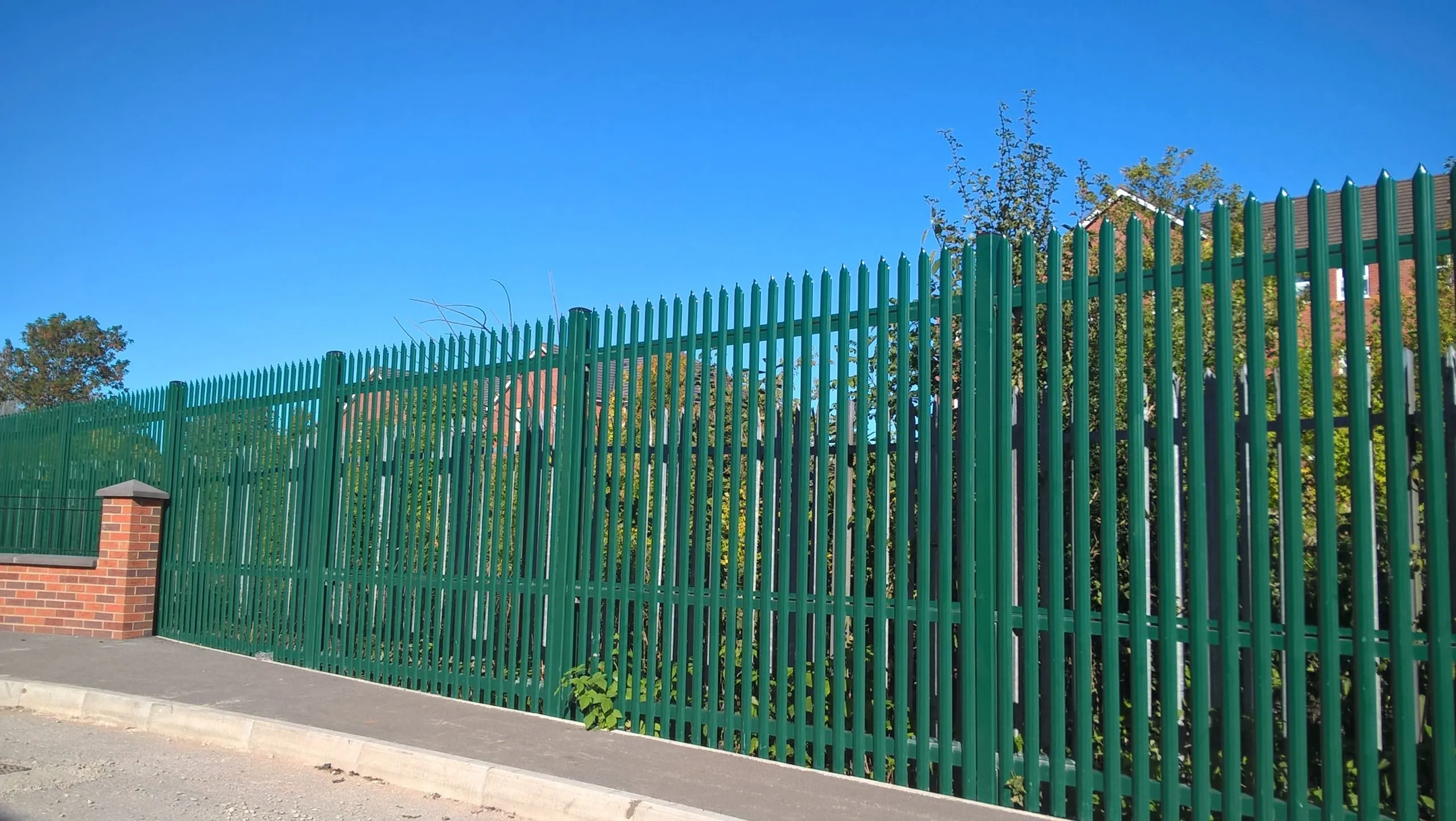
Main Types of Palisade Fences
Single Profile Palisade Fence (Standard Security Grade)
Single profiled vertical slats fixed to front and rear horizontal rails. Balances security and budget. Widely used for substations, industrial yards and public utility boundaries. Pointed tops as standard.
Double Profile Palisade Fence (High-Security Grade)
Two interlocked profiled slats form a thicker composite section. Much higher resistance to prying, bending and impact. Preferred for prisons, military zones and high-risk industrial restricted areas.
W Section Palisade Fence
Classic W-profile slat, widely adopted globally. Deep folded profile gives high rigidity without excessive weight. Easy fabrication and installation, the most common high-security palisade type.
D Section Palisade Fence
D-shaped rolled profile, smoother surface while retaining high stiffness. Less sharp edge exposure, suitable for sites where injury risk to authorised personnel needs reduction, while still maintaining anti-climb security.
Powder-Coated Palisade Fence
Hot-dip galvanised substrate plus outdoor polyester powder coating, available in custom RAL colours. Clean appearance, UV resistance and scratch protection for high-standard commercial and municipal security projects.
Core Technical Specifications
Palisade Slats
Profiles: W section / D section
Slat thickness: 2.0mm, 2.5mm, 3.0mm (high security ≥2.5mm)
Slat width: 100mm / 115mm / 125mm
Top option: Pointed / splayed / Y-cut anti-climb top
Slat spacing: 100mm nominal gap
Rails & Posts
Horizontal rails: U-channel or rectangular hollow section
Posts: Rectangular / square hollow steel posts
Post wall thickness: 2.5mm–4.0mm
Fixing: Anti-tamper bolts, security nuts, non-removable fasteners
Accessories
Anti-theft fixings, post caps, base plates, concrete anchor bolts, matching palisade swing gates, sliding gates and razor wire brackets.
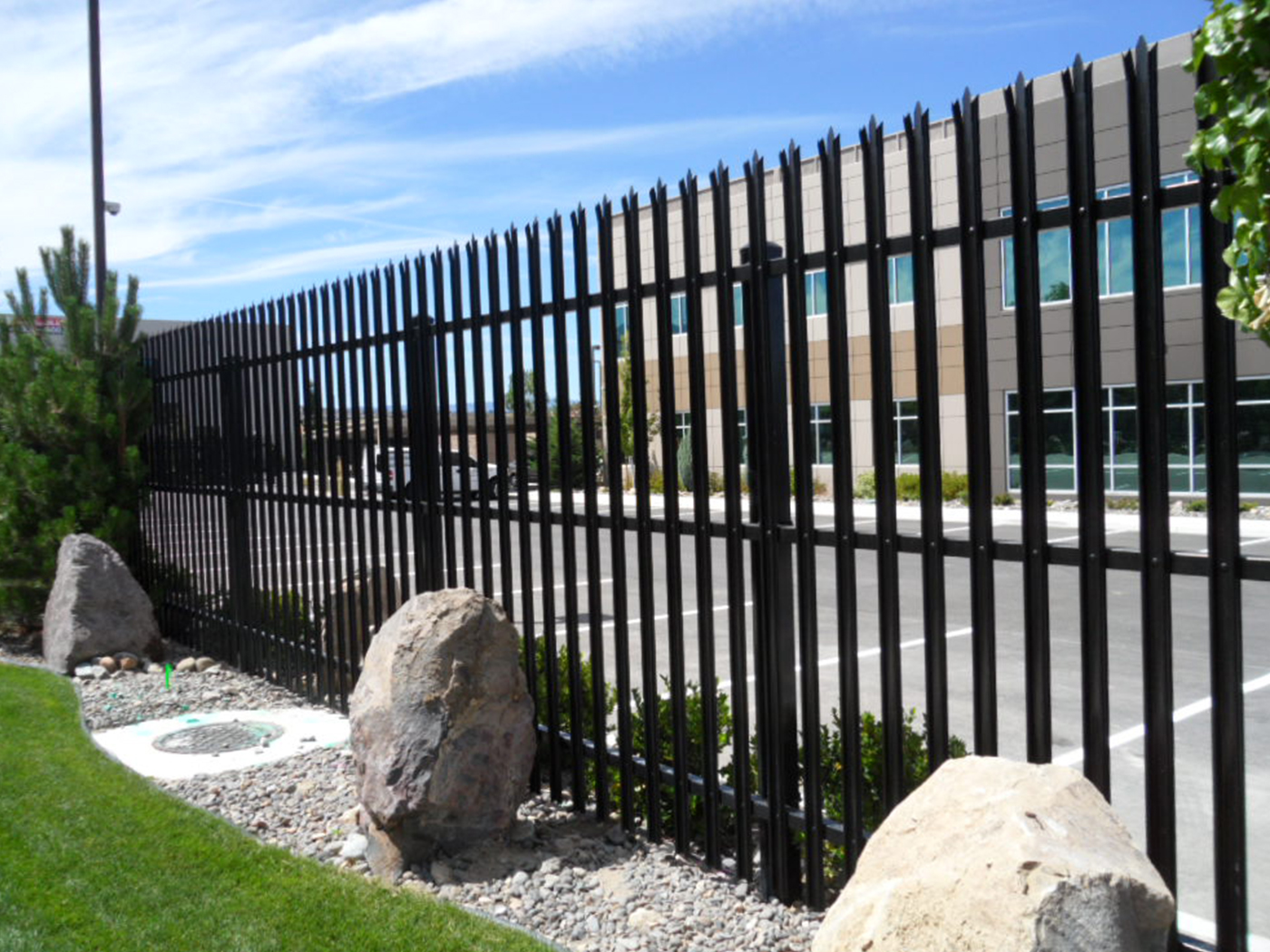
Anti-Corrosion Coating Solutions (ISO 9223:2012)
High-security palisade fences are often built as permanent perimeter assets, so corrosion protection directly affects long-term security performance.
C1‑C3 Low to moderate corrosion (inland industrial, utility sites)
Hot-dip galvanising is the baseline treatment. Powder coating can be added for colour and extra abrasion resistance. Stable performance for inland permanent security perimeters.
C4‑CX High to extreme corrosion (coastal, chemical, high humidity sites)
High-weather powder coating protects steel from salt spray, chemical vapour and heavy moisture. Ordinary paint or light galvanising will quickly corrode in coastal or chemical environments and weaken security.
Important reminder: Theoretical service life relies on proper installation and normal operating conditions. Heavy impact, deliberate vandalism, coating scratches and chemical exposure will damage protection and reduce service life. Regular inspection of bolts, slats and rails is recommended for high-security installations.
Procurement & Installation Guidance
Prioritise slat thickness and profile type. For true high security, select 2.5mm or thicker slats, double profile or heavy W-section. Thin slats can be bent easily and lose security function.
Use security anti-tamper fixings. Standard bolts can be removed by intruders; non-removable security fasteners are essential for high-security palisade fences.
Match post size with fence height and wind load. Tall palisade fences require thicker posts and closer post spacing to prevent deflection under impact or wind.
Choose anti-climb top style according to site security classification. Pointed or Y tops maximise anti-climb effect.
Keep slat spacing consistent. Uneven gaps create weak points for prying.
Install matching palisade gates with the same slat profile and security fasteners. A perimeter is only as strong as its gates.
For maximum risk sites, add razor wire brackets on top to upgrade intrusion resistance further.
Frequently Asked Questions
Q1: What is the difference between palisade fence and 358 security fence?
A1: Palisade fences use solid vertical profiled steel slats, offering superior impact and pry resistance and strong visual deterrence. 358 fence is welded mesh, with clear CCTV visibility. Palisade is better against brute-force attacks, while 358 excels at anti-climb monitoring.
Q2: Does UNE‑EN‑10223‑7:2013 apply to palisade fences?
A2: Yes. Giant Fence palisade fences steel slats, rails and metal fittings comply with UNE‑EN‑10223‑7:2013, covering raw material, forming, welding and coating requirements for steel security fencing.
Q3: Can palisade fences be used in coastal high-security projects?
A3: Yes. Coastal areas fall under ISO 9223:2012 C4‑CX corrosion grade. Specify thick hot-dip galvanising plus weather-resistant powder coating. Light galvanised palisade will rust quickly under salt spray and reduce security performance.
Conclusion
Palisade fences achieve high-security performance not just by height, but by integrated design: anti-climb shaped tops, heavy profiled steel slats, anti-pry structure, anti-tamper fixings and rigid rail-post assembly. These features resist climbing, prying, impact and cutting, delivering both physical protection and strong visual deterrence.
Giant Fence supplies full-range palisade fences, including W-section, D-section, single and double profile high-security palisade systems. All steel components comply with UNE‑EN‑10223‑7:2013, with ISO 9223:2012 anti-corrosion options to suit inland and coastal high-security sites. Matching security gates and accessories are available.
If you are sourcing high-security palisade fencing for utility, prison, data centre or industrial perimeter projects, contact Giant Fence. Share fence height, slat specification, site environment and total length. We can provide technical drawings, sample references and competitive bulk quotations.