



Introduction
When property owners, contractors and project planners search for long-lasting perimeter security, many turn away from flimsy wire mesh, timber or low-grade aluminium options and choose steel tubular fence. Also known as tube steel fence or square/rectangular tube fencing, it is widely adopted for industrial compounds, warehouse boundaries, school yards, government facilities, logistics parks and residential gated communities. Unlike mesh fencing that relies on welded wire strength, steel tubular fences are built from rigid hollow steel sections. Giant Fence supplies custom and standard steel tubular fence systems. This article explains the core features that make steel tubular fences a highly durable and reliable perimeter security choice.
Rigid Hollow Steel Structure Delivers High Mechanical Strength
The basic building block of a steel tubular fence is hollow steel tubing, commonly square tube, rectangular tube or round tube. The hollow profile provides excellent stiffness without excessive weight. Properly sized tubing with sufficient wall thickness resists bending, twisting and deformation under impact.
Compared with wire mesh fences, tubular fence panels do not easily warp when hit by vehicles, playground equipment or heavy impacts. Contractors can select different tube sizes and wall gauges: lighter specifications for decorative residential boundaries, and heavy-wall tubular sections for high-security industrial sites that require anti-ram and anti-break performance. The integrated frame-and-rail structure maintains shape for decades if manufactured correctly.
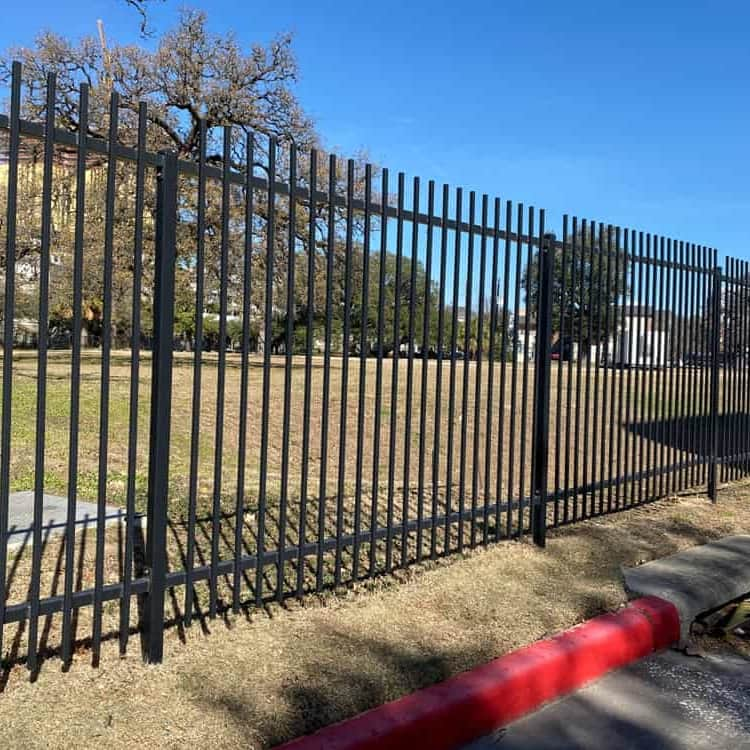
Reliable Anti-Corrosion Surface Treatment Options
Raw steel is vulnerable to rust, but modern coating systems unlock the long service life of steel tubular fence. The two most common surface treatments are hot-dip galvanizing and polyester powder coating.
- Hot-dip galvanizing forms a thick zinc alloy layer bonded metallically to the steel. It offers cathodic protection; even minor scratches will not immediately trigger rust spread.
- Powder coating adds an extra UV-resistant barrier. It prevents chalking, fading and chemical erosion, and supports many RAL colour options to match project design requirements.
For coastal, high-humidity or chemical-exposed sites, suppliers can upgrade to higher corrosion protection grades. This is a major advantage over wooden fencing (rot, insect attack) and ordinary painted steel (peeling paint and fast rusting).
Robust Welding & Connection Design
Durability does not only depend on the tubes themselves; joints and welding quality are critical. High-quality steel tubular fences adopt full penetration welding at every joint, followed by grinding and smoothing of weld seams. Poorly spot-welded tubular fences crack at weld points under wind load or repeated impact, leading to early failure.
Connection methods also affect lifespan. Bolts, brackets and fixing accessories should be galvanized or stainless steel to avoid galvanic corrosion. Many low-cost products use thin tubes and superficial spot welding, which creates a large performance gap even if they look similar at first glance. For security-focused projects, anti-tamper bolt designs are available to stop unauthorized disassembly.
Excellent Anti-Climb & Deterrence Performance
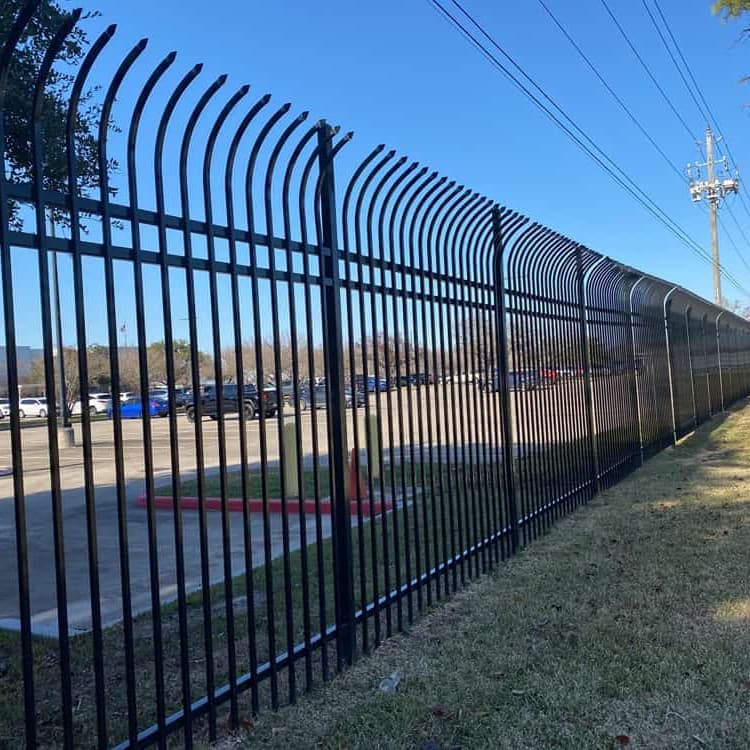
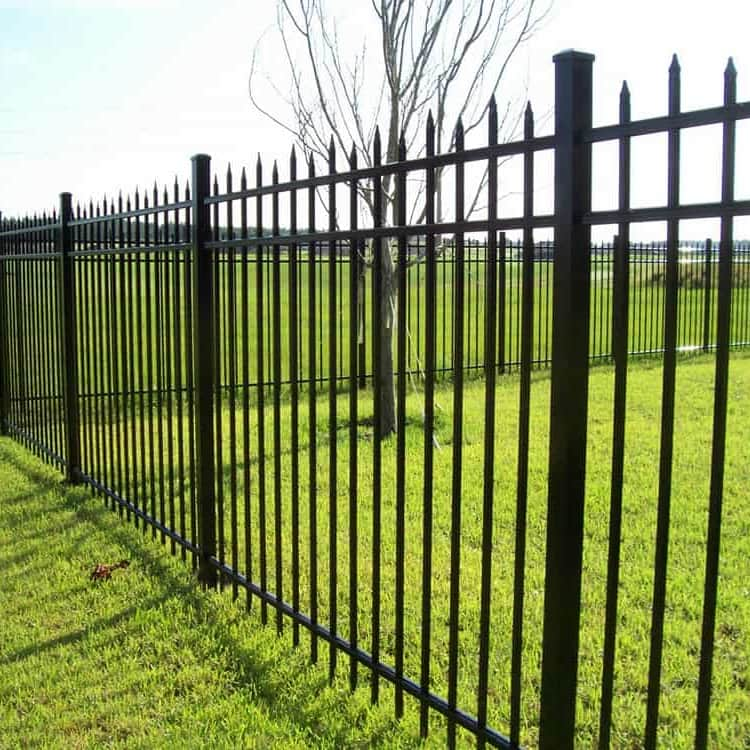
As a perimeter security product,steel tubular fence brings strong visual deterrence. Vertical bar tubular fences can be fitted with spear points, flat caps or finials on top. Smooth vertical tubes offer minimal hand or foot holds for climbing. Combined with proper height design, they greatly raise the difficulty of trespassing.
It is different from mesh fences where wire can be cut with bolt cutters. Cutting thick steel tubes requires heavy power tools, which creates noise and delays for intruders. This makes tubular fencing a preferred option for sites prioritizing intrusion deterrence, such as utility substations, storage yards and government premises.
Weather Resistance for All Climatic Conditions
Steel tubular fences perform steadily across diverse climates. They withstand strong wind loads, heavy snow, ice, intense sunlight and seasonal temperature swings. Well-engineered panels and posts are calculated for local wind speed requirements, avoiding panel collapse under storms.
Wood fences expand, shrink, crack and rot under changing weather. Aluminium fences are lightweight but dent easily under heavy impact. PVC fences suffer from brittleness and UV degradation over time. Properly coated steel tubular fences avoid these typical weaknesses, keeping stable performance year after year.
Low Maintenance Requirements Over Its Lifespan
One key benefit of a durable steel tubular fence is low ongoing maintenance. After installation, you only need occasional visual inspection and simple cleaning. It does not need regular repainting, staining, anti-termite treatment or part replacement like timber fencing.
Minor scratches on galvanized or powder-coated tubular fences rarely develop into large-area rust. Property management teams and facility owners save a great deal of labour and recurring maintenance budget, especially for large sites with thousands of metres of perimeter fencing.
Flexible Customization While Keeping Structural Stability
Steel tubular fence can be tailored in height, tube size, bar spacing, top style and colour, without sacrificing structural rigidity. Designers can choose close bar spacing for high-security zones or wider spacing for decorative community boundaries. Matching tubular gates (swing gates, sliding gates) use the same tube specifications and coating to form a unified perimeter system.
Custom features such as anti-climb tops, decorative finials, privacy strips and access control mounting brackets can be integrated during fabrication. This flexibility explains its popularity for both security-focused industrial projects and aesthetic residential developments.
Common Reference Specifications
- Tube shape: square tube, rectangular tube, round tube
- Common size: 20×40mm, 30×30mm, 40×40mm, 40×60mm, 50×100mm
- Wall thickness: 1.2mm, 1.5mm, 2.0mm, 2.5mm, 3.0mm
- Surface finish: hot-dip galvanized; hot-dip galvanized + powder coated
- Top options: flat top, spear top, ball finial, scroll decoration
FAQ
Q1: Is steel tubular fence better than palisade fence?
A1: Both are high-security steel fences. Tubular fencing has cleaner, smoother vertical bars and more decorative options, while palisade fences focus on heavy anti-ram protection. Selection depends on project security grade and aesthetic requirements.
Q2: Will steel tubular fence rust if scratched?
A2: If it has a hot-dip galvanized base, small scratches will not spread rust quickly. Deep scratches that expose bare steel can be touched up with matching touch-up paint.
Q3: Can steel tubular fence withstand strong winds?
A3: Yes. Our design can follow local wind load codes. Tube wall thickness, post spacing and base foundation design are adjusted to meet wind resistance requirements.
Conclusion
The durability of steel tubular fence comes from its rigid hollow steel structure, high-performance anti-corrosion coatings, quality welding, strong weather resistance and low-maintenance properties. It combines physical impact resistance, anti-climb deterrence and visual neatness, making it a balanced long-term perimeter security solution.
Giant Fence manufactures standard and custom steel tubular fence systems, including matching tubular gates, posts and hardware. We support tender projects for industrial parks, schools and public facilities, and can provide load calculation information and technical drawings. Contact us for your quotation and specification sheet.