


A perimeter fence is not something most property owners want to replace every few years. Whether it surrounds a residential community, commercial building, warehouse, or industrial facility, it needs to provide reliable boundary protection while remaining practical to maintain.
This is one reason Steel Tubular Fence remains a popular choice for long-term perimeter applications.
Its rigid steel structure, flexible design, and range of protective finishes make it suitable for projects where durability and appearance both matter.
But what actually determines how long a tubular fence performs well? The answer involves more than just choosing thick steel tubes. Let's look at the key factors.
1. What Makes Steel Tubular Fence Suitable for Long-Term Use?
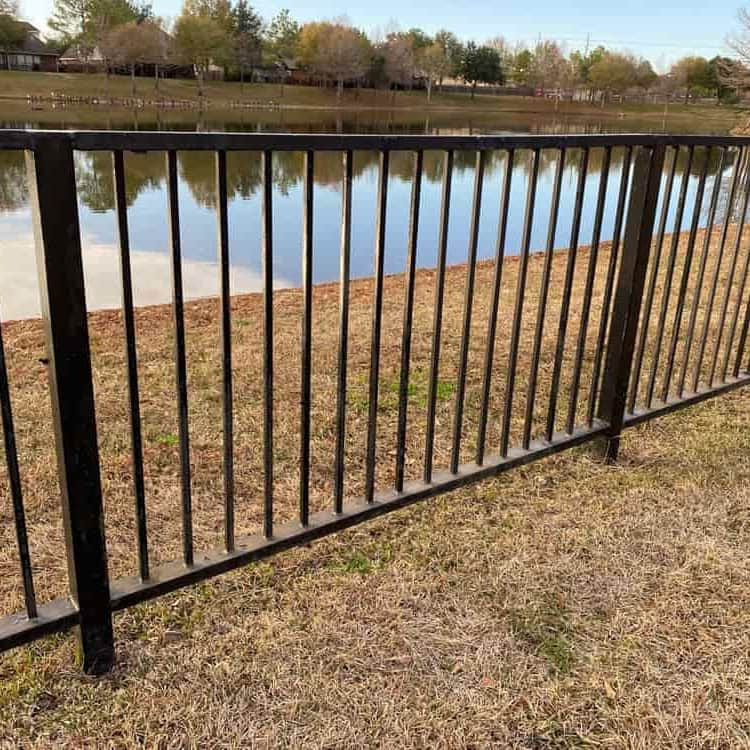
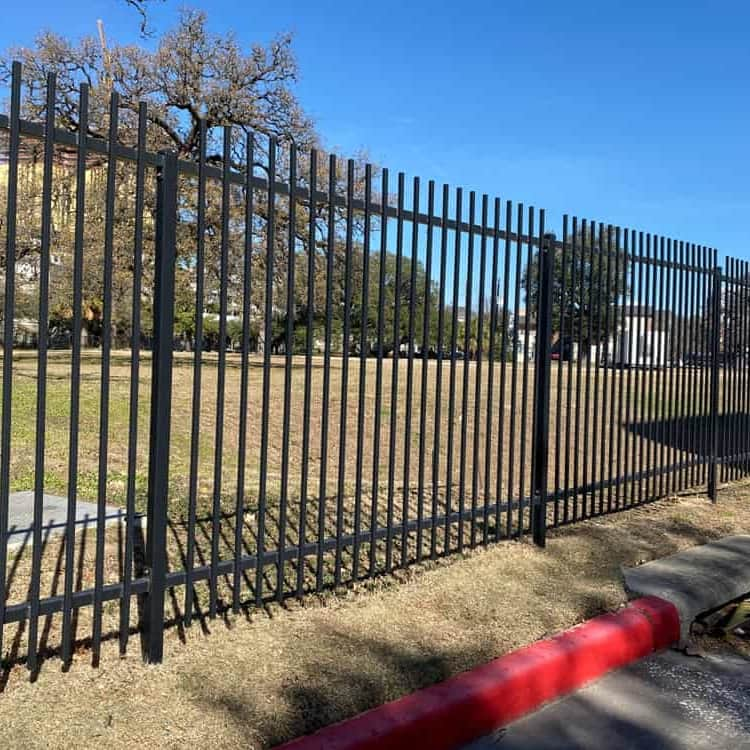
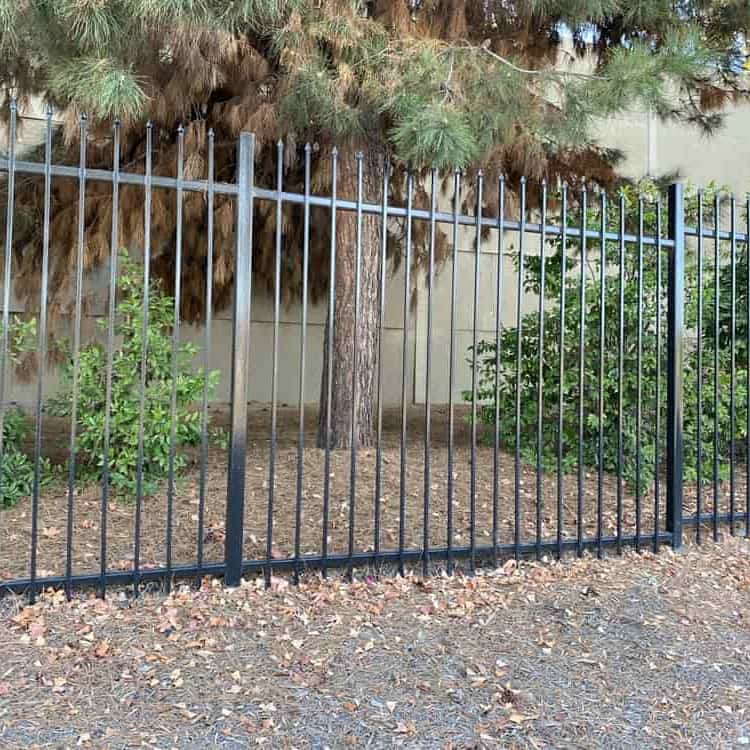
Steel tubular fencing uses hollow steel sections arranged into connected panels, usually with vertical bars, horizontal rails, or customized patterns.
Compared with lightweight fencing systems, it can provide a rigid physical boundary when properly designed and installed.
Its main advantages include:
Structural rigidity: Steel tubes form a stable panel framework.
Design flexibility: Different tube profiles and spacing can suit various project requirements.
Open structure: Allows visibility and airflow around the property.
Repairability: Individual panels or components can often be replaced when necessary.
Consistent appearance: Powder-coated finishes help maintain a coordinated perimeter design.
For long-term applications, the complete system matters. Panel construction, posts, foundations, connections, and corrosion protection all contribute to its performance.
2. Which Factors Affect the Durability of Tubular Steel Fencing?
2.1 Steel Tube Dimensions and Wall Thickness
Tube dimensions are among the first specifications buyers should check.
Common profiles include round, square, and rectangular hollow sections. Their dimensions and wall thickness influence structural stiffness, material consumption, and overall panel weight.
Thicker walls may provide greater resistance to deformation under comparable conditions, but the final design must also consider panel height, bar spacing, connection details, and expected loads.
Choosing the thickest tube is not always the most cost-effective solution. The goal is to match the steel specifications to the actual application.
2.2 Welding and Connection Quality
Even good-quality steel can produce a weak fence if the connections are poorly made.
Welded joints connect the vertical bars, horizontal rails, and supporting components. Their quality affects the integrity of the panel during transportation, installation, and service.
Buyers should pay attention to:
Consistency of welds.
Secure connections at panel intersections.
Accurate panel dimensions.
Surface defects around welded areas.
Compatibility between panels and posts.
Good fabrication quality helps reduce premature damage and unnecessary maintenance.
2.3 Post Strength and Foundation
The posts support the fence panels and transfer loads to the foundation.
Incorrect post dimensions, insufficient embedment, or unsuitable foundations can affect the stability of the entire fence line.
For large commercial and industrial projects, post spacing and foundation design should be confirmed according to the site conditions and engineering requirements.
3. How Does Surface Treatment Protect Steel Tubular Fences?
Corrosion is one of the main concerns for outdoor steel fencing.
Rain, humidity, industrial pollution, and coastal exposure can gradually affect unprotected steel. Choosing an appropriate surface treatment is therefore essential.
Hot-Dip Galvanizing
Hot-dip galvanizing applies a zinc coating to steel, providing a protective barrier and sacrificial corrosion protection.
It is commonly considered for outdoor fencing where long-term corrosion resistance is important.
Powder Coating
Powder coating provides a coloured finish and an additional protective layer.
It also gives buyers more design flexibility, particularly for residential developments, commercial properties, and public spaces.
However, surface preparation, coating adhesion, thickness, and fabrication quality all affect the final result.
|
Surface Treatment |
Main Benefit |
Considerations |
|
Galvanizing |
Zinc-based corrosion protection |
Confirm coating requirements |
|
Powder coating |
Appearance and additional protection |
Surface preparation and coating quality |
The right solution depends on the operating environment and project requirements. ISO 9223:2012 can help classify atmospheric corrosivity, while the actual coating system should be selected and specified separately.
4. Is Metal Tubular Fencing Cost-Effective Over Time?
The initial purchase price is only one part of the total cost of a fencing project.
A lower-priced fence may require more frequent repairs or maintenance if its materials, fabrication, or protective coating are unsuitable.
When comparing suppliers, buyers should consider:
Initial material and manufacturing costs.
Surface treatment requirements.
Transportation and installation costs.
Expected maintenance needs.
Availability of replacement panels and accessories.
A properly specified Steel Tubular Fence can help reduce unnecessary maintenance and replacement work over its service life.
For distributors and contractors, comparing the complete system rather than only the price per panel provides a more realistic purchasing assessment.
5. Applications of Steel Tubular Fence
Metal tubular fencing is suitable for different environments where a combination of perimeter protection and appearance is required.
|
Application |
Main Requirements |
|
Residential Communities |
Appearance, boundary definition, and durability |
|
Commercial Buildings |
Access control and architectural appearance |
|
Industrial Facilities |
Structural strength and perimeter protection |
|
Schools and Public Areas |
Visibility and suitable safety details |
|
Warehouses |
Practical installation and maintenance |
|
Parks and Gardens |
Open design and landscape integration |
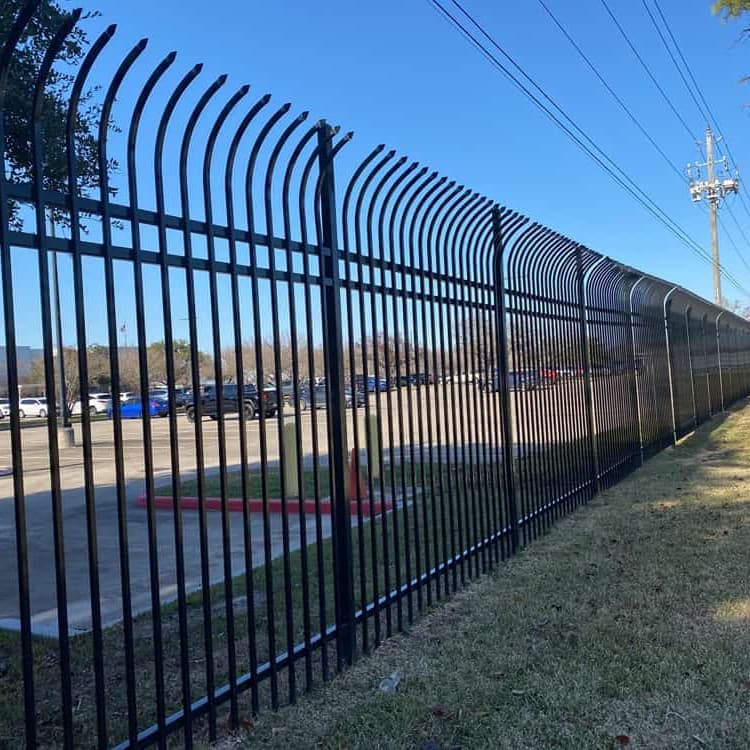
For sites requiring advanced anti-climb protection, a specialized security fence may be more appropriate than a conventional tubular system.
6. Buying Guide for Distributors and Contractors
When sourcing tubular steel fencing for long-term projects, a complete specification helps avoid quality differences and unexpected costs.
Before requesting a quotation, confirm:
Tube profile: Round, square, or rectangular.
Tube dimensions: Section size and wall thickness.
Panel dimensions: Required height and width.
Bar spacing: Distance between vertical or horizontal tubes.
Connection method: Welding or mechanical fixing.
Post system: Dimensions, spacing, and foundation requirements.
Surface treatment: Galvanizing, powder coating, or combined protection.
Accessories: Brackets, bolts, and matching gates.
Quantity and delivery: Total panels, posts, packaging, and shipping schedule.
For customized projects, drawings and reference photographs are useful for confirming the design before production.
Buyers should also request technical datasheets and relevant inspection records to verify that the supplied products match the agreed specifications.
7. Why Choose Giant Fence?
Hebei Giant Metal Technology Co., Ltd. (Giant Fence) is an integrated metal fencing manufacturer and exporter, supplying fencing products and related solutions to international markets.
With experience in metal fencing manufacturing, welded mesh processing, and surface treatment, Giant Fence supports different requirements for residential, commercial, industrial, and construction projects.
For Steel Tubular Fence projects, buyers can discuss:
Customized panel dimensions and tube configurations.
Different steel profiles and material specifications.
Welding and fabrication requirements.
Galvanizing and powder coating options.
Matching posts, gates, and accessories.
Bulk production and export packaging.
Our focus is to understand the project requirements first and help customers confirm suitable product specifications before production.
8. Frequently Asked Questions About Steel Tubular Fence
Q1: Is steel tubular fence suitable for long-term outdoor use?
Yes. When manufactured with suitable steel specifications, corrosion protection, and proper installation, it can be a practical option for long-term outdoor perimeter applications.
Q2: Does a thicker steel tube always mean a stronger fence?
Not necessarily. Wall thickness is important, but tube dimensions, panel design, welding, posts, and foundations also influence overall performance.
Q3: Which surface treatment is better for outdoor tubular fencing?
Galvanizing and powder coating are common options. The appropriate choice depends on environmental exposure and project specifications.
Q4: Can steel tubular fencing be customized?
Yes. Tube profiles, panel dimensions, bar spacing, decorative patterns, and surface treatments can be discussed according to manufacturing capabilities.
Q5: Can damaged tubular fence panels be replaced individually?
In many panel-based systems, individual sections can be replaced without removing the entire fence. Compatibility with the existing posts and fixing system should be checked first.
Conclusion
Choosing metal tubular fencing for long-term perimeter protection is about more than selecting a strong-looking steel panel.
Tube dimensions, wall thickness, welding quality, post strength, foundation design, and corrosion protection all influence how well the fence performs over time.
For distributors, contractors, and project engineers, confirming these details before purchasing helps control lifecycle costs and avoid unnecessary maintenance.
Looking for Steel Tubular Fence for your next project? Contact Giant Fence with your drawings, required specifications, and estimated quantities. Our team can help review your requirements and discuss a suitable fencing solution.