


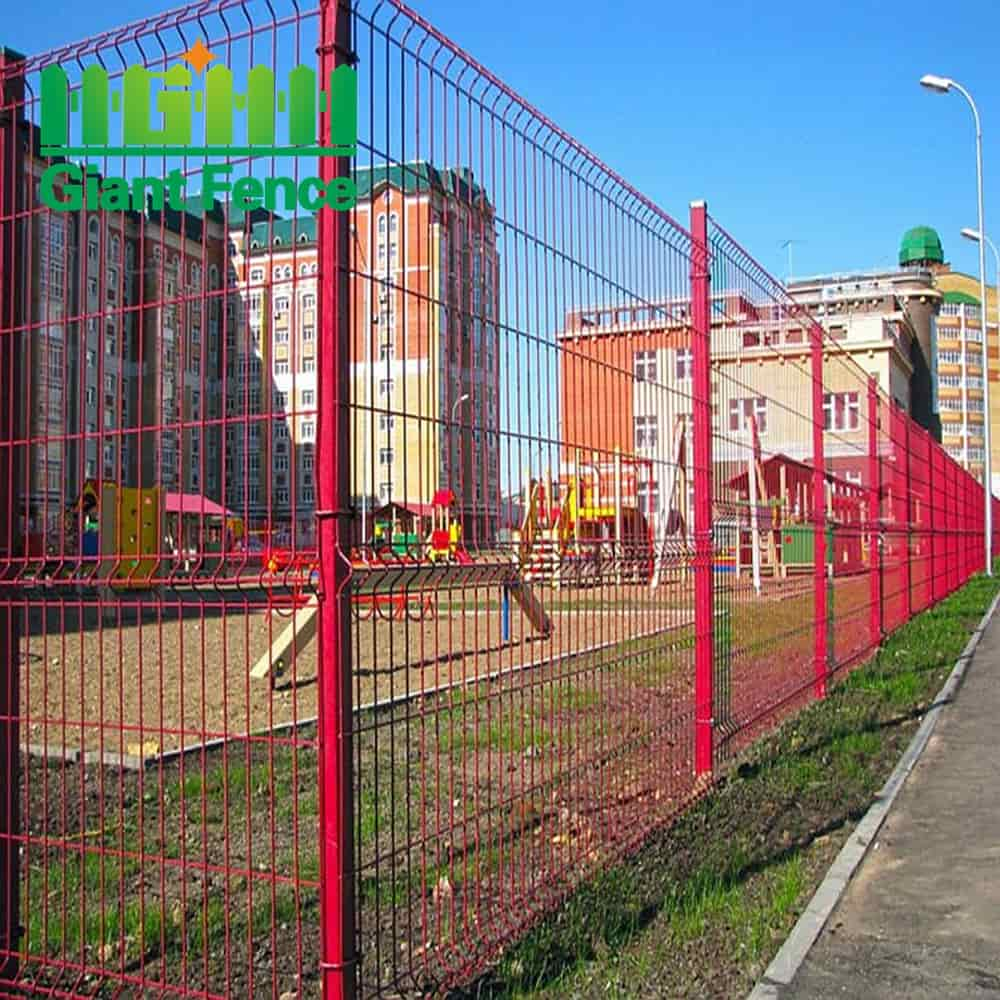
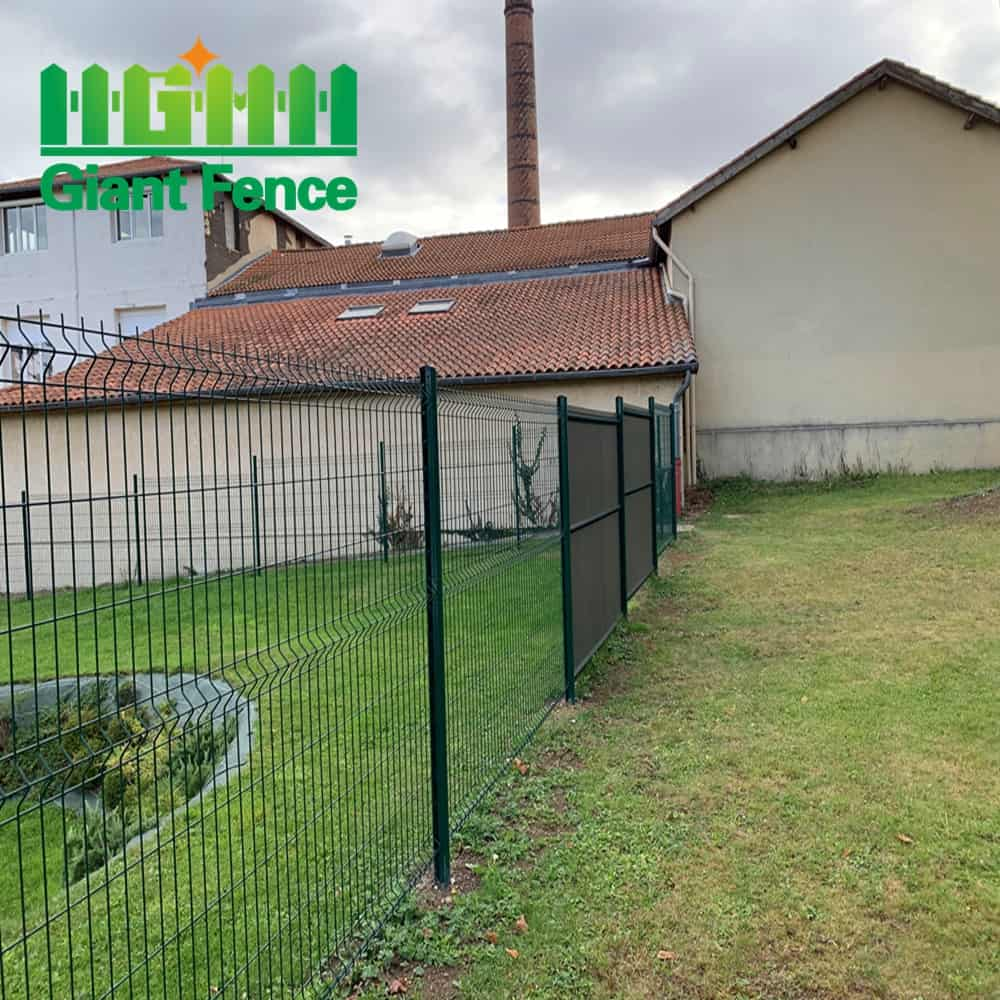
For most residential communities, 3D welded mesh fencing is a practical starting point for landscaped boundaries and general perimeter protection, while 2D double-wire fencing is worth considering where a flatter, heavier panel structure is required. A 3D fence uses V-shaped bends to reinforce panel rigidity; a 2D fence uses paired horizontal wires. The right choice depends on security expectations, mesh specifications, installation conditions, access gates, and project budget.
The 3D vs 2D Welded Mesh Fence decision should therefore be made at the project-system level, not by comparing panel prices alone.
For residential developers, EPC contractors, and overseas fence distributors, this guide provides a technical comparison, a practical housing-project scenario, manufacturing and quality-control considerations, and a quotation checklist.
Key Takeaways for Residential Fence Buyers
-
3D fencing: Often a practical choice for general residential boundaries, gardens, and landscaped areas where appearance and cost control are important.
-
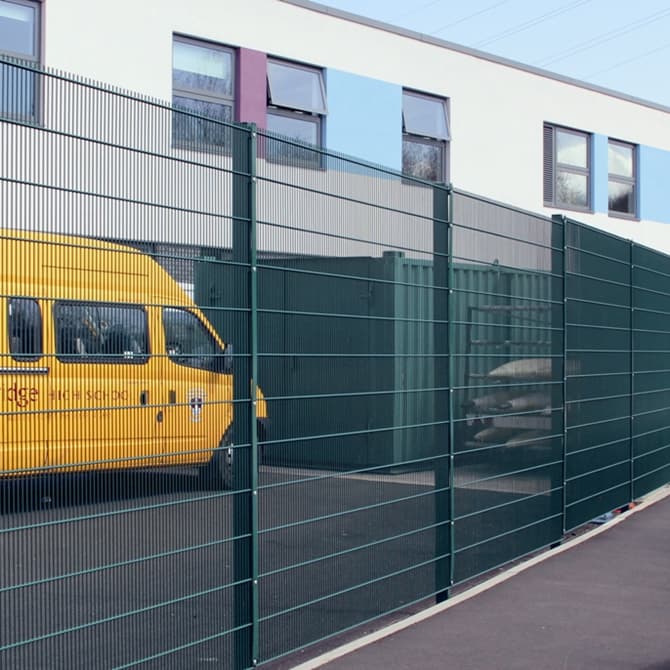
2D fencing: Uses double horizontal wires to provide a different, generally heavier panel construction for locations requiring additional rigidity.
-
Security: Neither fence type automatically provides a certified intrusion-resistance rating. Mesh, height, connections, and gates must be evaluated together.
-
Installation: Terrain, corners, steps, post spacing, and access openings affect both systems.
-
Corrosion protection: Compare actual galvanizing and coating specifications rather than generic service-life claims.
-
Total procurement cost: Include posts, clamps, gates, foundations, freight, installation, and future maintenance.
3D vs 2D Welded Mesh Fence: Technical Specifications Compared
The main structural difference is the arrangement of the steel wires.
A 3D panel uses welded mesh with formed V-bends. A 2D double-wire panel typically uses two horizontal wires around a single vertical wire at each horizontal level, producing a flat welded structure.
Technical Comparison Table
| Parameter | 3D Welded Mesh Fence | 2D Double Wire Fence |
|---|---|---|
| Panel structure | Welded mesh with V-shaped bends | Flat welded mesh with double horizontal wires |
| Wire configuration | Single-wire mesh; product dependent | Commonly 6/5/6 or 8/6/8 mm |
| Published wire diameter | Commonly 4–6 mm | 656 and 868 configurations |
| Published panel height | 0.8–2.4 m | 0.83–2.4 m |
| Published 3D panel widths | 2.0 / 2.2 / 2.5 m | Confirm for selected 2D model |
| Mesh opening options | 50 × 100 / 50 × 200 mm | 50 × 100 / 50 × 200 mm |
| Main rigidity feature | Formed V-bends | Paired horizontal wires |
| Surface treatment | Galvanized and coated options | Galvanized and coated options |
| Typical appearance | Profiled, decorative mesh | Flat, uniform mesh |
| Common residential use | Gardens and general community boundaries | Higher-demand boundaries and shared facilities |
| Installation system | Compatible posts and clamps | Compatible posts and clamps |
These ranges reflect published GIANT MESH product-family information. Actual dimensions, coatings, and wire configurations must be confirmed for the selected model before publication or purchase.
Buyers can compare the 3D Fence product range and the 2D Fence product range before requesting model-specific drawings.
What Does 656 or 868 Mean?
For double-wire fencing, the numerical designation describes the nominal wire arrangement.
656 generally refers to two 6 mm horizontal wires combined with a 5 mm vertical wire.
868 generally refers to two 8 mm horizontal wires combined with a 6 mm vertical wire.
The designation helps identify the steel wire configuration. It does not independently establish a specific security rating or determine the appropriate post and foundation design.
Which Fence Is Better for Different Residential Areas?
The best solution may vary within the same housing development.
Gardens and Landscaped Boundaries
A 3D welded mesh fence is often suitable where the priority is creating a clear boundary while maintaining an open appearance.
The formed bends provide panel rigidity, and the profile can complement gardens, residential pathways, and green spaces.
When reviewing the GIANT MESH residential fencing solutions, buyers can see configurations combining 3D fencing with pedestrian and vehicle gates.
Community Playgrounds and Shared Facilities
A 2D double-wire fence may be worth evaluating where repeated incidental contact or greater panel stiffness is expected.
However, playground suitability depends on more than wire configuration.
Check the finished edges, openings, projections, height, gate arrangement, and applicable local safety requirements.
A heavier panel alone does not establish playground compliance.
Residential Parking Areas
Parking entrances need coordinated fencing and access control.
Either 3D or 2D mesh may be appropriate for the surrounding boundary, but the fencing should not be presented as a vehicle-impact barrier without the required design and testing.
Where vehicle impacts are a credible risk, separate protective measures may be necessary.
Private Gardens and Privacy Zones
Neither conventional open 3D nor 2D mesh provides substantial visual privacy by itself.
If privacy is important, consider a compatible screened-fence system or a different boundary construction.
Adding screening also changes wind exposure and may require reassessment of the posts and foundations.
Residential Selection Matrix
| Residential Zone | Starting Recommendation | Why |
|---|---|---|
| Landscaped outer boundary | 3D Fence | Open appearance and practical general-purpose design |
| Villa and townhouse garden | 3D Fence | Architectural flexibility |
| Community playground boundary | Evaluate 2D 656 and 3D | Compare rigidity, edges and site requirements |
| Shared parking boundary | Evaluate 2D or 3D | Coordinate posts, access and impact risks |
| Higher-demand perimeter section | Evaluate 2D 868 | Heavier wire configuration |
| Private screened boundary | Compatible privacy system | Visual screening requires additional components |
Best practice: Compare the proposed systems against the same site specification. Do not assume that every 2D configuration is stronger than every 3D configuration under every loading condition.
How to Choose a Welded Mesh Fence for a Residential Community Project
A residential procurement manager should begin with the project layout and performance requirements.
1. How Many Fence Panels Are Required?
Start with the total surveyed boundary length, subtract gate openings, and identify the individual fence runs.
Then calculate the preliminary number of bays using the approved installation spacing.
Number of Bays = Net Fence Length ÷ Nominal Installed Bay Spacing
Round up where appropriate for initial estimating.
The finished quantity must be adjusted for corners, gates, slopes, special supports, and actual panel-to-post connections.
2. What Panel Height Is Suitable?
Panel height should reflect the intended boundary function, visual requirements, site conditions, and applicable local rules.
A decorative garden boundary may require a different height from a residential compound perimeter.
Avoid selecting height solely because it is the least expensive stock option.
3. Which Post Type Should Be Selected?
GIANT MESH offers different post configurations for welded mesh fencing.
The buyer should compare post section, wall thickness, fixing arrangement, installation method, and compatibility with the proposed panels.
Square, rectangular, round, and specially formed posts are not automatically interchangeable.
4. Which Mesh Opening Is Appropriate?
Mesh opening affects visibility, appearance, material configuration, and compatibility with the specified application.
The manufacturer should confirm the actual opening dimensions and tolerances.
For child-accessible areas, the designer must also consider relevant entrapment and safety requirements rather than choosing solely by appearance.
5. Should Pedestrian and Vehicle Gates Be Included?
Yes, whenever the perimeter contains controlled access points.
Gate openings should be defined early because they affect panel quantities, post locations, access hardware, and installation details.
6. Which Surface Treatment Is Suitable?
Select galvanizing and any additional coating according to the actual environmental exposure.
An inland residential site may have different corrosion requirements from a coastal development.
7. What Documentation Should the Supplier Provide?
Request dimensioned drawings, an approved component schedule, coating specifications, inspection requirements, sample approval records, and export packaging details.
For structural or safety-critical requirements, obtain appropriate project-specific engineering evidence.
Real Procurement Scenario: A 500-Meter Residential Boundary
Consider a hypothetical housing development requiring 500 meters of perimeter fencing.
Assume the preliminary layout includes:
-
One vehicle entrance measuring 4.0 m.
-
Two pedestrian entrances measuring 1.2 m each.
-
A nominal installed fence bay spacing of 2.5 m.
-
Landscaped boundaries, shared facilities, and a parking access zone.
This example is intended for procurement planning, not as a structural design or an actual customer project.
Step 1: Calculate Net Fence Length
Net Fence Length = Total Perimeter − Gate Openings
500 − 4.0 − (2 × 1.2) = 493.6 m
Step 2: Estimate Nominal Fence Bays
493.6 ÷ 2.5 = 197.44
Rounded upward, the initial estimate is approximately 198 nominal bays.
This is not the final purchase quantity.
Different fence runs, terminal conditions, gate posts, corners, and actual installed panel pitches must be reflected in the approved layout.
Step 3: Decide Where to Use 3D and 2D Panels
Rather than specifying one system across the entire property, the developer can evaluate both options by location.
| Project Area | Proposed Evaluation | Main Procurement Question |
|---|---|---|
| Landscaped boundary | 3D welded mesh | Does the panel match the architectural design? |
| Shared recreation area | 3D vs. 2D 656 | Which system meets the area's safety and rigidity requirements? |
| Service or parking boundary | 2D 656 or 868 | Is the heavier configuration justified by expected use? |
| Access entrances | Matching gate systems | Are the gates, posts, finishes, and hardware compatible? |
This 3D vs 2D Welded Mesh Fence procurement approach avoids making every boundary section unnecessarily heavy while still allowing more robust configurations where justified.
Step 4: Compare Complete Project Costs
The comparison should use:
Total Project Cost = Panels + Posts + Fixings + Gates + Coatings + Freight + Foundations + Installation
If one option has a lower panel price but requires different posts, extra installation labor, or more expensive connections, the overall cost difference may narrow.
Buyers should obtain itemized quotations for identical project scopes before making a decision.
What Manufacturing Processes Affect 3D and 2D Fence Quality?
GIANT MESH operates as Hebei Giant Metal Technology Co., Ltd., based in Anping County, Hebei Province, China.
According to its published company information, the business has developed capabilities covering wire mesh welding, fence panel forming, post manufacturing, surface treatment, and product inspection.
These manufacturing stages directly affect consistency between panels and the compatibility of complete fence systems.
Wire Mesh Welding
Steel wires are positioned and joined at their intersections.
Manufacturing controls should address wire diameter, mesh geometry, welded joint quality, and panel distortion.
For 2D fences, the paired horizontal wire configuration creates specific alignment and welding requirements.
V-Bend Forming
For 3D panels, the welded mesh is formed to produce the required V-shaped bends.
The position, number, and geometry of these bends should match the approved drawing.
Incorrect forming can affect panel dimensions and installation consistency.
Fence Post Manufacturing
Post sections and their connection points must match the intended panel system.
Where a project uses different 3D and 2D sections, the manufacturer should verify whether common posts and fittings are possible or separate components are required.
Surface Treatment
Galvanizing and compatible organic coatings are used to protect the steel and provide the required appearance.
Buyers must distinguish between coating processes and specify the applicable acceptance criteria.
Assembly and Export Preparation
A trial assembly checks whether the panels, posts, brackets, and gates fit together.
For bulk export orders, proper stacking, separation, labeling, and loading help reduce avoidable damage.
GIANT MESH's published company information describes its development of welding equipment, post production, and surface-treatment lines.
What Quality Checks Should Residential Project Buyers Require?
For large residential developments, quality control must support both the first shipment and any later repeat orders.
Manufacturing and Inspection Checklist
| Production Stage | Buyer Verification |
|---|---|
| Incoming steel wire | Wire diameter and approved material |
| Mesh welding | Intersection quality and mesh spacing |
| 3D panel forming | V-bend geometry and panel dimensions |
| 2D panel production | Double-wire positioning and weld consistency |
| Post fabrication | Section, wall thickness and fixing locations |
| Surface treatment | Agreed coating process, appearance and inspection |
| Trial assembly | Panel-to-post and gate compatibility |
| Final inspection | Dimensions, quantities and product identification |
| Export packaging | Coating protection, stacking and component labeling |
What Do Industry Standards Cover?
BS EN 10223-7:2012 specifies requirements for applicable welded steel wire fencing panels, including characteristics, coatings, properties, and tolerances.
Its scope includes relevant single- and double-horizontal-wire panel configurations and optional formed wire arrangements.
ISO 9223:2012 provides a framework for classifying the corrosivity of atmospheric environments.
These standards can inform purchasing specifications, but referencing them does not establish that every GIANT MESH product has been tested or certified to a specific requirement.
For a residential project, define the applicable standards, test methods, and acceptance criteria in the contract.
Real GIANT MESH Manufacturing Experience: Residential Fencing in Costa Rica
GIANT MESH has published a residential community fencing project in Costa Rica.
According to the manufacturer's project report, the order included 1,000 sets of 3D fence panels.
The documented configuration included:
| Project Item | Published Detail |
|---|---|
| Country | Costa Rica |
| Application | Residential community perimeter |
| Product | 3D welded mesh fence |
| Supplied quantity | 1,000 sets |
| Panel dimensions | 2.0 m high × 2.5 m wide |
| Forming | Customized five-bend panel configuration |
| Connections | Specified anti-theft screws |
| Post arrangement | Pre-embedded supports |
| Surface protection | Galvanized finish described in the report |
This example shows how a residential project may require a customized 3D configuration rather than a default catalog panel.
The five-bend design and supporting components were part of that particular order. They should not be treated as universal specifications for all 3D fencing.
The manufacturer also describes dimensional and surface-quality inspections for the project.
The case is a useful manufacturing reference, but it does not independently prove a universal impact rating, wind resistance, or service-life guarantee.
Buyers can review the Costa Rica residential fencing project for further details.
Which Fence Has the Lower Total Cost for Residential Projects?
The 3D vs 2D Welded Mesh Fence cost comparison depends on the actual specifications.
A conventional 3D panel often uses less steel than a heavier 2D double-wire configuration of comparable dimensions.
However, material consumption alone does not determine the final quotation.
Cost Comparison Factors
| Cost Element | 3D Fence | 2D Fence |
|---|---|---|
| Steel material | Depends on wire and bend configuration | Depends on paired horizontal wires |
| Panel production | Welding and V-bend forming | Double-wire welding |
| Posts | Selected for the approved system | Selected for the approved system |
| Clamps | Product-specific | Product-specific |
| Coating | Depends on finish specification | Depends on finish specification |
| Freight | Weight and packing arrangement | Weight and packing arrangement |
| Installation | Site and connection dependent | Site and connection dependent |
| Maintenance | Exposure and damage dependent | Exposure and damage dependent |
For a fair comparison, the two quotations should include identical project requirements, approved support arrangements, corrosion specifications, gate openings, and delivery terms.
When Is a Mixed System Worth Considering?
A mixed system may be economically useful when different parts of a residential development have different functional needs.
For example, a developer could evaluate 3D panels for landscaped areas and 2D panels near shared facilities.
The benefit must be demonstrated using project-specific quotations.
Using two fence types also introduces potential complexity in spare-parts inventory, connections, and installation planning.
What Should Be Included in a Residential Fence RFQ?
The most effective 3D vs 2D Welded Mesh Fence enquiry gives the manufacturer enough information to assess complete systems.
| RFQ Item | Information Required |
|---|---|
| Project location | Country, city and environmental conditions |
| Site layout | Boundary lengths, corners, slopes and gates |
| Fence purpose | General boundary, recreation area, higher-demand perimeter |
| Panel type | 3D, 2D 656, 2D 868, or comparative quotation |
| Dimensions | Panel height, width and intended installed spacing |
| Mesh specification | Wire diameter, opening and tolerances |
| Post system | Section, wall thickness, connection and foundation arrangement |
| Gate schedule | Pedestrian and vehicle gates, dimensions and hardware |
| Surface treatment | Galvanizing, coating type and color |
| Quality requirements | Approved drawings, samples and inspection records |
| Packaging | Export protection and component labeling |
| Supply plan | Quantities, delivery stages and destination |
An importer purchasing for several residential projects should also specify whether future replacement panels must remain compatible with the original order.
For an accurate quotation, send your drawings, desired panel configurations, gate schedule, and estimated quantities through the GIANT MESH contact page.
Frequently Asked Questions
Q1: What is the difference between 3D and 2D welded mesh fencing?
The main difference is panel construction. A 3D fence uses welded mesh with V-shaped reinforcing bends, while a 2D double-wire fence uses a flat panel with paired horizontal wires. For residential applications, buyers should compare the complete assemblies, including posts and fixings, rather than assuming one construction is superior in every condition.
Q2: What mesh opening sizes are available for welded mesh fence panels?
GIANT MESH's published product-family information lists 50 × 100 mm and 50 × 200 mm among the available mesh opening options for 3D and 2D fencing. Actual availability depends on the chosen model and wire configuration. Buyers should request dimensioned product drawings and confirm tolerances before approving a project specification.
Q3: Can fence panels be customized for different residential projects?
Customization may be possible for panel dimensions, mesh openings, wire configurations, colors, posts, and connection details. Feasibility depends on the manufacturer's available production methods and the proposed design. Submit the required dimensions and drawings early, then approve a representative sample before proceeding with a large production order.
Q4: Can fence panels, posts, and gates be supplied as one complete system?
Yes, GIANT MESH offers fencing and gate solutions intended for coordinated perimeter projects. However, component compatibility must be checked for the selected 3D or 2D configuration. Gate dimensions, support posts, hinges, locks, and finishes should be included in the initial specification rather than ordered independently afterward.
Q5: Is a 2D double-wire fence always more expensive than a 3D fence?
Not necessarily. A heavier double-wire configuration can require more steel, but the total installed cost also depends on panel dimensions, coating, posts, accessories, freight, foundations, and labor. Compare itemized quotations for the same site conditions. A lower individual panel price does not automatically produce a lower overall project cost.
Q6: What information should buyers provide when requesting a residential fence quotation?
Provide the project location, perimeter layout, total length, panel height, preferred mesh and wire specifications, ground conditions, post system, coating, gate schedule, and estimated quantity. State any relevant standards and inspection requirements. These details enable the supplier to prepare a more complete quotation and identify technical information that still requires approval.
Conclusion
The 3D vs 2D Welded Mesh Fence choice for residential projects depends on the purpose of each boundary section, not simply on the perceived strength or price of the panels.
For general housing-estate boundaries, landscaped areas, and villa developments, 3D welded mesh fencing is often a practical starting point.
For locations requiring a different, heavier flat-panel structure, 2D double-wire fencing deserves consideration, particularly after assessing the proposed posts, connections, and installation conditions.
Both systems require suitable corrosion protection, compatible gates, documented manufacturing quality, and an installation design appropriate to the project.
A residential developer may also benefit from comparing mixed configurations, provided the additional supply and installation complexity is justified.
GIANT MESH, operated by Hebei Giant Metal Technology Co., Ltd., manufactures welded mesh fencing systems and offers coordinated panels, posts, and gate solutions for residential and commercial projects.
Planning a residential fencing project? Contact GIANT MESH with your site drawings, proposed 3D and 2D specifications, expected quantities, and delivery destination to request a technical comparison and project-specific quotation.