


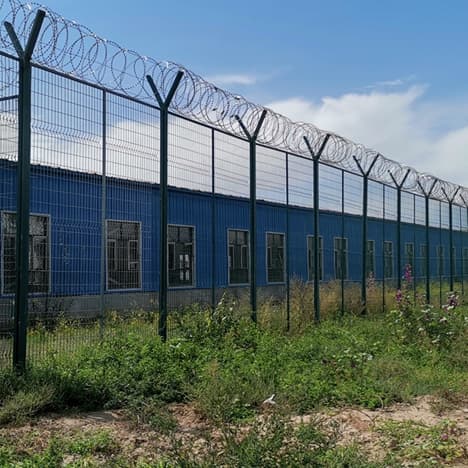
Airport fencing is not just about marking the boundary of an airport. It plays an important role in protecting runways, aircraft facilities, maintenance areas and other restricted zones from unauthorized access.
Unlike ordinary industrial fencing, an Airport Fence often needs to meet more demanding requirements. It should be difficult to climb, strong enough for long-term outdoor use and suitable for different security zones around the airport.
But not every airport project needs exactly the same fencing system. A perimeter fence around an international airport may require a different design from fencing around a maintenance area, cargo terminal or airport parking facility.
At Giant Fence, we manufacture welded mesh and high-security fencing systems for different infrastructure and industrial projects. Let's look at what matters when choosing an Airport Fence and how to match the specifications to the actual security requirements.
What Types of Airport Fence Are Commonly Used?
1. 358 Anti-Climb Fence
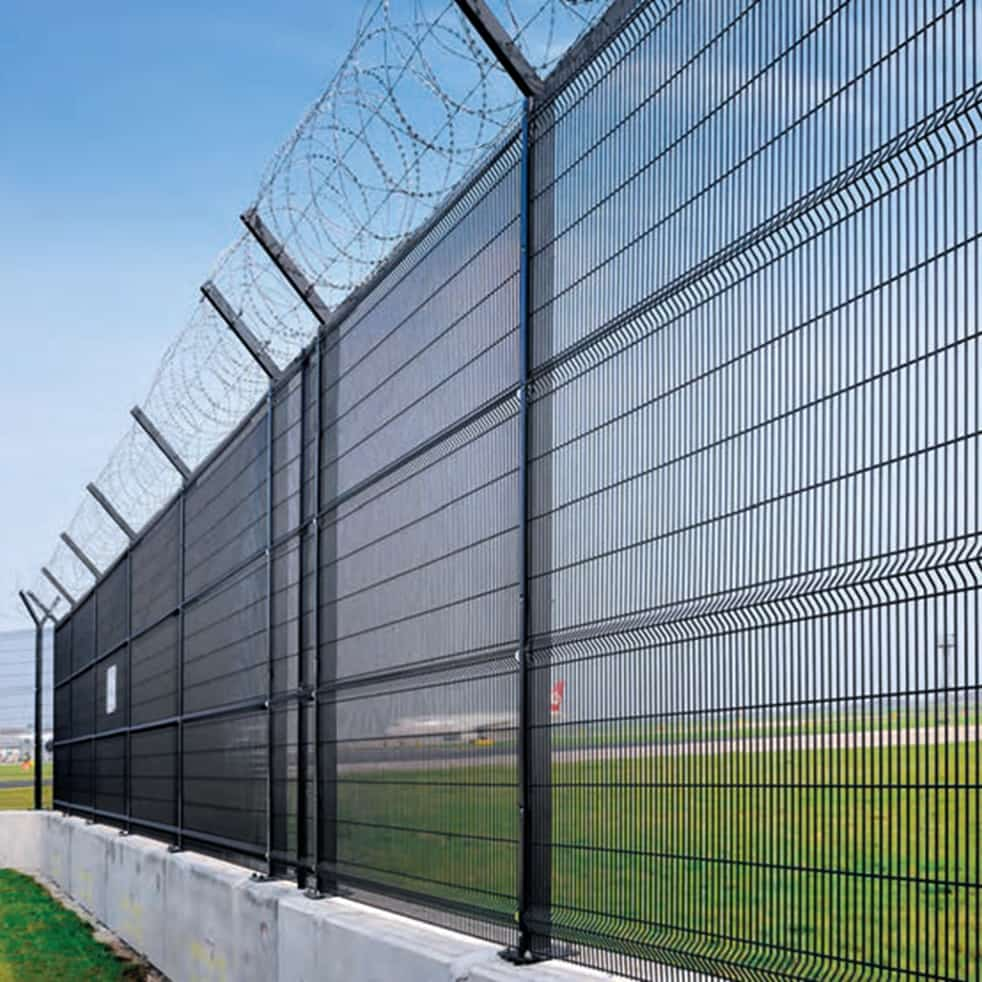
For high-security airport perimeters, 358 Anti-Climb Fence is a popular option.
Its small mesh opening of approximately 76.2 × 12.7 mm makes it difficult to gain a foothold or cut through the mesh using conventional hand tools.
It also maintains good visibility, which is useful for security patrols and surveillance systems.
This type of fence is worth considering for airport boundaries, restricted areas and other locations requiring enhanced perimeter protection.
2. Welded Mesh Airport Fence
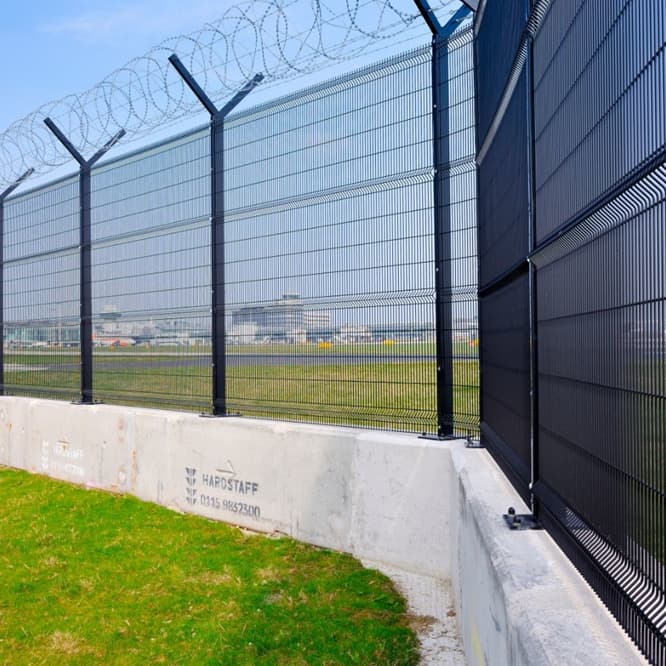
Welded mesh fencing offers a rigid structure and a clean appearance. Different wire diameters, mesh openings and panel heights can be selected according to the project.
It is suitable for airport support facilities, maintenance areas, warehouses and general perimeter separation where the required security level allows this design.
3. Chain Link Fence
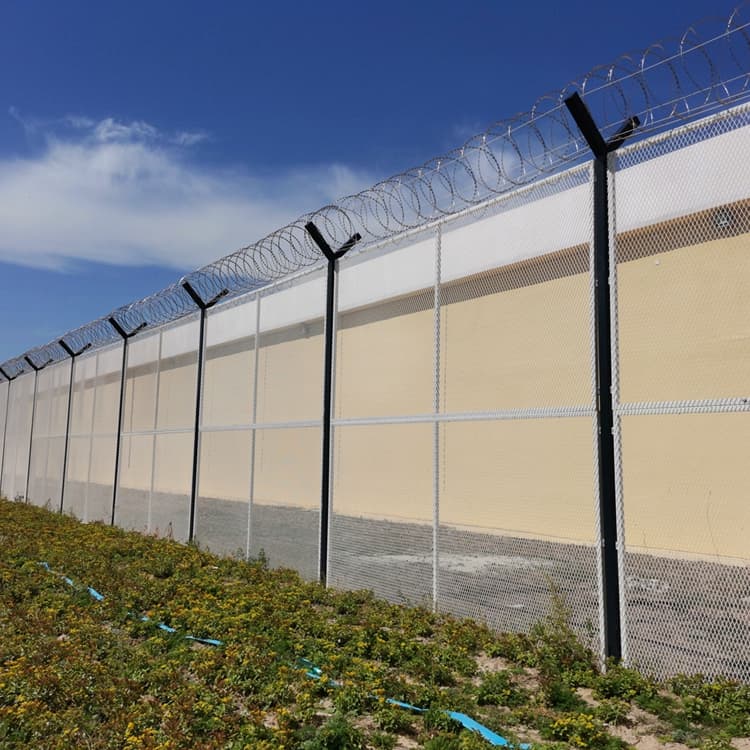
Chain Link Fence may also be used for selected airport facilities, temporary boundaries and lower-security areas.
Its flexible structure and practical installation make it suitable for covering large areas, although it may not provide the same anti-climb performance as specialized security mesh.
What Specifications Should You Consider?
Choosing an Airport Fence involves more than deciding how high the panels should be.
Fence Height: The height should match the security requirements of each zone. Restricted airport perimeters may require taller systems than general service areas.
Wire Diameter and Mesh Opening: Thicker wires can improve structural rigidity, while smaller mesh openings can make climbing and cutting more difficult.
Post Dimensions: Posts must support the panels and withstand the expected wind and structural loads. Their dimensions, wall thickness and spacing should be confirmed through project design.
Anti-Climb Features: Depending on the security requirements, additional features such as anti-climb mesh, security toppings or intrusion detection systems may be considered.
Gates and Access Control: Vehicle gates, pedestrian gates and controlled access points should be designed as part of the complete perimeter system.
For airport projects, fence panels and gates should never be specified independently of the overall security design.
Why Is Corrosion Protection Important for Airport Fence?
Airport fencing is generally exposed to outdoor conditions throughout the year. Rain, humidity, industrial pollution and coastal air can gradually affect the steel surface.
At Giant Fence, our welded mesh fencing products are manufactured in accordance with UNE-EN-10223-7:2013, with production controls covering steel wire materials, coating weight and welding processes.
For corrosion protection, we refer to ISO 9223:2012 to assess atmospheric corrosivity and select suitable coating solutions.
C1–C3: Low to medium corrosivity. Many inland airport locations may fall within these categories. Galvanized or powder-coated systems can be considered according to actual conditions.
C4–CX: High to extreme corrosivity. Coastal airports and heavily polluted industrial locations may require higher zinc coating weights or more protective coating systems.
How Long Can Airport Fence Last?
There is no single service life for every Airport Fence.
Under ideal conditions, with proper installation and no external damage, different coating systems can achieve their corresponding theoretical durability periods.
Actual performance depends on the environment, zinc coating weight, additional coating quality, installation and maintenance.
ISO 9223:2012 helps classify atmospheric corrosivity, but it does not guarantee a fixed number of service years.
For airports located near the sea or in industrial environments, confirming the coating specification before production is particularly important.
How Does Giant Fence Control Manufacturing Quality?
For infrastructure projects, consistent manufacturing quality matters just as much as the initial product design.
At Giant Fence, our welded mesh production process includes wire preparation, automatic mesh welding, panel forming, surface treatment and final inspection.
Our production controls focus on wire diameter, mesh dimensions, welding quality and coating requirements. Posts and accessories are also checked against approved specifications.
For export projects, suitable packaging helps protect the panels and coated surfaces during transportation.
We can also supply matching posts, clamps, fixing accessories and gates to support a more complete fencing solution.
What Should You Confirm Before Ordering Airport Fence?
Before requesting a quotation, it helps to prepare the following information:
Airport application and security zone.
Required fence height and total perimeter length.
Mesh opening and wire diameter.
Post dimensions and installation method.
Galvanizing and powder coating requirements.
Gate dimensions and access control requirements.
Project location and environmental conditions.
Applicable project drawings and security specifications.
For high-security airport projects, the final design should also be reviewed against the airport operator's requirements and relevant local security regulations.
Choosing the Right Airport Fence with Giant Fence
An Airport Fence needs to do more than create a physical boundary. It should support the airport's security arrangements while providing reliable outdoor performance over time.
358 Anti-Climb Fence may be suitable for restricted perimeters, while standard welded mesh systems can work well for selected support facilities and service areas.
The right choice depends on the security level, site conditions and project specifications.
At Giant Fence, we help customers review their fencing requirements and select suitable mesh panels, posts, gates and corrosion protection systems.
Planning an airport fencing project?
Share your project drawings, required dimensions, security level and installation location with Giant Fence. Our team can help review the specifications and recommend a suitable Airport Fence solution.
A reliable airport perimeter starts with the right design and the right materials.
Frequently Asked Questions About Airport Fence
Q1: What type of fence is best for airport security?
A1: 358 Anti-Climb Fence is a common choice for high-security airport perimeters because its small mesh openings make climbing and cutting more difficult. The final selection depends on the project's security requirements.
Q2: Why is 358 mesh used for Airport Fence?
A2: Its approximately 76.2 × 12.7 mm mesh opening provides good visibility while making it difficult to obtain a foothold or pass conventional cutting tools through the mesh.
Q3: Can Airport Fence be customized?
A3: Yes. Panel height, wire diameter, mesh opening, post dimensions, coating and gate configurations can be customized according to project drawings.
Q4: What coating is suitable for coastal airports?
A4: Higher zinc coating weights or suitable powder-coated systems may be considered for C4–CX environments under ISO 9223:2012, depending on actual exposure conditions.
Q5: Can Giant Fence supply complete Airport Fence systems?
A5: Giant Fence can supply welded mesh panels, 358 security fencing, posts, gates and matching fixing accessories according to project requirements.
Q6: Which manufacturing standard does Giant Fence follow?
A6: Our welded mesh fencing products are manufactured in accordance with UNE-EN-10223-7:2013, with controls covering steel wire materials, coating weight and welding processes.