


When choosing a 3D Fence, the surface treatment deserves as much attention as the wire diameter, mesh opening, and panel dimensions.
Two commonly discussed options are galvanizing and powder coating. Both help protect steel fencing, but they work in different ways. One uses zinc to protect the steel, while the other applies a polymer coating to create a protective and decorative surface.
For distributors, contractors, and project engineers, understanding the difference helps avoid comparing products that are not technically equivalent.
So, which option is better for your project? Let's take a closer look.
1. What Is a Galvanized 3D Fence?
A galvanized 3D Fence uses steel wire protected by a zinc coating. The zinc layer acts as a barrier and also provides sacrificial protection, helping protect the underlying steel when the coating is locally damaged.
Depending on the manufacturing process, two common approaches are used:
· Pre-galvanized wire: Steel wire is galvanized before being welded into fence panels.
· Hot-dip galvanizing after welding: The completed welded panel is galvanized, allowing the coating to cover the fabricated structure, including suitable welded areas.
Galvanized 3D Fence panels are commonly used for industrial boundaries, warehouses, commercial properties, and general outdoor fencing.
The actual corrosion protection depends on the zinc coating quality, coating mass, fabrication process, and environmental exposure.
2. What Is a Powder Coated 3D Fence?
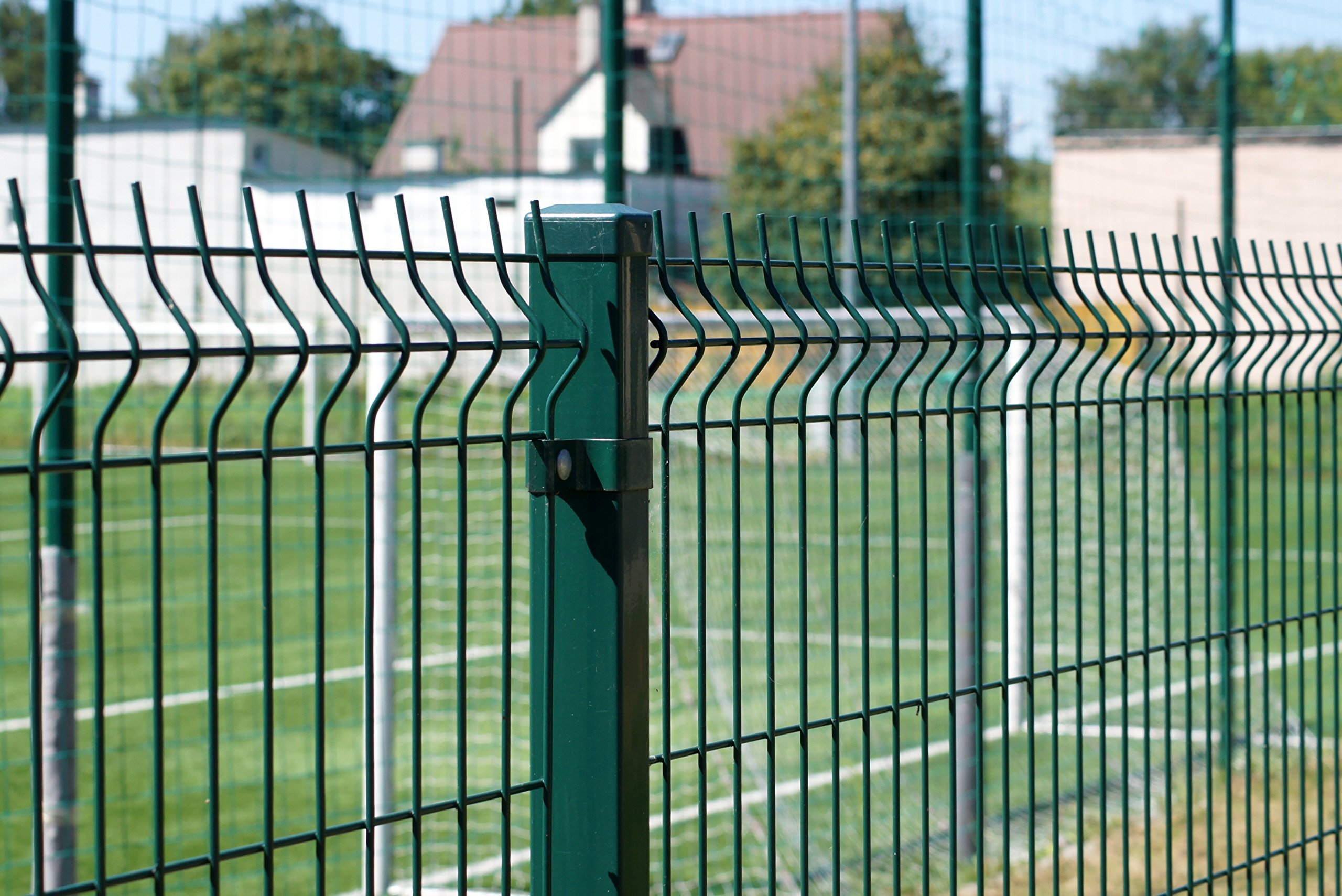
Powder coating is a surface finishing process in which dry polymer powder is applied to a prepared metal surface and cured using heat to form a continuous coating.
For 3D Fence panels, powder coating provides two main benefits:
· Additional surface protection: Creates a protective layer over the steel or underlying metallic coating.
· Improved appearance: Offers different colours and finishes to match buildings, gardens, and surrounding environments.
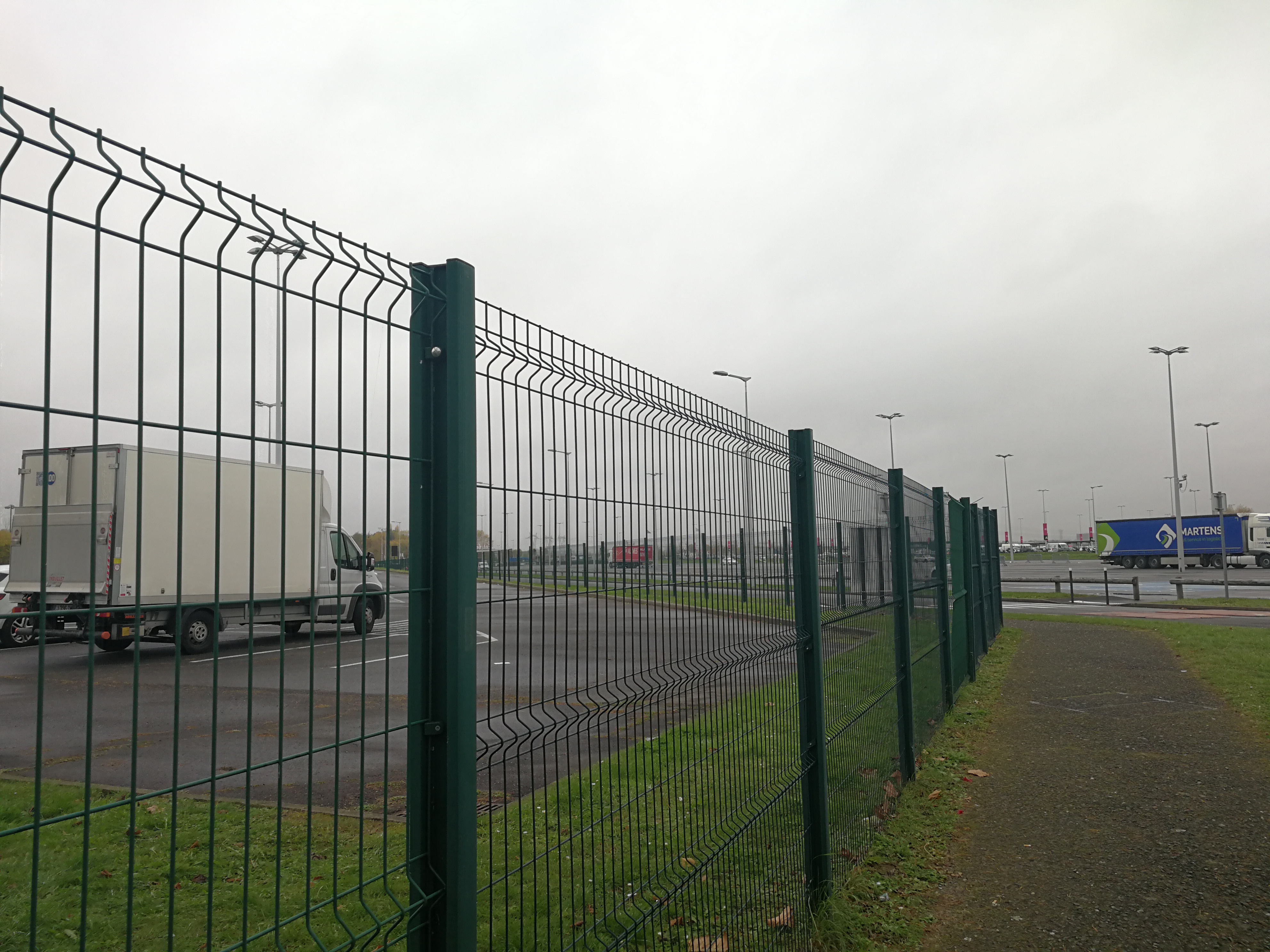
Green, black, and grey are common choices for outdoor fencing.
However, powder coating alone and galvanizing plus powder coating are not the same system. Some powder coated panels use galvanized steel as the base material, while others may use a different substrate preparation process.
Buyers should always confirm the complete manufacturing process before ordering.
3. Galvanized vs. Powder Coated 3D Fence: Key Differences
The main difference is the protection mechanism and the finished surface.
|
Comparison |
Galvanized Fence |
Powder Coated Fence |
|
Protection material |
Zinc |
Polymer coating |
|
Protection mechanism |
Barrier and sacrificial protection |
Physical protective layer |
|
Appearance |
Metallic silver-grey |
Coloured finish |
|
Colour options |
Mainly metallic |
Multiple colours |
|
Additional process |
Galvanizing |
Powder application and curing |
|
Main consideration |
Zinc coating mass |
Coating thickness and adhesion |
3.1 Corrosion Protection
Galvanizing protects steel through zinc's barrier and sacrificial action.
Powder coating provides a physical layer that separates the metal surface from environmental exposure.
Both have their own advantages, but their performance depends on coating quality and application conditions.
3.2 Appearance and Design
Galvanized fencing has a traditional metallic appearance, making it suitable for projects where appearance is less important than functional perimeter protection.
Powder coated fencing offers greater design flexibility. It can blend more naturally into residential communities, parks, commercial properties, and public spaces.
3.3 Maintenance Considerations
Both systems require appropriate inspection and maintenance.
If a powder coating is scratched or damaged, the exposed area may become more vulnerable to corrosion, particularly if the underlying steel has no metallic protection.
A galvanized coating can continue providing sacrificial protection in certain locally damaged areas, although its effectiveness depends on the remaining zinc coating and exposure conditions.
4. Why Combine Galvanizing and Powder Coating?
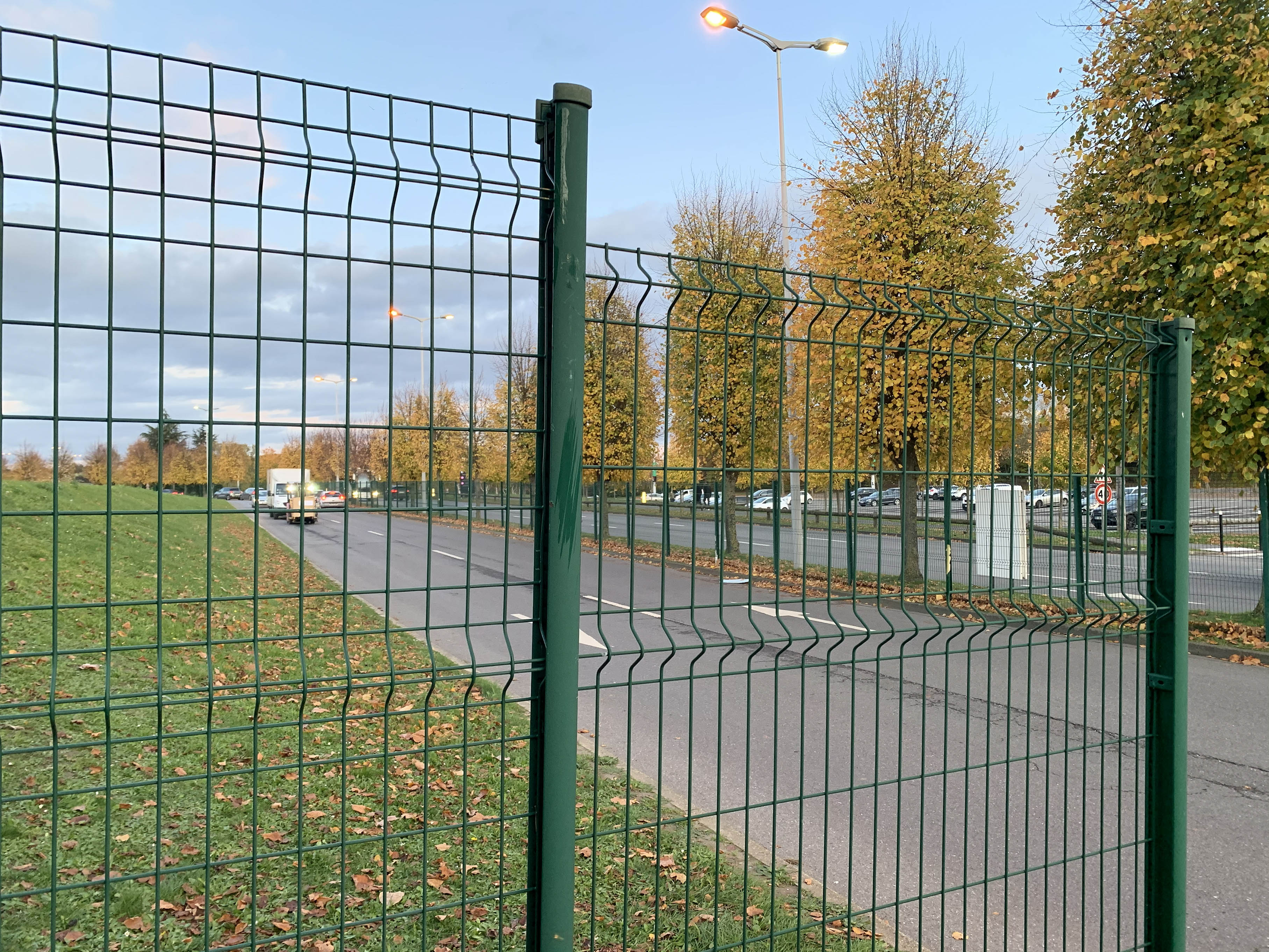
For many outdoor fencing projects, combining galvanizing and powder coating is worth considering.
The two processes provide different types of protection:
· Galvanizing provides zinc-based corrosion protection.
· Powder coating adds an additional protective and decorative layer.
When properly applied, the combination can provide a more comprehensive coating system than relying on powder coating over untreated steel alone.
However, the result depends heavily on surface preparation, coating compatibility, adhesion, and process control.
For buyers, it is important to confirm whether the manufacturer uses pre-galvanized wire or hot-dip galvanizing after fabrication before powder coating.
5. Which Surface Treatment Is Suitable for Different Environments?
The right choice depends on the installation environment, project budget, appearance requirements, and expected maintenance conditions.
|
Application |
Possible Surface Treatment |
|
General industrial boundaries |
Galvanized |
|
Residential communities |
Galvanized + Powder Coating |
|
Gardens and parks |
Powder Coating over suitable protected steel |
|
Commercial properties |
Galvanized or combined coating |
|
Coastal environments |
Project-specific enhanced corrosion protection |
For more corrosive environments, buyers should not select a coating based on appearance alone.
ISO 9223:2012 provides a framework for classifying atmospheric corrosivity from C1 to CX. The appropriate coating system should be selected according to actual exposure conditions and project specifications.
It is also important to remember that atmospheric corrosivity classification does not directly determine the service life of every fence coating system.
6. Buying Guide for Distributors and Contractors
When comparing galvanized and powder coated 3D Fence panels, make sure the quotations describe the actual coating process.
Before placing an order, confirm:
1. Base material: Steel wire specifications and material requirements.
2. Galvanizing process: Pre-galvanized wire or galvanizing after welding.
3. Zinc coating: Required coating mass and inspection method.
4. Powder coating: Coating type, thickness, colour, and adhesion requirements.
5. Panel specifications: Height, width, mesh opening, and wire diameter.
6. Quality inspection: Relevant coating and dimensional inspection records.
7. Accessories: Posts, clamps, brackets, and fixing components.
8. Packaging and delivery: Protection during transportation and production lead time.
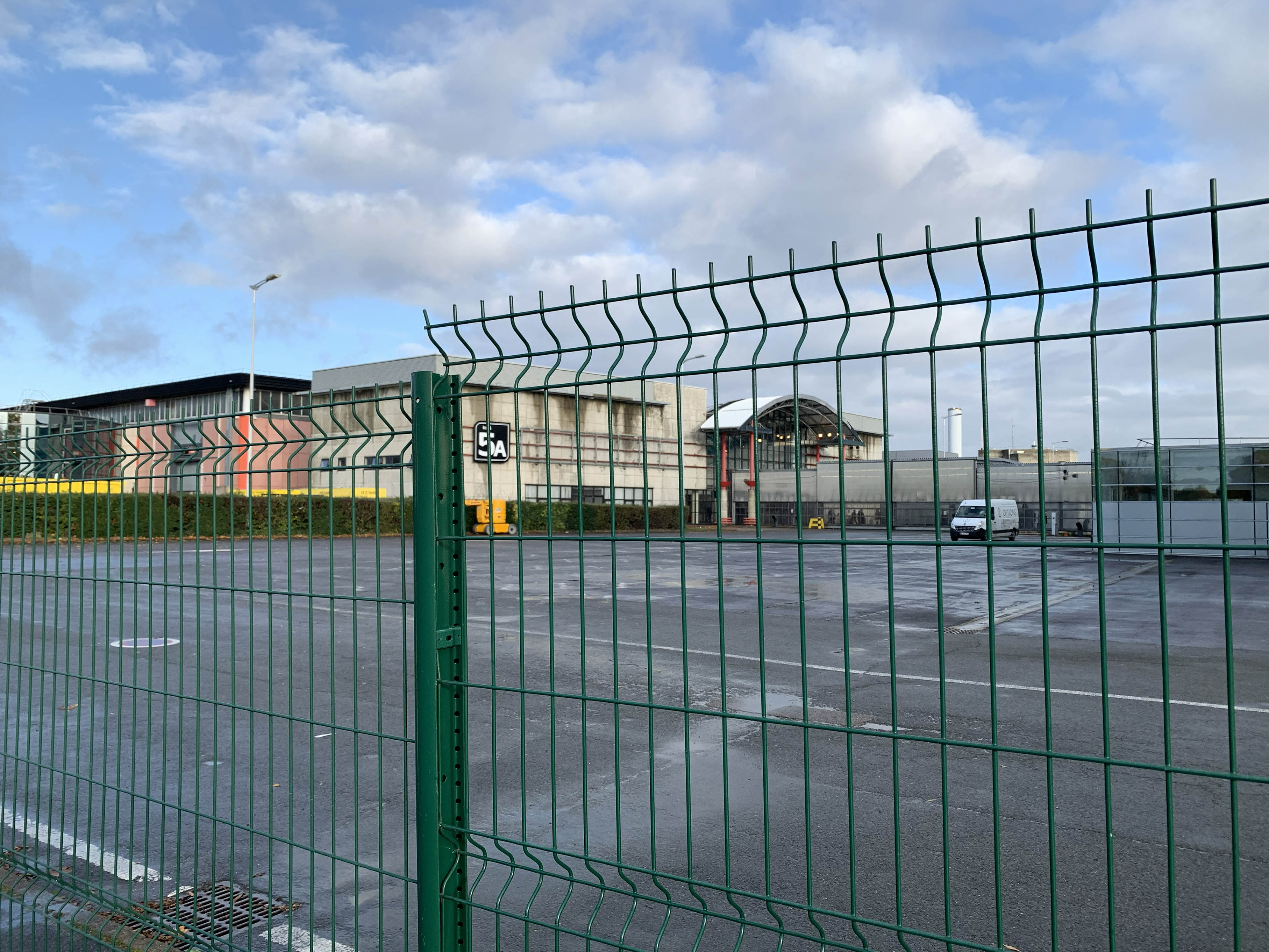
One important point: two panels may look almost identical after powder coating, but their underlying corrosion protection systems may be very different.
Always compare the complete technical specifications rather than relying on the final colour or unit price.
7. Why Choose Giant Fence?
Hebei Giant Metal Technology Co., Ltd. (Giant Fence) is an integrated metal fencing manufacturer and exporter, supplying fencing products and related solutions to international markets.
With experience in welded wire mesh manufacturing, panel processing, and surface treatment, Giant Fence supports different 3D Fence requirements for residential, commercial, and industrial projects.
Buyers can discuss:
· Galvanized and powder coated 3D Fence options.
· Different wire diameters and mesh openings.
· Customized panel heights and widths.
· Suitable corrosion protection systems.
· Matching posts and fixing accessories.
· Bulk production and export packaging requirements.
Our approach is to understand the project environment first, confirm the technical requirements, and then discuss a suitable product configuration.
8. Frequently Asked Questions About 3D Fence Coatings
Q1: Is galvanized 3D Fence better than powder coated 3D Fence?
Neither is automatically better. Galvanizing provides zinc-based protection, while powder coating provides a polymer surface layer and colour options. The choice depends on the project requirements.
Q2: Can powder coating be applied over galvanized steel?
Yes. Powder coating can be applied over properly prepared galvanized steel, provided the surface preparation and coating process are suitable for the materials involved.
Q3: Does powder coating prevent rust completely?
No coating can guarantee complete protection under every condition. Performance depends on coating quality, adhesion, surface preparation, and environmental exposure.
Q4: Which is more suitable for coastal fencing projects?
Coastal environments generally require enhanced corrosion protection. A properly specified galvanized and powder coated system may be considered, but the final selection should follow the project's environmental and technical requirements.
Q5: What should buyers check when ordering powder coated 3D Fence?
Confirm the base steel protection, powder coating thickness, colour, adhesion requirements, and inspection method. These details help ensure that the finished product meets the agreed specifications.
Conclusion
Choosing between galvanized and powder coated 3D Fence is not simply a matter of selecting a silver or coloured finish.
Galvanizing protects steel through zinc-based corrosion protection, while powder coating provides an additional polymer layer and greater design flexibility. When properly combined, the two processes can offer complementary protection for outdoor fencing.
For distributors, contractors, and project engineers, understanding the complete coating process is essential when comparing suppliers and controlling long-term project costs.
Looking for galvanized or powder coated 3D Fence for your next project? Contact Giant Fence with your drawings, required specifications, and estimated quantities. Our team can help review your requirements and discuss a suitable fencing solution.