


How to Choose a Security Fence: Comparing Mesh, Palisade and 358 Systems
The Real Challenge Behind Security Fence Selection
When planning a perimeter system, most buyers ask: “Which fence is strongest?”
But real security performance depends on more than steel thickness — it involves visibility, climb resistance, anti-cut capability, maintenance requirements, and integration with electronic security systems.
Choosing between mesh, palisade, and 358 fences isn’t only a matter of budget — it’s about how effectively the fence performs in its intended environment, from residential estates to airports or energy facilities.
Understanding the Engineering Principles of Fence Security
A security fence functions as both a physical barrier and a psychological deterrent. Its effectiveness relies on several engineering factors:
-
Structural Rigidity: How well the frame resists deformation or bending.
-
Mesh Density: Smaller apertures limit climbing and cutting attempts.
-
Height and Foundation: Determines visibility control and intrusion delay time.
-
Coating and Corrosion Resistance: Ensures performance under UV, rain, and chemical exposure.
-
Integration Potential: Ability to combine with cameras, sensors, or razor wire for layered defense.
The right system balances all five parameters rather than maximizing one.
Comparing Mesh, Palisade, and 358 Fence Systems
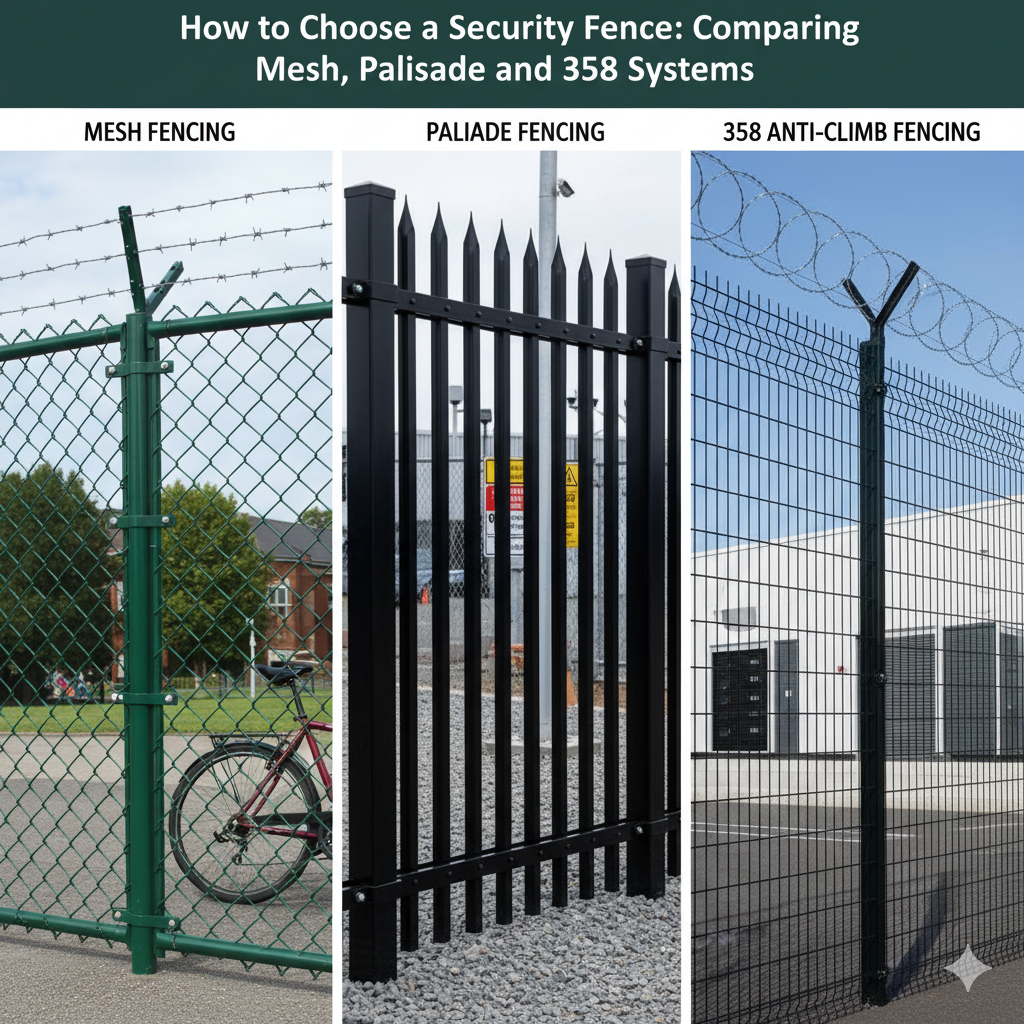
| Type | Structure | Anti-Climb Rating | Anti-Cut Performance | Visibility | Maintenance | Typical Use |
|---|---|---|---|---|---|---|
| Standard Welded Mesh Fence | 4–5 mm wire, 50×200 mm aperture | Moderate | Moderate | High | Low | Residential, light industrial |
| Palisade Fence | Vertical steel pales with pointed tops | High | High | Medium | Moderate | Factories, logistics yards |
| 358 Security Fence | 4 mm wire, 12.7×76.2 mm aperture (“prison mesh”) | Very High | Very High | Controlled | Very Low | Prisons, airports, critical sites |
Mesh fences offer balance between visibility and cost.
Palisade systems act as strong deterrents but may appear aggressive.
358 fences deliver unmatched anti-intrusion performance, often used for high-security and critical infrastructure.
Engineering Solutions for Enhanced Protection
Modern perimeter protection combines mechanical strength with smart technology.
Giant Fence integrates coated steel frameworks and anti-cut mesh panels that support sensor mounting and modular installation.
Key enhancements include:
-
Hot-dip galvanization and powder coating for dual corrosion protection.
-
Modular bolt-fixed design for quick maintenance without welding.
-
Custom panel heights (up to 3.6 m) with barbed or razor topping options.
-
Sensor compatibility — vibration, fiber optic, and motion detection ready.
These solutions transform fences from passive barriers into active security systems.
Advantages of an Engineered Security Fence
An engineered security fence goes beyond basic strength — it delivers precision, durability, and adaptability through advanced design.
-
Stronger Structure: Each panel is manufactured with uniform wire tension and robotic welding, ensuring rigidity against wind and impact without excess weight.
-
Long-Term Protection: Dual-layer coating (galvanization + powder finish) prevents rust and color fading for up to 20 years, even in coastal or humid zones.
-
Lower Lifetime Cost: Minimal repainting and easy modular replacement reduce maintenance expenses by over 30% across its lifespan.
-
Smart Integration: The mesh geometry allows seamless integration with cameras, sensors, and lighting, turning the fence into an intelligent security layer.
-
Aesthetic Flexibility: Multiple RAL color options and sleek finishes help the system blend into residential, industrial, or public environments.
In short, engineered fences combine mechanical reliability, modern appearance, and economic value — offering protection that looks good and lasts.
Application Scenarios and Selection Guidance
| Environment | Recommended Type | Rationale |
|---|---|---|
| Residential Complexes | Welded Mesh Fence | Balances safety and aesthetics |
| Factories & Warehouses | Palisade Fence | Strong deterrence and easy section replacement |
| Power Plants / Airports | 358 Security Fence | High anti-cut and anti-climb performance |
| Public Facilities (Schools, Parks) | Mesh Fence | Friendly appearance, adequate safety |
| Border & Correctional Sites | 358 + Razor Wire | Maximum containment and monitoring efficiency |
Selection depends on your threat level, visibility preference, and maintenance capacity.
Common Questions
What does “358” mean?
It refers to the mesh aperture: 3″ × 0.5″ × 8 gauge — fine enough to prevent climbing and tool entry.
Can I paint or recolor a coated fence?
Powder-coated finishes already provide UV protection; repainting is unnecessary for 15+ years.
Is palisade fencing still relevant today?
Yes — especially where strong visual deterrence is needed, such as industrial and logistics zones.
What’s the typical lifespan of a security fence?
With galvanized and powder-coated protection, most systems last 15–25 years with minimal maintenance.
Engineering Security That Lasts
A security fence is more than metal and mesh — it’s the foundation of perimeter strategy.
By understanding the functional differences between mesh, palisade, and 358 systems, decision-makers can invest in protection that’s not only stronger but also smarter.
For consultation, technical drawings, or material specifications, visit Giant Fence or contact our engineering team.