


For industrial contractors, property developers, and international fencing distributors, selecting a reliable metal fence gate manufacturer involves more than comparing gate prices or steel frame dimensions.
A successful entrance system must coordinate pedestrian and vehicle access, structural supports, gate hardware, adjacent fencing, corrosion protection, and operational safety. When these components are sourced without a unified specification, even a well-manufactured gate can create installation difficulties.
Typical procurement problems include incompatible gate posts, insufficient opening clearance, poorly coordinated hinges, missing accessories, inconsistent coatings, and automation systems that have not been properly evaluated for the site.
This guide explains how B2B buyers can specify complete metal gate systems, compare entrance configurations, evaluate manufacturing quality, and prepare a detailed RFQ for industrial parks, logistics facilities, and mixed-use developments.
It also introduces how Giant Fence, operated by Hebei Giant Metal Technology Co., Ltd., supports coordinated fencing and entrance solutions for international projects.
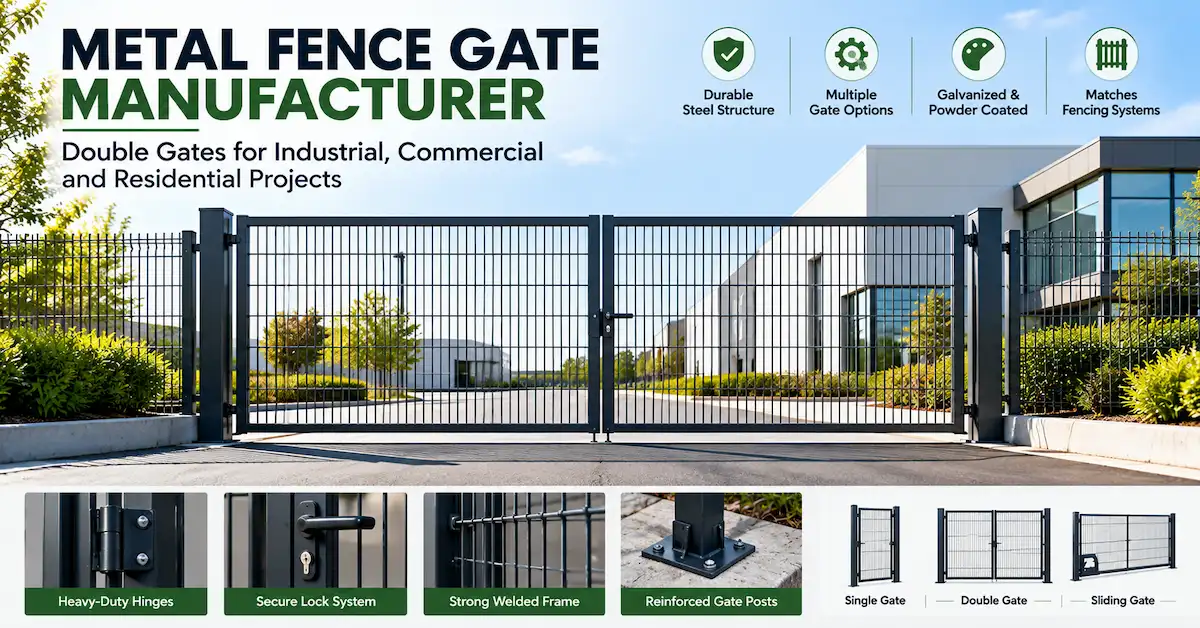
Quick Answer: How to Choose a Metal Fence Gate Manufacturer
Choose a metal fence gate manufacturer that can provide dimensioned gate drawings, compatible support posts, appropriate hardware, suitable corrosion protection, and a complete bill of materials.
For multi-entrance projects, evaluate pedestrian gates and vehicle gates separately. Confirm clear opening widths, traffic requirements, operating space, foundation conditions, and automation responsibilities before approving production.
The lowest gate-leaf price is not necessarily the lowest installed-system cost.
Key Takeaways for B2B Gate Buyers
-
Complete system compatibility: Gate frames, posts, hinges, locks, and adjacent fencing must work together.
-
Entrance-specific selection: Pedestrian, swing, sliding, and cantilever gates serve different access requirements.
-
Structural integrity: Gate weight, frame rigidity, hinges, supports, and foundations determine operational reliability.
-
Safety requirements: Powered vehicle gates require appropriate risk assessments, protective devices, and commissioning.
-
Corrosion protection: Steel gates, posts, and hardware should receive compatible protection for the actual environment.
-
Quality assurance: Dimensional inspection, welding checks, trial assembly, and hardware verification reduce procurement risks.
-
Commercial clarity: Request an itemized quotation covering the complete gate system, not only the gate leaf.
What Does a Metal Fence Gate Manufacturer Supply?
A metal fence gate manufacturer produces access components that integrate with perimeter fencing systems.
Depending on the product range, these may include steel tubular gates, welded mesh infill gates, pedestrian gates, double swing gates, sliding gates, and customized entrance assemblies.
A complete gate system generally consists of:
-
Metal gate frame and infill.
-
Structural support posts.
-
Hinges, rollers, tracks, or cantilever mechanisms.
-
Latches, locks, stops, and fixing accessories.
-
Base plates, anchors, or embedded support details.
-
Compatible adjacent fence connections.
-
Automation interfaces and protective devices where specified.
The key distinction is between buying an individual gate leaf and purchasing a coordinated entrance system.
A gate leaf may represent only part of the final project cost. Additional structural components, hardware, civil works, and installation services can materially affect the budget.
Giant Fence offers metal fencing and matching entrance systems for residential, commercial, and industrial applications. Its company profile provides information about its manufacturing background and product capabilities.
Which Metal Fence Gate Type Should You Choose?
The correct opening mechanism depends on available space, site traffic, operating frequency, terrain, and project requirements.
Gate Type Comparison
| Gate Type | Main Advantages | Main Limitations | Typical Application |
|---|---|---|---|
| Single Swing Gate | Simple construction and practical pedestrian access | Requires swing clearance | Staff entrances, garden access |
| Double Swing Gate | Wide opening divided between two leaves | Requires suitable swing area and support posts | Factory entrances, housing developments |
| Tracked Sliding Gate | Avoids a large inward or outward swing arc | Requires lateral travel space and a maintained track | Warehouses, logistics yards |
| Cantilever Sliding Gate | No continuous ground track across the opening | Requires counterbalance space and engineered supports | Industrial vehicle entrances |
| Custom Matching Gate | Coordinates infill, finish, and geometry with fencing | Requires careful manufacturing and interface control | Complete perimeter projects |
These are functional comparisons, not universal performance rankings.
Single Swing Gates for Pedestrian Access
Single swing gates suit entrances where people need controlled access without opening a large vehicle gate.
The specification should identify clear passage width, opening direction, frame dimensions, hinge arrangement, latch type, and accessibility requirements.
For employee entrances or residential pathways, the designer must also consider emergency access and applicable local regulations.
Learn more in Giant Fence's single gate selection guide.
Double Swing Gates for Vehicle Entrances
Double swing gates divide the entrance into two leaves.
They may suit sites with sufficient opening clearance and an appropriate foundation arrangement.
Buyers should verify the leaf weights, hinge capacities, center stops, drop bolts, structural bracing, and gate-post design.
Sliding and Cantilever Gates
Sliding gates are useful where a conventional swing gate would interfere with nearby traffic or occupy valuable operating space.
Tracked systems require suitable ground conditions and maintenance of the track area.
Cantilever systems eliminate the continuous ground track across the opening but require sufficient lateral space and an engineered support arrangement.
For both systems, the designer must assess the travel path, moving components, wind exposure, and foreseeable contact with people or vehicles.
Technical Specifications Buyers Must Confirm
A reliable quotation requires consistent specifications across suppliers.
The following checklist is intended for supplier evaluation, not as a claim that all Giant Fence gate models share the same dimensions.
| Specification | Required Information | Why It Matters |
|---|---|---|
| Gate Type | Single, double, tracked sliding, cantilever | Determines operating mechanism |
| Clear Opening Width | Actual usable passage width | Vehicle and pedestrian access |
| Gate Height | Finished gate height | Matches surrounding fence |
| Frame Material | Steel grade and section type | Structural design |
| Frame Profile | Square or rectangular tubular section | Rigidity and fabrication |
| Wall Thickness | Approved tube thickness | Material and structural performance |
| Infill | Welded mesh, tubular bars, or other approved design | Appearance, visibility, security |
| Support Posts | Section, wall thickness, length | Transmits operational loads |
| Hardware | Hinges, rollers, locks, guides, stops | Reliable operation |
| Surface Finish | Galvanizing, powder coating, or specified system | Corrosion protection |
| Operating Method | Manual or powered | Safety and equipment requirements |
| Installation | Embedded or base-plated | Foundation and anchoring design |
Why Gate Width Is Not the Same as Leaf Width
Buyers frequently specify an entrance as "5 meters wide" without defining whether this means the clear passage or the overall manufactured assembly.
These measurements can differ.
A final drawing should distinguish:
-
Clear opening between structural obstructions.
-
Overall gate frame dimensions.
-
Gate-leaf dimensions.
-
Hinge and operating clearances.
-
Post centerlines.
-
Travel or swing envelope.
The manufacturer should confirm the dimensions before fabrication.
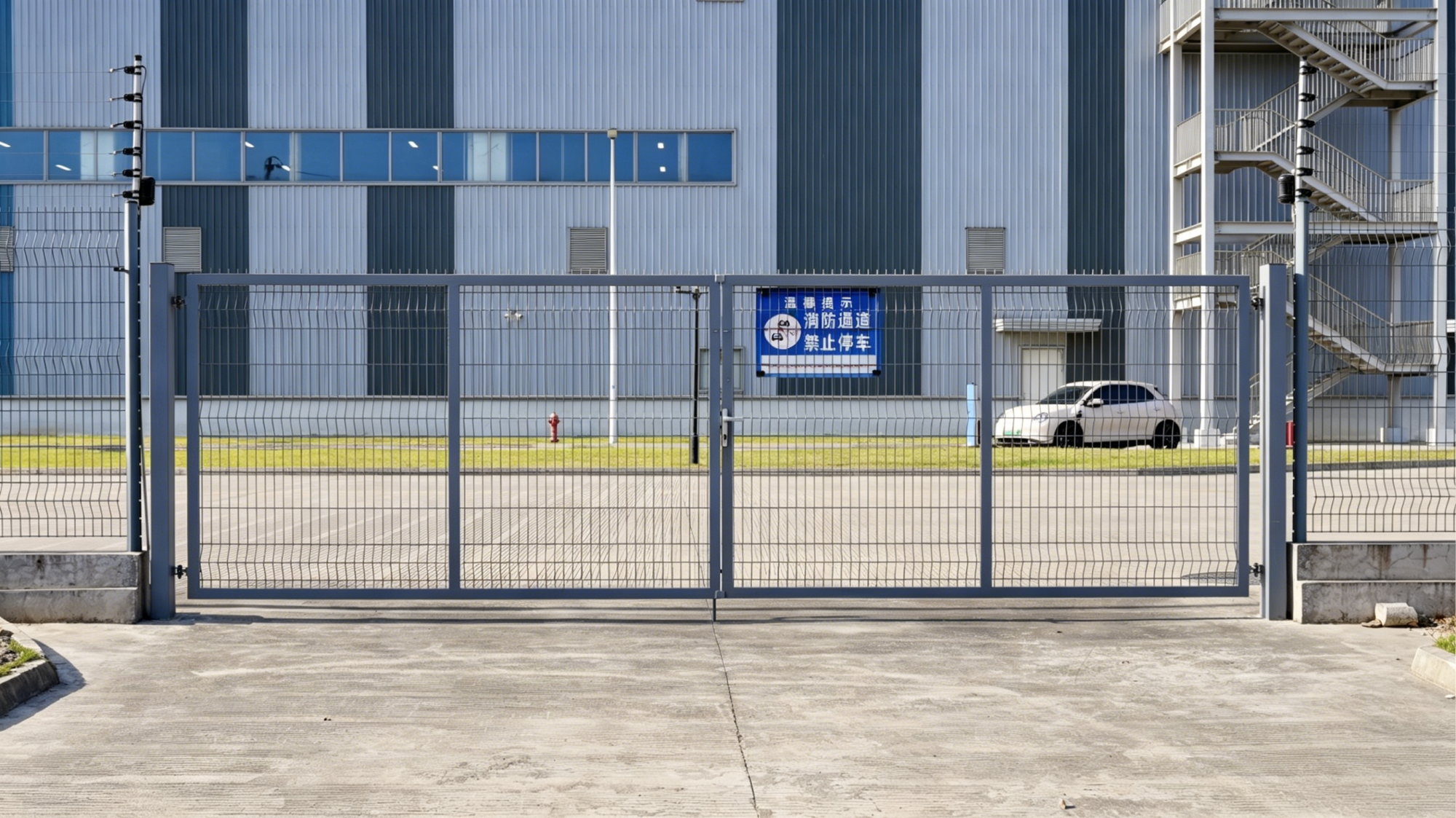
Why Gate Posts and Hardware Are Critical
One of the most expensive mistakes in gate procurement is treating structural gate posts as interchangeable with ordinary fence-line posts.
Fence posts generally carry loads from fixed panels. Gate posts may also carry changing loads from moving leaves, hinges, and operating mechanisms.
Gate Support Considerations
Post section and wall thickness: The post must be designed for the required loading conditions.
Hinge arrangement: Hinge locations affect the transfer of forces between the gate and post.
Foundations: The foundation must account for ground conditions, gate operation, and relevant loads.
Anchorage: Base plates and anchors must be selected for the actual structural requirements.
Alignment: Incorrect positioning can cause poor closing, rubbing, or operating problems.
A thicker post alone does not guarantee a safe installation. The complete support and foundation system must be appropriate.
Hardware Procurement Checklist
Before ordering, confirm the required hinges, locks, drop bolts, stoppers, rollers, guides, fasteners, and replacement components.
For powered systems, also establish which supplier is responsible for motors, controls, electrical connections, safety devices, and commissioning.
Matching Metal Gates with 2D, 3D, and Privacy Fence Systems
For property developers and EPC contractors, coordinated fencing and entrance systems can reduce interface problems.
Giant Fence offers entrance configurations that combine welded mesh fencing with pedestrian and vehicle gates.
Its driveways and entrances solutions illustrate several approaches.
3D Fence with Pedestrian and Double Gates
This arrangement can be suitable for residential communities requiring separate pedestrian and vehicle entrances.
The gate height, finish, and frame appearance should coordinate with the 3D mesh fence.
2D Fence with Sliding Vehicle Gates
Double-wire fencing may be used around industrial or commercial boundaries.
A matching sliding gate can offer vehicle access without requiring a large swing area.
The gate frame, however, must be engineered independently of the surrounding mesh panels.
Privacy Fence with Coordinated Entrance Gates
Privacy fencing can require matching gate infill and finishes.
Additional screening may increase wind loads. This should be considered when specifying gate frames, hinges, posts, and automated systems.
Gabion and Metal Gate Combinations
Architectural entrances may combine gabion walls with steel fencing and vehicle gates.
A decorative gabion structure should not automatically be considered a suitable structural support for a moving gate.
Use an appropriate independent support arrangement unless a qualified designer specifies otherwise.
Safety Requirements for Manual and Automated Metal Gates
A professional metal fence gate manufacturer should help buyers identify applicable safety requirements without claiming that every gate configuration meets every international standard.
Manual Gate Safety
Manual gates should be evaluated for foreseeable hazards, including uncontrolled movement, trapping points, unstable supports, and unsuitable operating arrangements.
Hardware and access requirements should match the installation environment.
Automated Gate Safety
Powered gates introduce additional risks.
These may include crushing, shearing, drawing-in, and trapping hazards around moving leaves, hinges, posts, and guide mechanisms.
Relevant technical references include:
-
EN 12453:2017+A1:2021, addressing safety requirements and test methods for power-operated doors and gates within its scope.
-
ASTM F2200-24, addressing construction requirements for automated vehicular gates in relevant applications.
-
UL 325, relevant to automated gate operators in applicable North American systems.
The applicable requirements depend on destination country, intended users, gate configuration, and local regulations.
Compliance must be assessed for the actual installed system. The presence of an electric motor does not establish that the entire gate is compliant.
The manufacturer, automation supplier, designer, and installer should agree their respective responsibilities before installation.
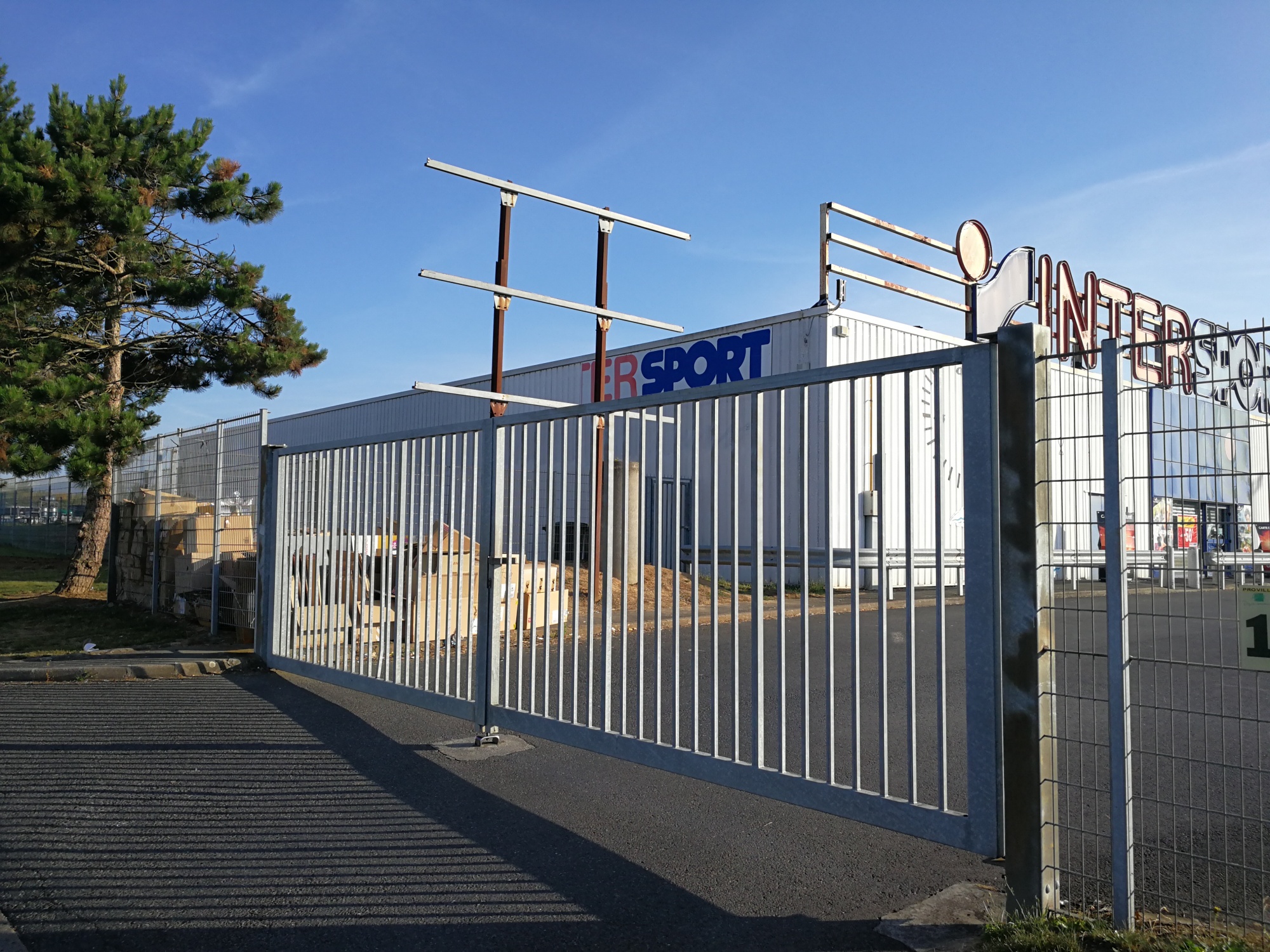
Manufacturing Process and Quality Control
A dependable metal fence gate manufacturer should establish measurable production and inspection requirements.
Giant Fence's published manufacturing capabilities include metal fabrication, fencing components, surface treatment, and quality-control operations.
The actual scope of each order should be confirmed through drawings and inspection requirements.
Recommended Production Workflow
1. Technical Drawing Approval
Confirm gate geometry, material sections, hardware positions, and installation interfaces.
2. Material Preparation
Check material specifications and required dimensions before cutting and fabrication.
3. Frame Fabrication
Control joint preparation, welding, squareness, and alignment.
4. Hardware Preparation
Verify hinge plates, brackets, lock locations, and other mounting details.
5. Surface Treatment
Apply the specified corrosion-protection system using the agreed process.
6. Trial Assembly
Check alignment and compatibility of the gate, hardware, and support arrangement.
7. Final Inspection and Packing
Verify dimensions, appearance, supplied components, and shipping protection.
Quality Inspection Matrix
| Inspection Item | What Buyers Should Check |
|---|---|
| Frame Dimensions | Width, height, diagonals, and tolerances |
| Structural Sections | Material, profile dimensions, wall thickness |
| Welding | Applicable workmanship and inspection criteria |
| Gate Alignment | Frame geometry and closing clearances |
| Hardware | Correct type, quantity, position, and operation |
| Support Posts | Dimensions, connection details, base plates |
| Coating | Agreed process, condition, and acceptance criteria |
| Trial Fit | Gate-to-post compatibility |
| Packaging | Protection, identification, and completeness |
For bulk orders, approve a first article before full production whenever appropriate.
Buyers can also review Giant Fence's resource center for available company and technical documentation.
Corrosion Protection for Outdoor Metal Gates
Gate components are exposed to rain, humidity, temperature changes, and sometimes coastal or industrial pollutants.
An appropriate protective system should address the gate frame, posts, hinges, fasteners, and fabricated connections.
Common options may include galvanized steel, powder-coated finishes, or compatible combined protection systems.
For coated assemblies, buyers should clarify:
-
Substrate preparation.
-
Galvanizing process where specified.
-
Powder-coating requirements.
-
Color reference.
-
Coating acceptance criteria.
-
Protection of drilled or welded areas.
-
Hardware corrosion compatibility.
ISO 9223 provides a framework for understanding atmospheric corrosivity, but does not establish a guaranteed product service life.
For coastal projects, the protective system should be specified according to the actual environment rather than a generic promise of permanent rust resistance.
Worked Example: A Mixed-Access Industrial Perimeter
Consider a hypothetical industrial development with a total boundary length of 380 meters.
The project requires several entrance types:
| Entrance Type | Quantity | Clear Opening Each | Total Opening |
|---|---|---|---|
| Pedestrian Single Gate | 2 | 1.2 m | 2.4 m |
| Double Swing Vehicle Gate | 2 | 5.0 m | 10.0 m |
| Sliding Service Gate | 1 | 7.0 m | 7.0 m |
| Total | 5 | — | 19.4 m |
Assuming all entrances fall along the measured perimeter:
Net Fixed-Fence Length = 380 − 19.4 = 360.6 meters
This provides an initial quantity-planning basis.
However, it does not determine manufactured gate-leaf widths, number of support posts, or foundation dimensions.
What Should the Procurement Team Verify?
First, confirm whether all five entrances require separate structural support posts.
Second, identify the vehicle turning requirements and operating space around each gate.
Third, coordinate the gate infill and protective finish with the remaining fence panels.
Fourth, confirm whether the sliding gate requires automation and what protective equipment must be included.
Finally, calculate the hardware and support quantities using approved manufacturing and installation drawings.
This example demonstrates procurement planning only. It is not a completed customer project or a structural design.
How to Compare Metal Fence Gate Wholesale Costs
The price of a gate leaf may be only one part of the completed entrance cost.
A complete comparison should include:
| Cost Component | Commercial Consideration |
|---|---|
| Gate Fabrication | Material, frame sections, infill, welding |
| Support Posts | Steel specification, plates, hardware |
| Accessories | Hinges, rollers, locks, guides, stops |
| Surface Treatment | Galvanizing and coating requirements |
| Automation | Operators, controls, protective devices |
| Foundations | Civil works and anchoring |
| Logistics | Packing, freight, handling |
| Installation | Assembly, adjustment, commissioning |
| Maintenance | Inspection, lubrication, replacement parts |
Total Installed Gate Cost = Supplied Components + Freight + Foundations + Installation + Commissioning + Applicable Maintenance Allowance
Automated gates may have higher initial costs than manual systems, but the procurement decision should reflect traffic operations and site requirements.
A cheaper gate can become expensive if it requires replacement hardware, repeated adjustment, or substantial site modification.
For transparent supplier comparisons, obtain quotations using identical technical specifications and commercial terms.
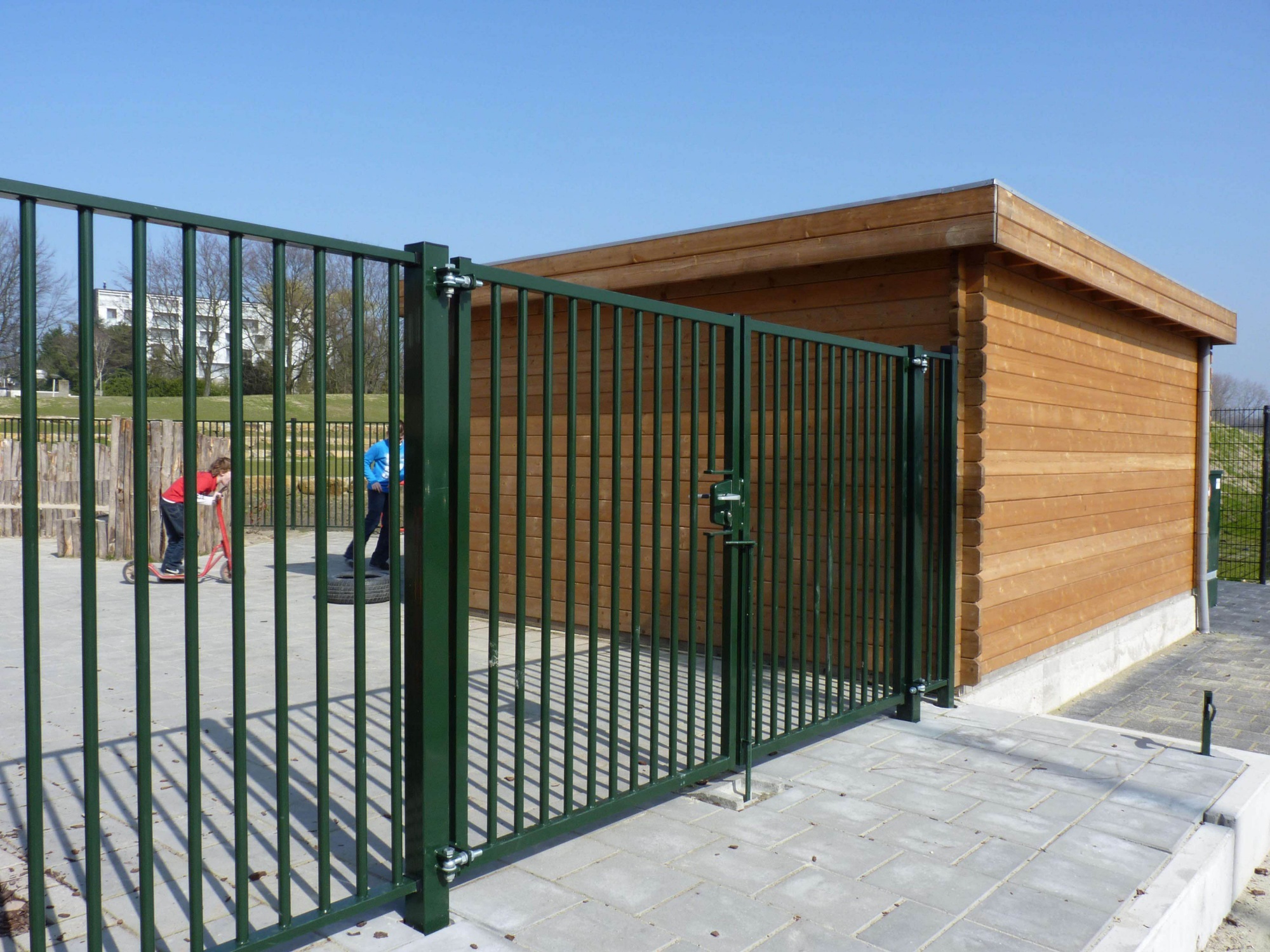
Custom Manufacturing, OEM Requirements, and Bulk Delivery
International buyers may request gates with nonstandard dimensions, matching fence infill, particular colors, or project-specific access arrangements.
Giant Fence describes customization capabilities for fencing and entrance systems.
Depending on product feasibility and the confirmed order, discussions may include:
-
Custom gate sizes.
-
Different steel frame profiles.
-
Matching welded mesh or tubular infill.
-
RAL color coordination.
-
Specialized support-post arrangements.
-
Manual or automated configurations.
-
Project-specific packaging.
-
Repeat wholesale orders.
For distributors, approved drawings and controlled product codes are particularly important.
The manufacturer should confirm MOQ, sample arrangements, production schedule, and delivery terms for the specific order.
Customized products should not be assumed to share the same availability or lead time as standard stock.
Why Consider Giant Fence for Coordinated Gate Projects?
Giant Fence, operated by Hebei Giant Metal Technology Co., Ltd., supplies welded mesh fencing and related metal perimeter products.
Its published range includes 3D fencing, 2D double-wire systems, entrance gates, and matching components.
For B2B buyers, relevant advantages of coordinated sourcing include discussing panel-to-gate compatibility, matching finishes, component quantities, and project documentation with a single supplier.
The company also provides residential community fencing solutions demonstrating the coordination of perimeter panels and multiple entrance types.
Supplier selection should still be based on approved specifications, relevant quality records, and the actual contractual scope.
Metal Fence Gate Manufacturer RFQ Checklist
Before requesting a quotation, prepare the following information.
| RFQ Category | Required Details |
|---|---|
| Buyer Information | Company, country, contact details |
| Application | Residential, commercial, industrial |
| Gate Quantity | Number of each gate type |
| Clear Opening | Required usable width and height |
| Opening Method | Single swing, double swing, sliding, cantilever |
| Material | Steel grade and frame requirements |
| Gate Infill | Mesh, tubular bars, or other design |
| Support System | Posts, base plates, anchors |
| Hardware | Hinges, locks, guides, stops |
| Automation | Manual or powered, controls and safety scope |
| Coating | Galvanizing, color, powder-coating requirements |
| Installation | Site drawings, slopes, foundations |
| Inspection | Required checks and documentation |
| Commercial Terms | Destination, Incoterm, order quantity |
| Delivery | Required project schedule |
Include a layout drawing identifying every entrance where possible.
Need metal gates for a multi-entrance project? Submit your gate schedule, clear opening dimensions, fencing specifications, expected quantities, and destination through the Giant Fence contact page to discuss available manufacturing options and a project-specific quotation.
Frequently Asked Questions
1. What should I look for in a metal fence gate manufacturer?
Prioritize technical drawing capability, compatible gate and post systems, measurable manufacturing quality, appropriate coatings, and clear commercial terms. Ask for documented specifications and a complete quotation rather than relying only on product photographs.
2. What is the difference between a swing gate and a sliding gate?
Swing gates rotate around hinges and require suitable opening clearance. Sliding gates move laterally and require sufficient travel space. Selection depends on entrance geometry, operating conditions, and site requirements.
3. Are double swing gates suitable for industrial entrances?
They can be suitable where sufficient space is available and the complete system is designed for the required loads and usage. Gate weight, supports, foundations, wind exposure, and operating frequency must be considered.
4. Can metal gates match 2D and 3D welded mesh fencing?
Yes. Manufacturers can offer coordinated gate infill, heights, colors, and connection details. However, gate frames and supports must be selected for their own structural and operating requirements.
5. What is the best steel frame thickness for a gate?
There is no universal thickness suitable for every entrance. The required section depends on dimensions, structural loads, material properties, bracing, and the support arrangement.
6. Do metal fence gates require galvanized coatings?
Not every application requires the same coating system. Galvanizing, powder coating, or combined protection may be appropriate depending on material, environment, appearance, and project requirements.
7. Can a standard manual gate be automated later?
Sometimes, but automation requires a separate assessment of the gate structure, hinges, supports, operating loads, protective devices, and applicable safety requirements. An existing manual gate should not be assumed suitable without evaluation.
8. What quality checks should be completed before shipping?
Verify frame dimensions, welding, material sections, coating, hardware positions, accessories, trial assembly, packaging, and required documentation against the approved specification.
9. Can metal fence gates be customized for wholesale orders?
Custom dimensions, infill, finishes, and operating arrangements may be possible. Manufacturing feasibility, sample requirements, MOQ, and delivery timing must be confirmed for the specified configuration.
10. How can I request an accurate metal fence gate quotation?
Provide gate types, clear opening dimensions, quantities, drawings, frame requirements, support-post specifications, coating details, operating method, destination, and delivery terms. A complete RFQ reduces uncertainty and improves quotation comparability.
Conclusion
Choosing a reliable metal fence gate manufacturer requires evaluating the complete entrance system rather than focusing only on the gate leaf or its initial price.
For industrial contractors, property developers, and international distributors, the most important considerations include gate type, clear opening dimensions, structural supports, hardware compatibility, corrosion protection, safety requirements, and documented manufacturing quality.
Projects involving several pedestrian and vehicle entrances benefit from coordinated gate schedules, approved technical drawings, and transparent bills of materials.
A well-prepared RFQ helps buyers compare manufacturers more accurately, reduce avoidable installation problems, and manage procurement risks.
Giant Fence, operated by Hebei Giant Metal Technology Co., Ltd., offers metal fencing and matching entrance solutions for B2B projects, supported by published manufacturing and customization capabilities.
Planning a new industrial perimeter or residential entrance project? Share your site drawings, gate schedule, required dimensions, matching fence specifications, operating requirements, and expected quantities with the Giant Fence team to discuss a coordinated metal fence gate solution.