



Introduction
Single gates are one of the most widely used access solutions paired with steel tubular fencing. Unlike double swing gates or sliding gates, a single gate consists of one gate leaf that swings inward or outward. It is compact, cost-effective, easy to install and fits narrow entryways for pedestrian access, small side entrances and secondary site access points. For residential compounds, school side doors, factory pedestrian passages and park enclosures, single gates remain the preferred option for many contractors and fence buyers.
However, many customers make hasty selections only based on gate width or price. Ignoring factors such as frame tube thickness, hinge load capacity, opening direction, ground clearance and anti-corrosion finish often leads to sagging gates, stuck movement, rusting hinges and frequent maintenance headaches. As a professional steel tubular fence manufacturer, Giant Fence applies the same UNE‑EN‑10223‑7:2013 standards to our single gates and matching fence panels, with anti-corrosion grades defined by ISO 9223:2012 for inland and coastal projects.
This guide covers core selection criteria, common styles, hardware requirements, installation tips and typical mistakes for single gates. It will help you pick a durable, well-matched gate for your steel tubular fence system.
Confirm Basic Site Parameters Before Selection
Start by measuring and confirming site conditions, as these decide whether your single gates will work smoothly long term.
- Clear opening width: Standard widths of single gates usually range from 0.9m to 1.5m. Wider single gates (over 1.5m) are not recommended, as the large leaf will put heavy stress on hinges and easily sag over time. For wider access, double gates or sliding gates are better alternatives.
- Gate height: Normally matched to the adjacent steel tubular fence height, common sizes 1.2m, 1.5m, 1.8m and 2.0m. The top line should stay consistent with fence panels for a neat visual effect.
- Opening direction: Swing inwards or outwards. Check for obstacles inside and outside the gate such as slopes, walkways, walls and drainage channels before deciding.
- Ground condition: Flat ground is ideal. Sloped ground requires either a stepped bottom frame or a gap between the gate bottom and ground surface to avoid scraping when swinging.
- Gate post foundation: Single gates need reinforced gate posts to carry the leaf weight. Lightweight line posts cannot support a heavy steel single gate.
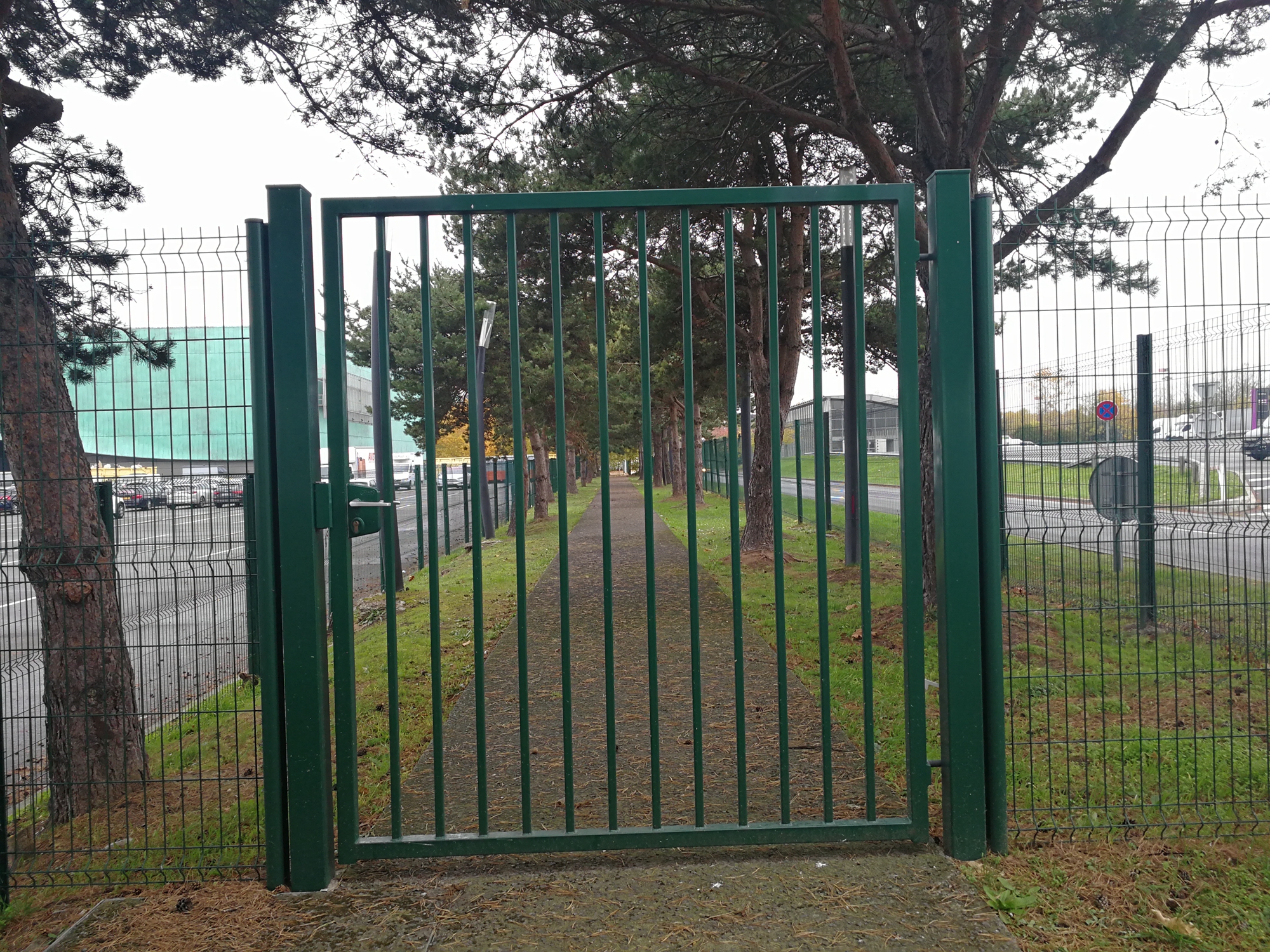
Common Styles of Steel Single Gates
Most single gates share the same tube layout as the connected steel tubular fence panels, keeping the whole perimeter system uniform. The main styles include:
- Vertical infill single gate: Matches standard tubular fence, vertical steel bars fixed between top and bottom horizontal rails. It provides clear visibility and good security, the most popular style for industrial and municipal pedestrian entrances.
- Solid panel single gate: With sheet metal or privacy infill, low visibility. Suitable for yards and areas requiring privacy protection.
- Decorative single gate: With curved tops, spear points or ornamental elements. Widely used for residential and commercial landscaping fences.
You can keep the same tube OD, wall thickness, spacing and coating color between single gates and fence panels for a unified look.
Key Structural & Material Requirements
Structure determines the service life of single gates. Cheap gates usually cut corners on frame thickness and welding.
- Gate frame tube: The outer frame should use thicker-wall steel tubes than regular fence rails. A reinforced frame prevents twisting and sagging under its own weight.
- Welding quality: Full penetration welding is required on all frame joints. Poor spot welding will crack after repeated opening and closing.
- Anti-corrosion treatment: Same coating system as your fence. C1-C3 inland:polyester powder coating. C4-CX coastal salt-spray areas: enhanced high weather-resistant powder coating. Gate hardware must also be rust-resistant.
- Gate posts: Dedicated heavy-duty gate posts, thicker than normal line posts. Two installation options: concrete embedded or surface-mounted with heavy base plates.
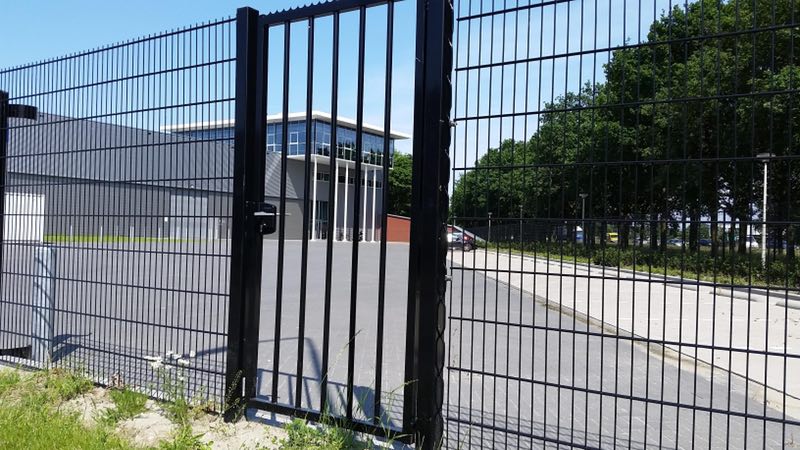
Hardware Selection: The Most Overlooked Part
Even a well-built single gate will fail quickly with poor-quality hardware. The main hardware set includes hinges, latch, gate stop and optional lock.
- Hinges: For steel single gates, heavy-duty adjustable butt hinges or adjustable band hinges are preferred. Heavier gates need 2–3 hinges to distribute weight. Adjustable hinges allow fine tuning if the gate sags slightly after installation.
- Latch / gate catch: Standard manual latches are economical for pedestrian use. If security is higher, choose keyed locks or magnetic latches.
- Gate stop: A necessary accessory to limit swing range and avoid hitting walls or fence panels.
- Optional accessories: Self-closing hinges, gate wheel support for larger single gate leaves, padlock hasps.
Matching With Your Steel Tubular Fence System
When ordering single gates together with steel tubular fence panels, pay attention to consistency:
- Unified tube specification, bar spacing and top profile (flat top / spear top).
- Same RAL coating color and surface finish.
- Gate height aligned with fence height.
- The supplier should supply gate posts, hardware and gate stops as a complete set, not just the gate leaf alone.
Buying gates and fence panels from one manufacturer avoids mismatched sizes, color differences and incompatible installation details.
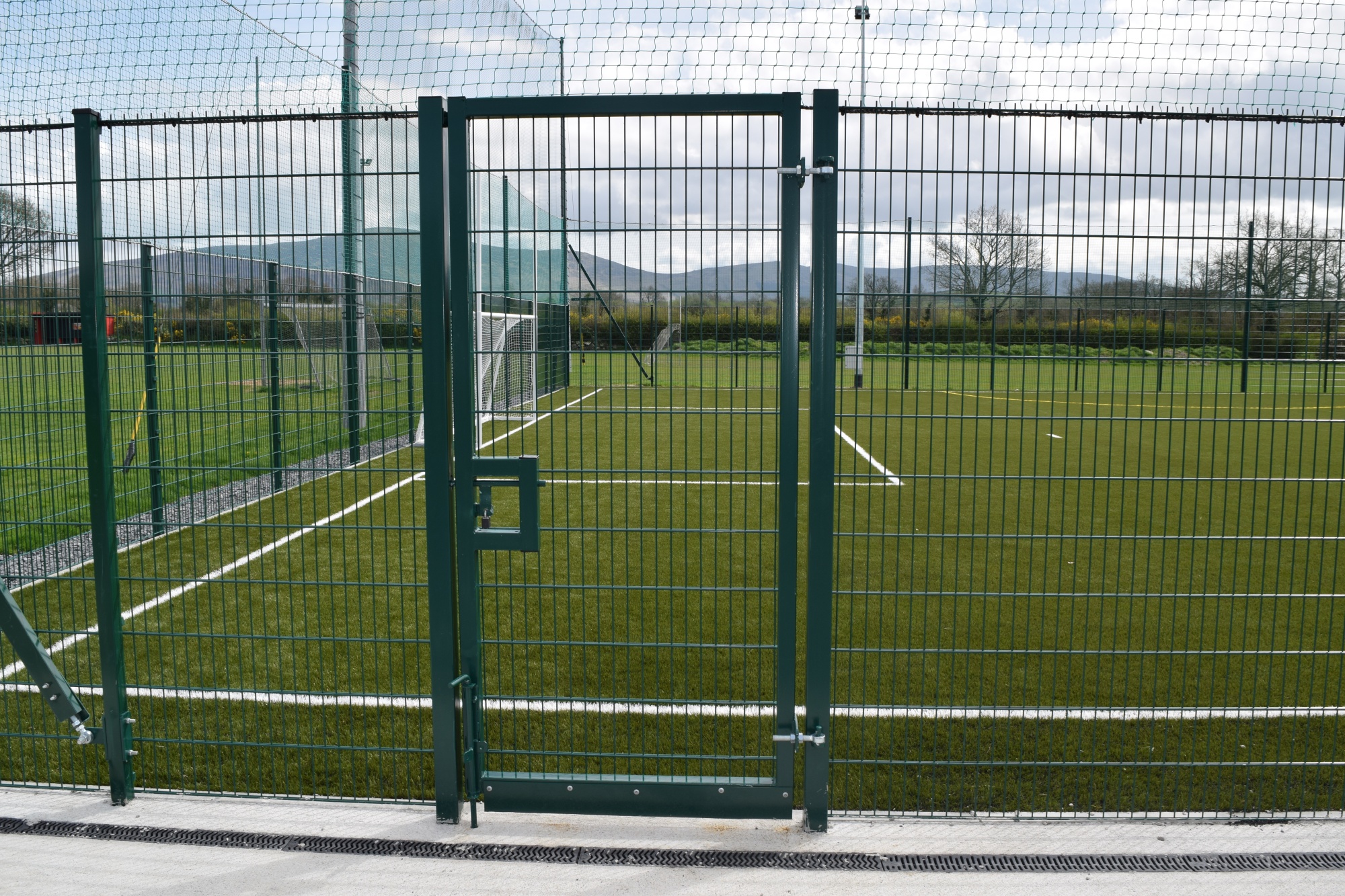
Installation Tips for Single Gates
- Install gate posts first and ensure they are perfectly plumb. Crooked posts are the top cause of gate sagging and jamming.
- Reserve proper bottom clearance, usually 10–25mm, to prevent rubbing the ground.
- Concrete for embedded posts needs enough curing time before hanging the gate leaf.
- Test opening and closing repeatedly after installation, adjust hinges if the gate rubs or does not latch properly.
- If the gate leaf is relatively wide, add a support wheel at the free end to reduce hinge load.
Common Mistakes to Avoid When Buying Single Gates
- Mistake 1: Choosing too wide a single gate
Single gates over 1.5m are prone to sagging. Switch to double gates for wider entry.
- Mistake 2: Using ordinary fence posts as gate posts
Light posts cannot hold the gate weight and will tilt over time.
- Mistake 3: Ignoring hardware quality
Cheap iron hinges rust and seize within months outdoors. Always use galvanized or stainless hardware.
- Mistake 4: No gate stop
Without a stop, users can swing the gate too far and damage the fence or hinges.
- Mistake 5: Inconsistent finish between gate and fence
Different batches or separate suppliers often result in color mismatch.
FAQ
Q1: What is the maximum recommended width for single gates?
A1: We recommend keeping single gates within 1.5m clear width. Wider than that, double swing gates are a more stable option.
Q2: Can single gates swing both inward and outward?
A2: Standard single gates swing only one direction. If bidirectional swing is needed, special hinges are required and should be specified before production.
Q3: Can single gates be customized to match my existing steel tubular fence?
A3: Yes. Provide tube size, bar spacing, height, color and top style. Giant Fence can produce custom single gates for matching.
Q4: Do single gates come with posts and hinges?
A4: Many suppliers sell only the gate leaf. For a complete set, confirm that heavy-duty gate posts, hinges, latch and gate stops are included in your quotation.
Conclusion
Single gates are simple in appearance, but proper selection involves width limitation, frame structure, reinforced gate posts, rust-proof hardware, swing direction and matching fence design. A correctly selected single gate will operate smoothly for years with minimal maintenance, while a poor choice brings constant trouble on site.
Giant Fence supplies complete single gates that fully match our steel tubular fence panels, complying with UNE‑EN‑10223‑7:2013 and ISO 9223:2012 anti-corrosion standards. We provide gate leaf, heavy gate posts, adjustable hinges, latches and stops as a full kit, supporting custom sizes, colors and decorative tops for residential, industrial and municipal projects.
If you need matched single gates for your fencing project, send us your opening size, height and site requirements. We will prepare drawings and competitive pricing for you.