



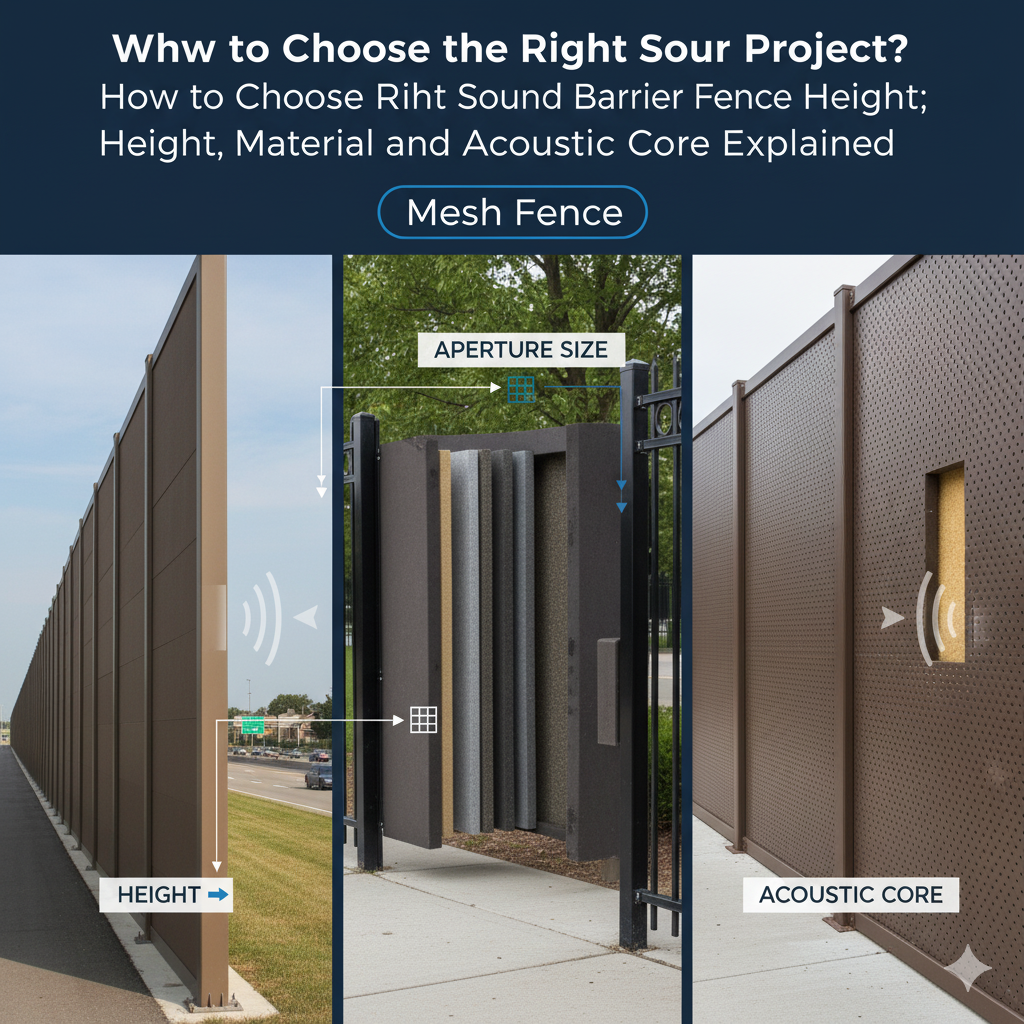
How to Choose the Right Sound Barrier Fence: Height, Material Density, and Acoustic Core Explained
Why Noise Complaints Persist Even After Installing a Fence
Many homeowners believe noise reduction is as simple as “a taller fence.”
But real-world acoustics doesn’t work that way.
Outdoor noise typically reaches residential areas in three paths:
-
Direct sound (travels over the fence)
-
Reflected sound (bounces along hard surfaces)
-
Diffracted sound (wraps around obstacles)
This means a fence that looks solid may still fail because:
-
It’s not high enough to block the direct line of sight of sound waves
-
The panel density is too low to stop low-frequency noise
-
The core absorbs nothing and acts as a reflective board
-
Gaps and micro-leaks let sound pass straight through
Noise control is an engineering problem — not a decorative one.
The Acoustic Principles Behind Effective Noise Barriers
To pick the right fence, homeowners need to understand the three engineering factors that matter most outdoors.
1. Height — The First and Strongest Line of Defense
A sound barrier only works if it breaks the direct path between noise source and listener.
This is why every 1 ft increase in height can reduce 1.5–3 dB depending on distance.
Key factors:
-
If you can “see” the noise source over the fence, the sound can reach you.
-
Height matters more for traffic noise, neighbors’ HVAC units, playgrounds, and barking dogs.
-
A fence too short behaves like no fence at all.
2. Material Density — Mass Stops Sound
Acoustic performance follows the “mass law”:
Heavier, denser materials block more sound, particularly low-frequency noise.
Density directly affects performance of:
-
Timber composite panels
-
Metal acoustic cassettes
-
High-density PVC systems
-
Concrete or precast walls
-
Mineral-filled composite boards
Lightweight materials simply do not stop deep vibration from engines or road noise.
3. Acoustic Core — Where Absorption Actually Happens
A barrier made only of dense material blocks sound but reflects the rest back into the environment, often causing echo, reverberation, and poor subjective comfort.
That is why modern acoustic fences use specialized cores such as:
-
Rockwool / mineral wool
-
Glass fiber
-
Perforated steel-backed absorbent panels
-
Laminated acoustic membrane
-
Outdoor-rated sound-absorbing foam
Good cores must be hydrophobic, UV-stable, and non-settling, otherwise outdoor cycles will destroy them in one season.
Comparing the Main Types of Sound Barrier Fence Technologies
| Fence Type | Density | Absorption | Lifespan | Suitable Applications |
|---|---|---|---|---|
| Solid Timber Composite | Medium | Low | Medium | Gardens, local noise only |
| Concrete / Precast Sound Wall | High | Low-Medium | Very Long | Roads, industrial zones |
| Metal Acoustic Cassette (with core) | High | High | Long | HVAC, schools, commercial sites |
| High-Density PVC / Vinyl Barrier | Medium | Medium | Medium-Long | Residential traffic noise |
| Steel Perforated + Mineral Wool Core | High | Very High | Long | High-traffic roads, railways |
The strongest performance comes from systems that combine mass + absorption, not one or the other.
Engineering-Backed Solutions for Different Noise Problems
For traffic noise / road vibration
-
Height: 2.2–3.0 m
-
Density: ≥ 20–25 kg/m²
-
Acoustic core: mineral wool 50–100 mm
-
Best choice: steel cassette + absorbent core
For neighbor noise / air conditioners / small machinery
-
Height: 1.8–2.4 m
-
Density: ≥ 12–15 kg/m²
-
Acoustic core: lightweight absorbent
-
Best choice: composite acoustic fence panel
For playgrounds / sports courts / barking dogs
-
Height: 2.4–3.0 m
-
Density: medium
-
Acoustic core: optional depending on frequency
-
Best choice: composite or perforated steel absorbent panel
For commercial facilities / industrial sites
-
Height: engineered according to acoustic survey
-
Density: high
-
Acoustic core: mandatory
-
Best choice: mineral wool + steel system
Different noise sources require completely different material behaviors — there is no universal sound fence.
Where Each Solution Works Best in Real Residential Settings
| Scenario | Key Pain Point | Minimum Requirement | Recommended Solution |
|---|---|---|---|
| Backyard facing busy street | Low-frequency engine noise | High fence + high density | Acoustic cassette panel |
| HVAC unit next door | High-frequency mechanical buzz | Absorbent core | Perforated absorbent panel |
| Noisy children / playground | Impact + mid-frequency | Height + rigidity | Composite acoustic barrier |
| Residential area near railway | Mixed-frequency vibration | Maximum mass + core | Concrete + mineral wool |
| Garden privacy + mild noise | Mostly speech noise | Density > height | Composite dense panel |
This is how engineers match sound frequency → barrier behavior → correct panel design.
FAQs: What Homeowners Ask Most About Acoustic Fences
Q: Does a taller fence always work better?
Up to a point, yes — but only if the material density and core also match the noise type.
Q: Can plants or hedges replace a sound barrier?
No. Vegetation cannot stop sound unless it is extremely deep and dense (5–20 m).
Q: Do gaps ruin the fence performance?
Absolutely. Even small air gaps create acoustic leaks and destroy attenuation values.
Q: Is foam enough for outdoor noise?
Indoor foam is not suitable outdoors. It absorbs water and breaks down quickly.
A Well-Selected Sound Barrier Is an Engineering Decision—Not a Guess
Noise problems persist because many fences look solid but fail acoustically.
When you match height, density, and acoustic core correctly, you can achieve meaningful noise reduction without overspending or replacing entire structures.
If you need a project-specific assessment based on noise source, installation conditions, or budget, you can explore more fence technologies on the Giant Fence website or reach out to our team through the Contact Us page for technical guidance.