


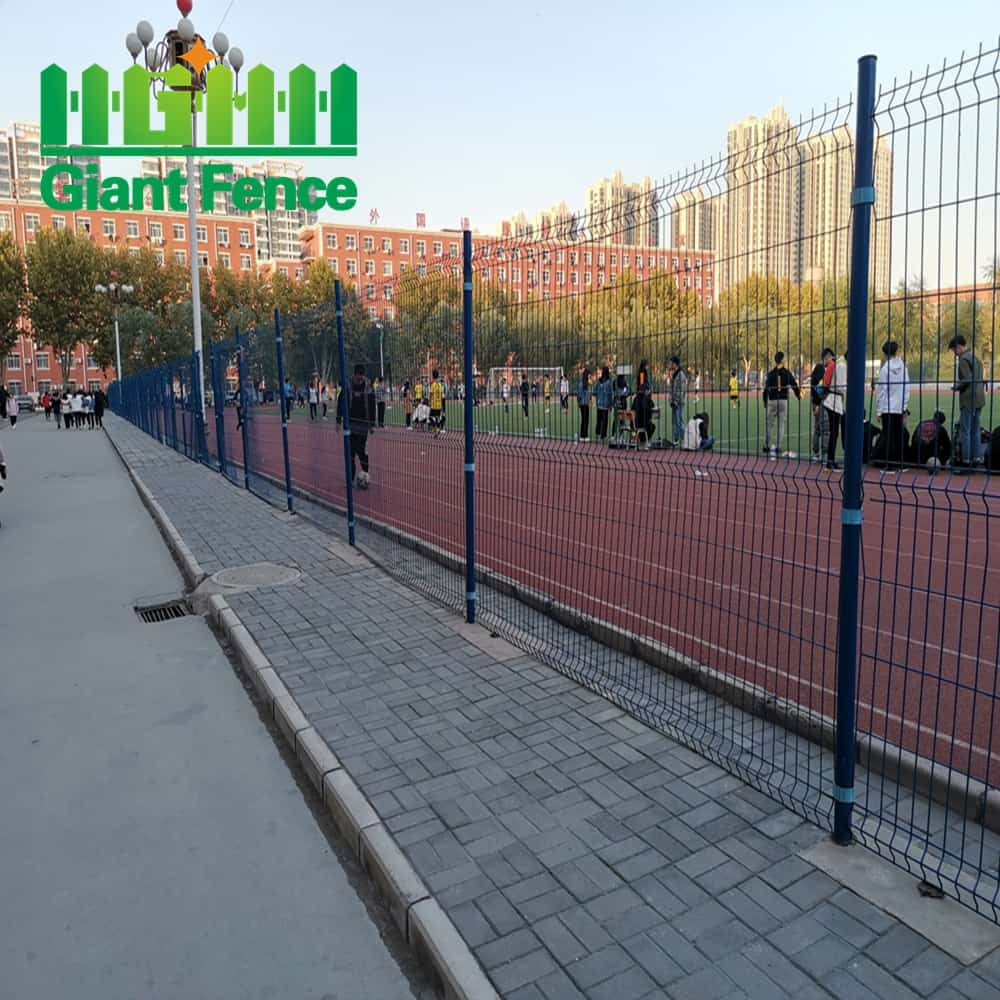
Before placing a bulk order, buyers should conduct a welded mesh fence manufacturer audit covering factory identity, technical specifications, manufacturing equipment, material quality, welding consistency, surface treatment, customization capabilities, and export delivery. A reliable manufacturer should provide approved product drawings, representative samples, documented inspection procedures, and an itemized quotation for the complete fencing system.
For international fence distributors, importers, EPC contractors, and residential developers, selecting a manufacturer based solely on the lowest panel price can create significant procurement risks.
Differences in wire diameter, coating quality, post compatibility, and included accessories may turn an inexpensive quotation into a costly installation project.
This guide explains eight practical checks that help B2B buyers evaluate fencing manufacturers before committing to bulk production.
Key Takeaways for B2B Fence Buyers
-
Verify the manufacturer's legal identity and actual production facilities.
-
Compare quotations using identical technical specifications.
-
Evaluate welding, panel forming, post manufacturing, and surface-treatment capabilities.
-
Request product-specific quality inspection records rather than relying only on certificates.
-
Approve a representative panel, post, and fixing assembly before mass production.
-
Confirm production scheduling, packaging, and shipment responsibilities.
-
Compare complete procurement costs instead of individual panel prices.
-
Use a weighted supplier assessment to support purchasing decisions.
1. How Can Buyers Verify Whether a Fence Supplier Is a Real Manufacturer?
A welded mesh fence manufacturer audit should begin with the supplier's legal identity and production capabilities.
A professional website and attractive product photographs are useful starting points, but they do not independently establish manufacturing ownership or production capacity.
Manufacturer Verification Checklist
| Verification Item | Evidence to Request | Purchasing Value |
|---|---|---|
| Legal company name | Business registration documents | Confirms contracting entity |
| Factory location | Address and factory audit | Verifies production location |
| Welding equipment | Equipment records and production demonstration | Evaluates manufacturing capability |
| Post production | Machinery and sample components | Confirms system compatibility |
| Surface treatment | Process details and facility information | Identifies coating capabilities |
| Quality management | Current certificates and inspection records | Evaluates production controls |
| Export experience | Relevant project and shipment documentation | Assesses international delivery experience |
Buyers should also identify which processes are performed internally and which are subcontracted.
Outsourcing does not necessarily indicate poor manufacturing quality. However, the supplier should remain accountable for process control, inspection, and conformity to the approved specification.
GIANT MESH Manufacturing Background
GIANT MESH, operating as Giant Fence under Hebei Giant Metal Technology Co., Ltd., is located in Anping County, Hebei Province, China.
The company's published development history describes the establishment of its earlier factory operations in 1992 and the founding of Hebei Giant Metal Technology Co., Ltd. in 2014.
Its business includes welded mesh fencing, gabion products, gate systems, and other metal fencing solutions.
Buyers can review the company's manufacturing background and development history as part of their initial supplier assessment.
2. What Technical Specifications Should a Welded Mesh Fence Manufacturer Provide?
A qualified manufacturer should be able to explain how product dimensions, steel-wire configurations, coatings, posts, and accessories affect the completed fence system.
Comparing products without matching these specifications can lead to misleading price differences.
3D and 2D Welded Mesh Fence Specifications
| Parameter | 3D Welded Mesh Fence | 2D Double Wire Fence |
|---|---|---|
| Panel structure | Welded mesh with formed V-bends | Flat mesh with paired horizontal wires |
| Published wire configuration | Commonly 4–6 mm | 6/5/6 or 8/6/8 mm |
| Published panel height | 0.8–2.4 m | 0.83–2.4 m |
| Panel width | 2.0 / 2.2 / 2.5 m standard options | Confirm selected model |
| Mesh opening | 50 × 100 / 50 × 200 mm | 50 × 100 / 50 × 200 mm |
| Surface treatment | Powder coating, PE coating, hot-dip galvanizing options | Powder coating and hot-dip galvanizing options |
| Supporting posts | Product-specific post configurations | Product-specific post configurations |
| Accessories | Compatible clamps and fasteners | Compatible clamps and fasteners |
| Common applications | Residential boundaries and landscaped areas | Shared facilities and higher-demand perimeters |
The numerical ranges are product-family references published by GIANT MESH. Actual availability, measurement conventions, tolerances, and coating combinations must be confirmed for the selected model.
Why Is Wire Diameter Important?
Two suppliers may quote apparently identical welded mesh panels while using different steel-wire dimensions.
Buyers should clarify whether the stated diameter refers to the steel core or the finished coated wire.
For double-wire fencing, the configuration must identify both horizontal and vertical wires.
A 656 panel generally consists of two nominal 6 mm horizontal wires and one nominal 5 mm vertical wire.
An 868 configuration generally uses two nominal 8 mm horizontal wires and one nominal 6 mm vertical wire.
Why Should Buyers Request Complete Assembly Drawings?
A technical drawing should identify more than panel height and width.
It should also establish installed post spacing, post profiles, wall thickness, fixing locations, connection geometry, and gate interfaces.
The GIANT MESH residential fencing product range provides an overview of available fencing systems and coordinated entrance solutions.
Final procurement decisions should be based on approved model-specific drawings.
3. Which Manufacturing Processes Should Buyers Inspect?
During a welded mesh fence manufacturer audit, buyers should examine whether the factory can consistently manufacture products according to the agreed specification.
Manufacturing Process and Quality Risks
| Production Stage | Main Manufacturing Risk | What Buyers Should Verify |
|---|---|---|
| Steel-wire preparation | Incorrect wire diameter or material | Material specifications and inspection records |
| Mesh welding | Weak joints or inconsistent geometry | Welding controls and inspection methods |
| Panel forming | Incorrect V-bend geometry | Approved forming dimensions |
| Post manufacturing | Incorrect sections or fixing positions | Post drawings and dimensional checks |
| Galvanizing | Incomplete zinc protection | Coating process and inspection |
| Powder coating | Poor adhesion or surface defects | Pretreatment, coating and curing controls |
| Component assembly | Incompatible panels and posts | Representative trial assembly |
| Final inspection | Nonconforming products | Batch inspection records |
| Export packaging | Surface damage or missing parts | Packing and loading checks |
Welding Equipment and Panel Consistency
Welding quality affects panel integrity and dimensional consistency.
Buyers should examine the manufacturer's ability to maintain the approved mesh geometry and verify welded intersections using suitable inspection methods.
GIANT MESH's published company history states that it introduced Swiss Schlatter welding equipment in 2017.
This investment provides relevant manufacturing background, although equipment ownership alone does not establish the quality of every production batch.
Fence Post Manufacturing
Posts must match panel geometry and fixing arrangements.
GIANT MESH reports developing peach-shaped post production capabilities in 2016 and adding its BD post production line in 2022.
For bulk purchasers, the important question is whether the proposed post system can be produced consistently and assembled with the ordered panels.
Surface-Treatment Capabilities
The company also reports adding a powder-coating production line in 2024.
For buyers, coating equipment should be evaluated alongside surface preparation, process control, inspection methods, and finished-product protection.
A complete manufacturing assessment should examine actual production output rather than relying only on machinery photographs.
4. How Should Buyers Evaluate Quality Control and Certifications?
A welded mesh fence manufacturer audit should distinguish between company-level management certification and product-specific conformity.
An ISO 9001 certificate addresses quality management systems. It does not automatically prove that every fence panel meets the purchaser's dimensional, mechanical, coating, or installation requirements.
Quality-Control Requirements Before Shipment
| Inspection Item | What Should Be Verified |
|---|---|
| Raw materials | Steel specifications and wire dimensions |
| Mesh geometry | Opening dimensions and orientation |
| Welded intersections | Agreed weld-quality requirements |
| Panel dimensions | Height, width, shape and tolerances |
| Post dimensions | Section, length and fixing positions |
| Zinc coating | Approved coating requirements and relevant tests |
| Organic coating | Coverage, appearance and adhesion where required |
| Assembly compatibility | Panels, posts, clamps and gates |
| Final quantity | Approved bill of materials |
| Packaging | Surface protection and component identification |
Which Industry Standards Are Relevant?
BS EN 10223-7:2012 is a relevant technical reference for applicable welded steel wire fencing panels, addressing product characteristics, coatings, properties, and tolerances.
Buyers should identify the applicable standard and acceptance criteria in their purchase specification.
Depending on the selected coating system and destination market, additional standards may be relevant.
GIANT MESH publishes information about ISO 9001, ISO 14001, ISO 45001, product testing, and other documentation in its Resource Center.
Before relying on any certification, buyers should verify:
-
The issuing organization.
-
Certificate validity and scope.
-
The certified company and production location.
-
Whether the document applies to the proposed product.
-
Whether additional batch-specific testing is required.
A certificate displayed online should not replace an agreed product inspection plan.
How Should Nonconforming Products Be Managed?
Buyers should agree on a procedure covering defect identification, batch segregation, corrective action, reinspection, replacement, and shipment approval.
For high-volume projects, independent third-party inspection may be useful where included in the purchasing agreement.
5. Can the Manufacturer Support Custom Specifications and Sample Approval?
Standard fencing products may not meet every residential, commercial, or industrial project requirement.
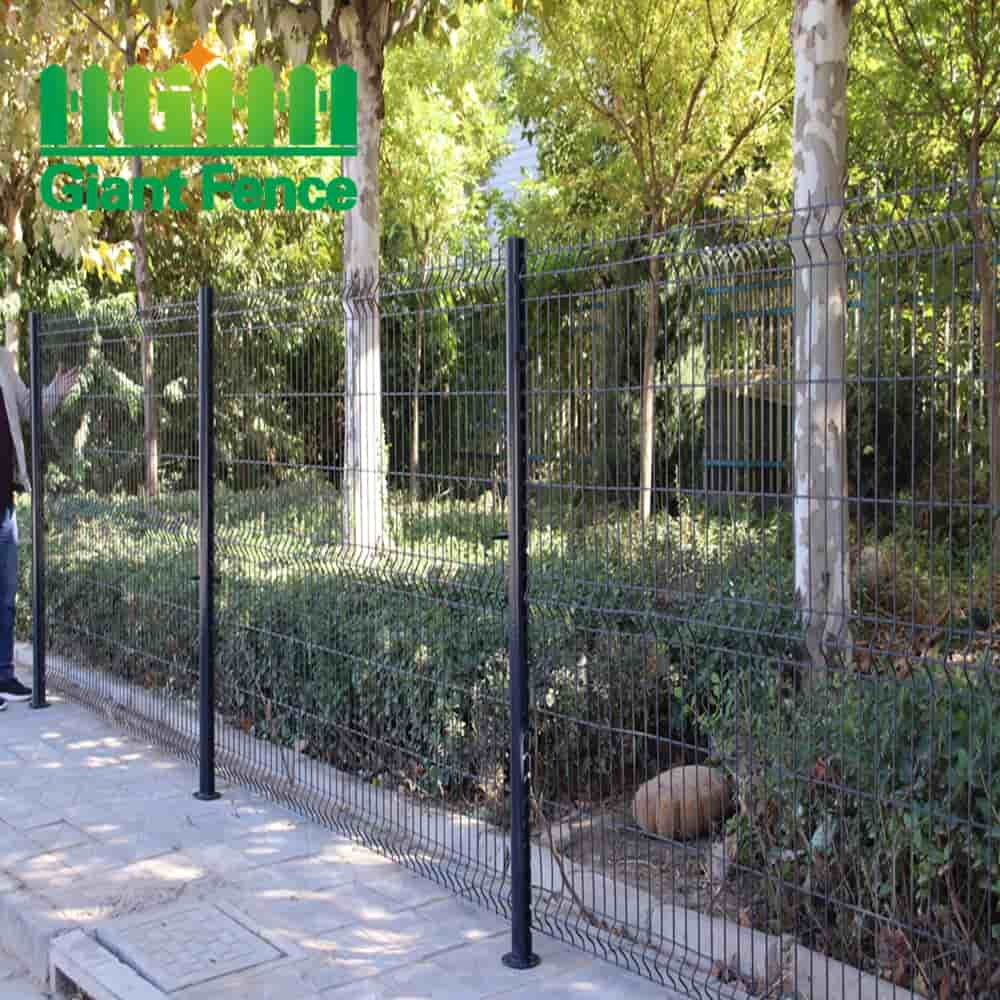
Customization can involve different panel heights, wire configurations, mesh openings, post profiles, coatings, gate dimensions, or connection systems.
Custom Manufacturing Evaluation
| Customization Requirement | Manufacturer Verification |
|---|---|
| Nonstandard panel dimensions | Production feasibility and tolerances |
| Different mesh openings | Welding configuration and material requirements |
| Customized V-bends | Approved forming geometry |
| Special post profiles | Manufacturing and connection compatibility |
| RAL colors | Coating availability and approved sample |
| Matching gates | Frame, hardware and support requirements |
| Special packaging | Protection, labels and shipment configuration |
Customization feasibility, MOQ, tooling costs, and production lead time should be confirmed for the individual enquiry.
What Should a Pre-Production Sample Include?
For complete fencing systems, a representative sample should ideally demonstrate the actual panel, post, fixing components, and surface finish.
A sample panel without its matching supports cannot fully establish installation compatibility.
Approve the sample against a controlled drawing revision before authorizing mass production.
Real GIANT MESH Project Reference: Costa Rica Residential Fencing
GIANT MESH has published a residential community fencing project in Costa Rica involving 1,000 sets of customized 3D welded mesh fencing.
| Project Item | Manufacturer-Published Detail |
|---|---|
| Country | Costa Rica |
| Application | Residential community perimeter |
| Supply quantity | 1,000 fence sets |
| Panel dimensions | 2.0 m high × 2.5 m wide |
| Panel geometry | Five customized reinforcing bends |
| Connection system | Specified anti-theft screws |
| Installation arrangement | Pre-embedded posts |
| Surface treatment | Hot-dip galvanizing |
The manufacturer's project report also describes dimensional and surface-quality inspections before shipment.
This example demonstrates why bulk buyers should confirm panel geometry, fasteners, supports, and coatings as coordinated project requirements.
These details relate to the reported Costa Rica order and should not be treated as universal specifications or performance guarantees.
6. How Can Buyers Evaluate Production Capacity and Delivery Reliability?
Large fencing orders often involve multiple product configurations and scheduled delivery phases.
For a welded mesh fence manufacturer audit, request production information specific to the proposed order rather than relying only on advertised annual capacity.
Production and Delivery Assessment
| Assessment Area | What Buyers Should Request |
|---|---|
| Raw material availability | Material preparation schedule |
| Welding capacity | Planned production allocation |
| Post production | Availability of selected post profiles |
| Surface treatment | Coating schedule and process availability |
| Custom products | Sample and production approval timeline |
| Quality inspection | Planned inspection hold points |
| Packaging | Packing completion schedule |
| Shipping | Estimated loading and dispatch dates |
Why Is the Production Bottleneck Important?
A manufacturer may have sufficient welding equipment but limited available coating capacity during a particular production period.
The completion date depends on the entire manufacturing process, including posts, accessories, inspection, and packing.
Ask the supplier to identify the expected production sequence and any dependencies.
For phased developments, confirm that subsequent shipments will maintain compatibility with previously delivered products.
Can the Manufacturer Guarantee Repeat-Order Consistency?
Repeat-order buyers should maintain approved drawings, product codes, coating samples, inspection criteria, and component schedules.
Any proposed material or manufacturing change should require written approval before production.
This is especially important for distributors who need replacement panels and accessories to remain compatible with existing inventory.
7. What Should Buyers Check About Export Packaging and Transportation?
Welded mesh fencing can be damaged during stacking, handling, container loading, transportation, or unloading.
A suitable export plan should protect both structural components and finished coatings.
Export Packaging Checklist
| Product | Main Transport Risk | Recommended Packaging Requirement |
|---|---|---|
| Welded mesh panels | Deformation and surface abrasion | Suitable support and separation |
| Fence posts | Scratches and damaged ends | Bundling and protective materials |
| Gates | Frame distortion and coating damage | Secure support and edge protection |
| Clamps and fasteners | Missing or mixed components | Separate labeled packages |
| Custom panels | Incorrect identification | Drawing and product references |
| Installation accessories | Quantity shortages | Complete packing list |
Buyers should request package dimensions, quantities, estimated shipment weight, loading arrangements, and delivery terms.
Who Is Responsible for Shipment Damage?
The contract should define inspection responsibilities, agreed Incoterms, packaging requirements, insurance arrangements, and procedures for reporting damage or shortages.
Receiving inspection should document the condition of packages and products before installation begins.
For bulk imports, a complete packing schedule can help identify missing accessories before they cause project delays.
8. How Can Buyers Compare Manufacturers Objectively?
A price comparison becomes useful only when the suppliers are quoting equivalent products and supply scopes.
A structured scoring system can help procurement teams compare technical capability, quality evidence, delivery arrangements, and commercial terms.
Welded Mesh Fence Manufacturer Audit: 100-Point Scorecard
| Evaluation Dimension | Maximum Points | Assessment Focus |
|---|---|---|
| Company identity and factory verification | 10 | Legal entity and manufacturing facilities |
| Technical product capability | 20 | Drawings, specifications and system compatibility |
| Manufacturing process control | 15 | Welding, forming, posts and coatings |
| Quality inspection and documentation | 20 | Testing, inspection and defect management |
| Customization and sample approval | 10 | Manufacturing feasibility and sample conformity |
| Production and delivery planning | 10 | Order-specific scheduling |
| Export packaging and logistics | 10 | Product protection and shipment coordination |
| Commercial transparency | 5 | Itemized prices and contractual responsibilities |
| Total | 100 | Overall supplier evaluation |
This is a suggested procurement assessment tool, not an industry certification or an independently verified manufacturer rating.
Award points according to the quality of evidence provided. Missing documentation should not receive full points.
Critical safety, legal, technical, or contractual failures should prevent approval regardless of the total score.
Practical B2B Procurement Scenario: Ordering 1,000 Residential Fence Sets
Consider a hypothetical international distributor sourcing 1,000 welded mesh fence sets for a residential development.
Each set requires an approved panel, compatible post components, and the specified fixing accessories.
The distributor receives two quotations with different supply scopes.
Comparing Supplier Offers
| Cost Item | Supplier A | Supplier B |
|---|---|---|
| Quoted price per set | $28.00 | $30.00 |
| Additional post components | $1.80 | Included |
| Additional fixing accessories | $1.20 | Included |
| Complete material cost per set | $31.00 | $30.00 |
| Total for 1,000 sets | $31,000 | $30,000 |
These prices are hypothetical and used only to demonstrate procurement calculations. They are not GIANT MESH quotations or market-price estimates. Equivalent delivery terms and technical specifications are assumed.
Supplier A appears less expensive when only the initial quotation is considered.
However, after adding the missing components, Supplier B has a lower complete material cost in this example.
The distributor must still evaluate coating quality, approved drawings, inspection evidence, delivery timing, and manufacturing consistency before awarding the contract.
For developers purchasing coordinated panels, pedestrian gates, vehicle gates, and posts, GIANT MESH's Residential Communities solutions illustrate how different fencing components can form an integrated perimeter system.
Total Procurement Cost
A useful comparison is:
Total Procurement Cost = Panels + Posts + Accessories + Gates + Packaging + Freight + Inspection + Applicable Installation and Rework Costs
The lowest individual panel price is not necessarily the lowest total project cost.
What Should Buyers Include in a Bulk Fence RFQ?
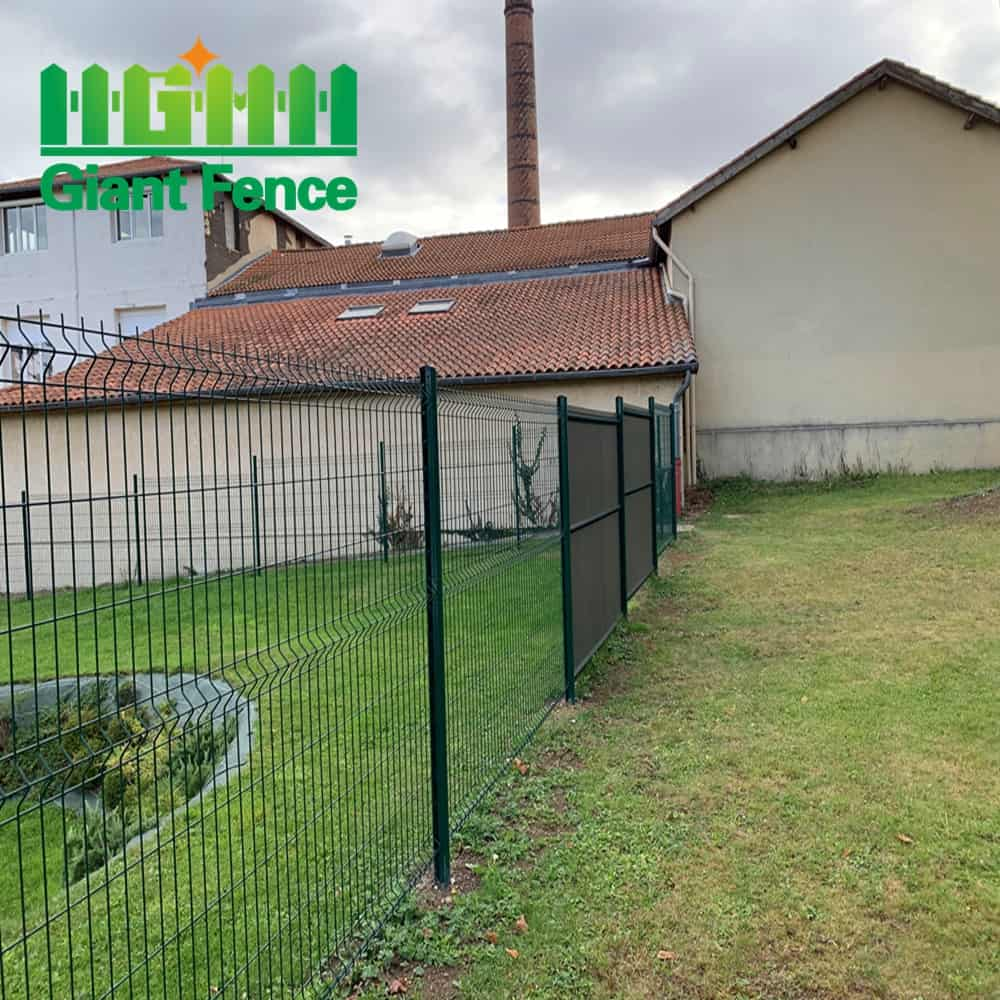
A complete request for quotation helps the manufacturer assess technical feasibility and prepare an itemized commercial offer.
| RFQ Requirement | Information to Provide |
|---|---|
| Project application | Residential, industrial, commercial or infrastructure |
| Installation location | Country and environmental conditions |
| Fence type | 3D, 2D or another approved system |
| Panel specifications | Height, width, wire and mesh opening |
| Post requirements | Profile, thickness and installation arrangement |
| Gate requirements | Types, dimensions and hardware |
| Surface treatment | Galvanizing, coating and color |
| Quantity | Panels, posts, gates and accessories |
| Customization | Drawings and nonstandard requirements |
| Quality control | Standards, inspections and acceptance criteria |
| Export packaging | Protection and identification requirements |
| Delivery | Destination, schedule and Incoterm |
Buyers should also request confirmation of the proposed manufacturing process, production schedule, sample availability, and documentation package.
Frequently Asked Questions
Q1: What documents are needed for a welded mesh fence manufacturer audit?
Buyers should request company registration documents, relevant factory information, technical product drawings, material specifications, quality management certificates, inspection records, and production schedules. Product-specific test reports and representative samples may also be required. Verify document validity and scope before approving the supplier, particularly when purchasing large quantities or products with customized technical requirements.
Q2: How can buyers verify welded mesh fence quality before placing a bulk order?
Request a representative sample and inspect the wire dimensions, mesh geometry, welded intersections, panel measurements, coating condition, and connection compatibility. Establish measurable acceptance criteria before production. For larger orders, an agreed inspection plan and independent third-party inspection can provide additional evidence that the delivered products conform to the approved specifications.
Q3: Can a fence manufacturer supply customized panels, posts, and gates?
Yes, manufacturers with suitable production capabilities may provide customized panel dimensions, mesh configurations, posts, coatings, and matching gate systems. However, availability depends on the proposed design and manufacturing process. Buyers should provide drawings, approve representative samples, and confirm minimum order requirements, production timing, and any additional customization costs before placing the order.
Q4: Does ISO 9001 certification guarantee fence panel quality?
No. ISO 9001 certification concerns an organization's quality management system rather than automatically guaranteeing the performance of individual products. Buyers should verify the certificate's validity and scope, then request product-specific inspection evidence. Approved drawings, material specifications, applicable standards, and documented acceptance criteria remain necessary for reliable bulk fence procurement.
Q5: How can buyers compare quotations from different welded mesh fence manufacturers?
Compare quotations using identical wire dimensions, mesh openings, panel sizes, coatings, posts, accessories, inspection requirements, and delivery terms. Request itemized prices and identify exclusions. A lower panel price may reflect thinner wire, different coatings, or missing components. Evaluate complete material and delivery costs together with manufacturing capability and quality documentation.
Q6: What information should buyers provide to request a bulk welded mesh fence quotation?
Provide the project location, fence application, required panel dimensions, wire configuration, mesh opening, posts, coatings, gate requirements, estimated quantities, installation drawings, and delivery destination. Include any applicable standards, inspection requirements, customization details, and shipment schedules. Complete technical information helps manufacturers prepare more accurate quotations and identify potential compatibility issues before production.
Conclusion
A comprehensive welded mesh fence manufacturer audit helps international buyers evaluate production capability, technical accuracy, quality control, customization, and delivery reliability before approving bulk purchases.
Rather than selecting a supplier based solely on panel prices, buyers should examine the entire manufacturing and procurement process.
The most suitable manufacturer is one that can demonstrate conformity to the approved specifications, provide compatible fencing components, communicate clearly about production requirements, and support documented order acceptance.
GIANT MESH, operated by Hebei Giant Metal Technology Co., Ltd., offers 3D welded mesh fencing, 2D double-wire fencing, matching gate systems, and project-specific fencing solutions supported by its published manufacturing capabilities and international project experience.
Planning a bulk welded mesh fence purchase or looking for a long-term manufacturing partner?
Contact GIANT MESH with your required fence specifications, project drawings, estimated quantities, and shipping destination to discuss manufacturing options and request an itemized quotation.