



Crowd control barriers are widely used at concerts, festivals, sporting events, construction sites, and public gatherings. Their job is simple: guide pedestrian movement, separate restricted areas, and help maintain an organized space.
But a barrier is only useful if it stays where it is supposed to.
A lightweight barrier may be easy to transport, but it can become unstable if the base is poorly designed, the frame is too weak, or the ground is uneven. For distributors, event organizers, and rental companies, understanding these details is essential when choosing Crowd Control Barriers.
So, what actually affects barrier stability? Let's look at the main factors.
1. What Are Crowd Control Barriers?
Crowd Control Barriers are portable metal barriers designed to guide pedestrian movement and create temporary separation between different areas.
Unlike permanent perimeter fences, they are generally designed for quick installation, relocation, and storage.
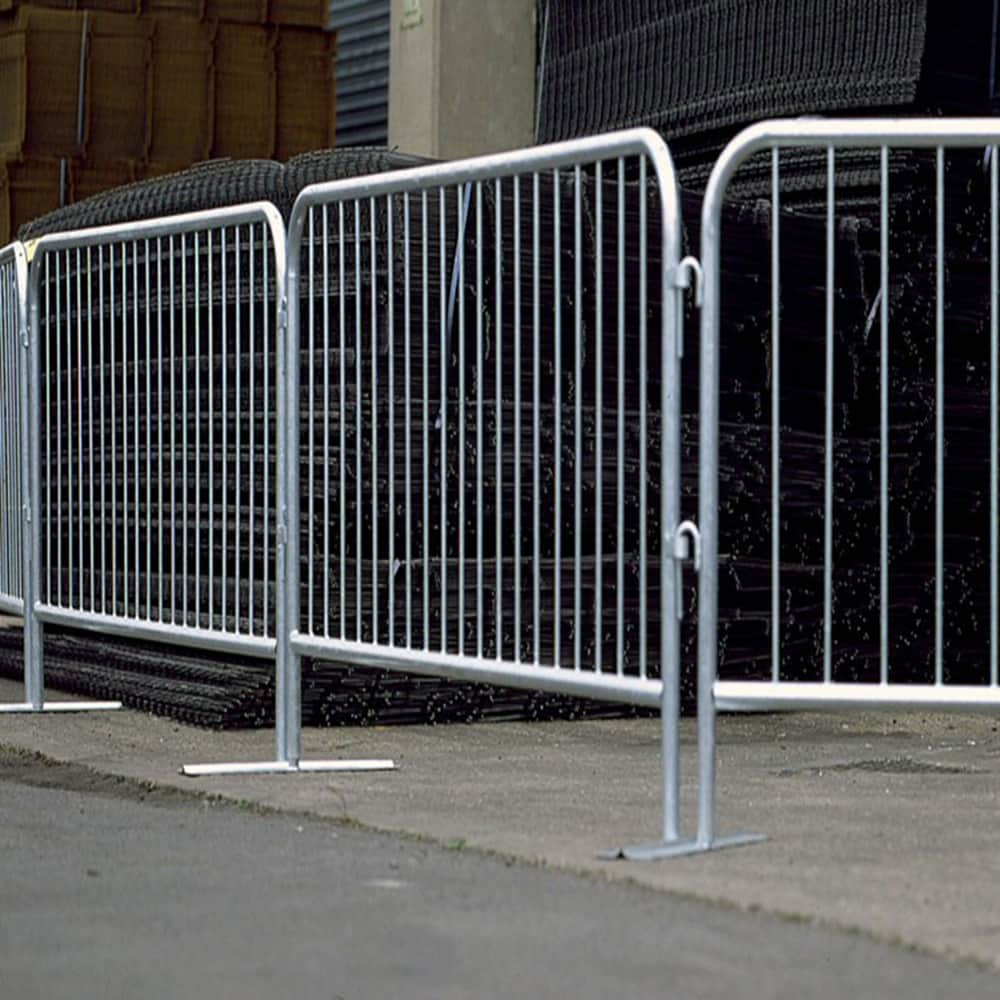
A typical metal crowd control barrier includes:
Main frame: Usually constructed from steel tubes.
Vertical infill bars: Form the barrier panel and help prevent unauthorized passage.
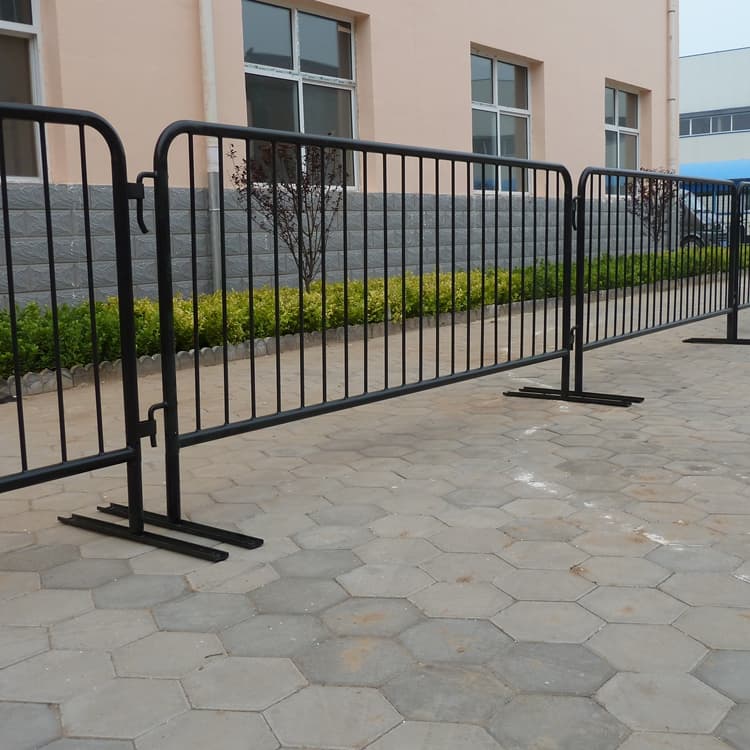
Base or feet: Support the structure and provide contact with the ground.
Welded connections: Join the frame and infill components.
Interlocking hooks: Connect adjacent barriers to form a continuous line.
Their dimensions, materials, and base configurations vary depending on the intended application.
2. What Factors Affect Crowd Control Barrier Stability?
2.1 Base Design and Support
The base is one of the most important factors affecting stability.
Common base designs include fixed, detachable, and flat or bridge-style feet. Each has different advantages in terms of support, transportation, and storage.
A wider and properly designed base can improve resistance to tipping, but stability also depends on barrier height, weight, ground conditions, and external forces.
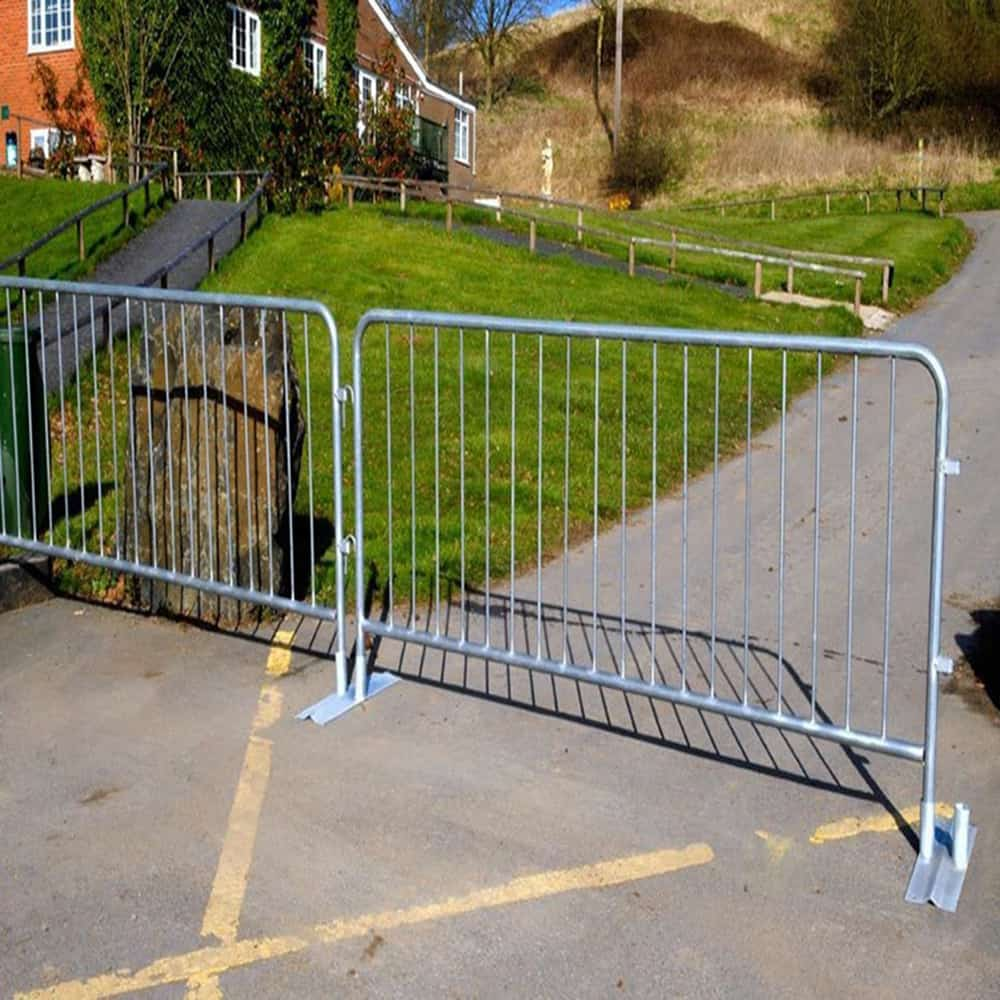
Buyers should consider whether barriers will be installed on concrete, asphalt, grass, or other surfaces.
2.2 Frame Material and Tube Specifications
The main frame provides structural support.
Steel tube dimensions, wall thickness, and material properties all influence how the barrier performs during normal handling and use.
A stronger frame can help resist deformation, but simply increasing tube thickness does not guarantee overall stability. The base, joints, and complete structural design must work together.
2.3 Welding Quality
Welded joints connect the horizontal and vertical components of the barrier.
Poor welding can create weak points, particularly around corners and frame connections.
When evaluating a supplier, buyers should check:
Consistency of welds.
Connection quality at frame corners.
Secure attachment of vertical bars.
Visible defects such as cracks or incomplete welds.
Good welding helps maintain the integrity of the barrier during repeated handling and transportation.
2.4 Interlocking Connections
Individual barriers can move or separate if they are not properly connected.
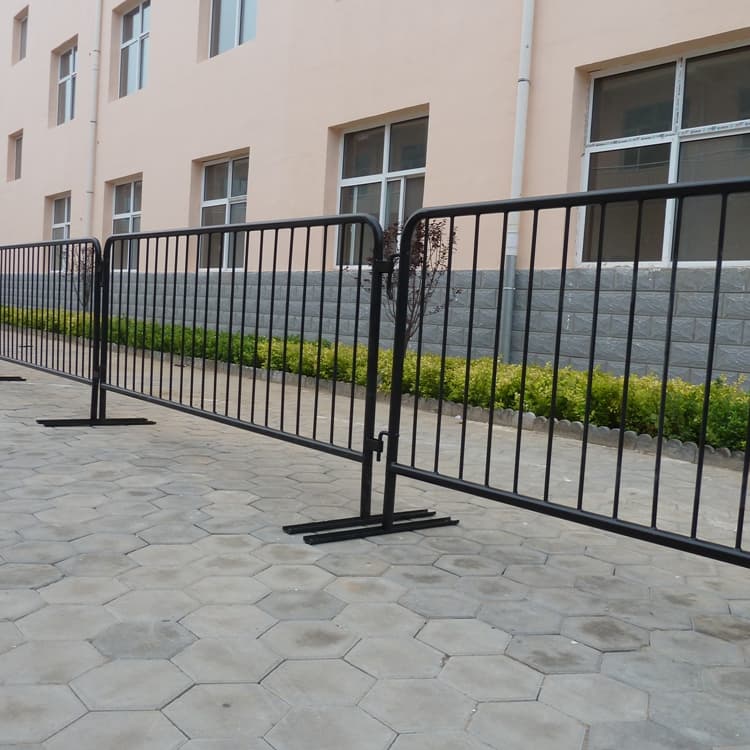
Hook-and-eye or similar interlocking systems allow adjacent units to form a continuous barrier line.
This helps maintain alignment and reduces unintended gaps between sections.
For events involving large pedestrian flows, the complete barrier layout and connection arrangement should be planned according to the expected crowd conditions.
2.5 Barrier Height and Weight
Taller barriers may provide better physical separation, but they can also experience greater wind forces and tipping moments.
Barrier weight and base dimensions should therefore be considered together with panel height and the intended operating environment.
The right balance depends on whether the barrier is being used for general pedestrian guidance, queue management, or a more demanding event application.
3. Why Do Ground Conditions and Installation Matter?
Even a well-manufactured barrier can become unstable if it is installed incorrectly.
Ground Surface
Flat, firm surfaces generally provide more predictable support than loose soil, soft grass, or uneven ground.
On uneven surfaces, some feet may not make proper contact with the ground, increasing the risk of movement or tipping.
Barrier Arrangement
The layout also matters. Long straight lines, corners, changes in direction, and entrance openings can affect how barriers interact with one another.
Proper connections and suitable positioning help maintain a consistent barrier line.
Environmental Conditions
Outdoor installations may be exposed to wind, rain, and changing ground conditions.
For exposed locations, the barrier arrangement should be assessed according to the expected environmental loads. Additional anchoring or a different barrier system may be necessary.
4. How to Choose the Right Crowd Control Barrier?
Not every application requires the same barrier configuration.
|
Application |
Main Selection Priorities |
|
Concerts and festivals |
Stable bases and secure connections |
|
Sporting events |
Durable frames and clear pedestrian routes |
|
Public gatherings |
Easy handling and effective separation |
|
Construction sites |
Suitable strength and site conditions |
|
Queue management |
Lightweight design and quick installation |
|
Rental businesses |
Stackability, durability, and replaceable components |
For general pedestrian guidance, portable barriers may be sufficient. However, barriers intended to withstand significant crowd pressure require specific structural assessment and should not be selected based on appearance alone.
5. Applications of Crowd Control Barriers
Crowd Control Barriers are used in many temporary and public environments.
Concerts and Festivals: Separate event areas and guide pedestrian movement.
Sports Events: Organize spectator routes and restrict access to designated areas.
Public Events: Manage queues and establish temporary boundaries.
Construction Sites: Separate pedestrians from selected work areas.
Exhibitions and Trade Shows: Control visitor flow around entrances and display areas.
Rental Operations: Provide reusable barrier systems for different events.
Each application has different requirements for barrier strength, portability, layout, and safety.
6. Buying Guide for Distributors and Contractors
When purchasing crowd barriers in bulk, price is only one part of the decision.
Before requesting a quotation, confirm:
|
Item |
What to Check |
|
Overall dimensions |
Barrier height and width |
|
Frame material |
Steel type and tube specifications |
|
Infill bars |
Diameter, spacing, and configuration |
|
Base design |
Fixed, detachable, or flat feet |
|
Welding |
Frame and infill connection quality |
|
Connection system |
Hook-and-eye or other fittings |
|
Surface treatment |
Galvanized or painted finish |
|
Packaging |
Stacking and transportation requirements |
|
Quantity |
Total units required |
|
Application |
Indoor, outdoor, or high-demand event use |
For rental companies, stackability and repeated assembly are particularly important. For event contractors, base design and connection compatibility may have a greater influence on daily operations.
Requesting product drawings and technical specifications before ordering helps ensure that the selected barrier matches the intended use.
7. Why Choose Giant Fence?
Hebei Giant Metal Products Technology Co., Ltd. (Giant Fence) is an integrated metal fencing manufacturer and exporter, supplying fencing products and related solutions to international markets.
Our product range includes Crowd Control Barriers and other metal fencing systems for construction, industrial, commercial, and public applications.
For crowd control barrier projects, buyers can discuss:
Barrier dimensions and frame configurations.
Steel tube and infill specifications.
Base designs and connection systems.
Surface treatment options.
Packaging and bulk export requirements.
Our approach is to understand the intended application first and then review the required product specifications to help customers identify a suitable configuration.
8. Frequently Asked Questions About Crowd Control Barriers
Q1: What makes a crowd control barrier more stable?
Base design, frame strength, barrier weight, connection quality, and ground conditions all influence stability. These factors should be evaluated as part of the complete barrier system.
Q2: Are heavier crowd control barriers always better?
Not necessarily. Greater weight may help resist movement, but portability also matters. A suitable balance between weight, base design, and structural performance is more important.
Q3: Which base design is best for crowd control barriers?
There is no universal best option. Fixed and detachable feet suit different transportation, storage, and installation requirements. The choice depends on the intended application and ground conditions.
Q4: Can crowd control barriers be connected together?
Yes. Many portable barriers use hook-and-eye or similar connections to form continuous lines. Buyers should confirm compatibility when ordering multiple batches or replacement units.
Q5: Are standard crowd control barriers suitable for high-pressure crowds?
Not automatically. General-purpose pedestrian barriers should not be assumed to withstand significant crowd pressure. Applications involving crowd surges or high lateral loads require barriers specifically designed and assessed for those conditions.
Conclusion
The stability of Crowd Control Barriers depends on more than the strength of the steel frame. Base design, welding quality, connections, barrier dimensions, and ground conditions all contribute to their overall performance.
For distributors, rental companies, and event contractors, checking these details before purchasing can help reduce product failures, improve installation efficiency, and support safer crowd management.
Looking for Crowd Control Barriers for your next project? Contact Giant Fence with your required dimensions, base preferences, and estimated quantities. Our team can help review your specifications and discuss a suitable barrier solution.