


When people start looking for a fence for their property, they usually have a few basic questions in mind: How secure is it? Will it last outdoors? Is it easy to install? And, of course, does it fit the project budget?
Among the many fencing options available today, 3D Fence has become a popular choice for residential areas, industrial sites, commercial properties, schools, warehouses and public facilities. There is a good reason for that. It offers a practical balance between strength, appearance, visibility and installation efficiency.
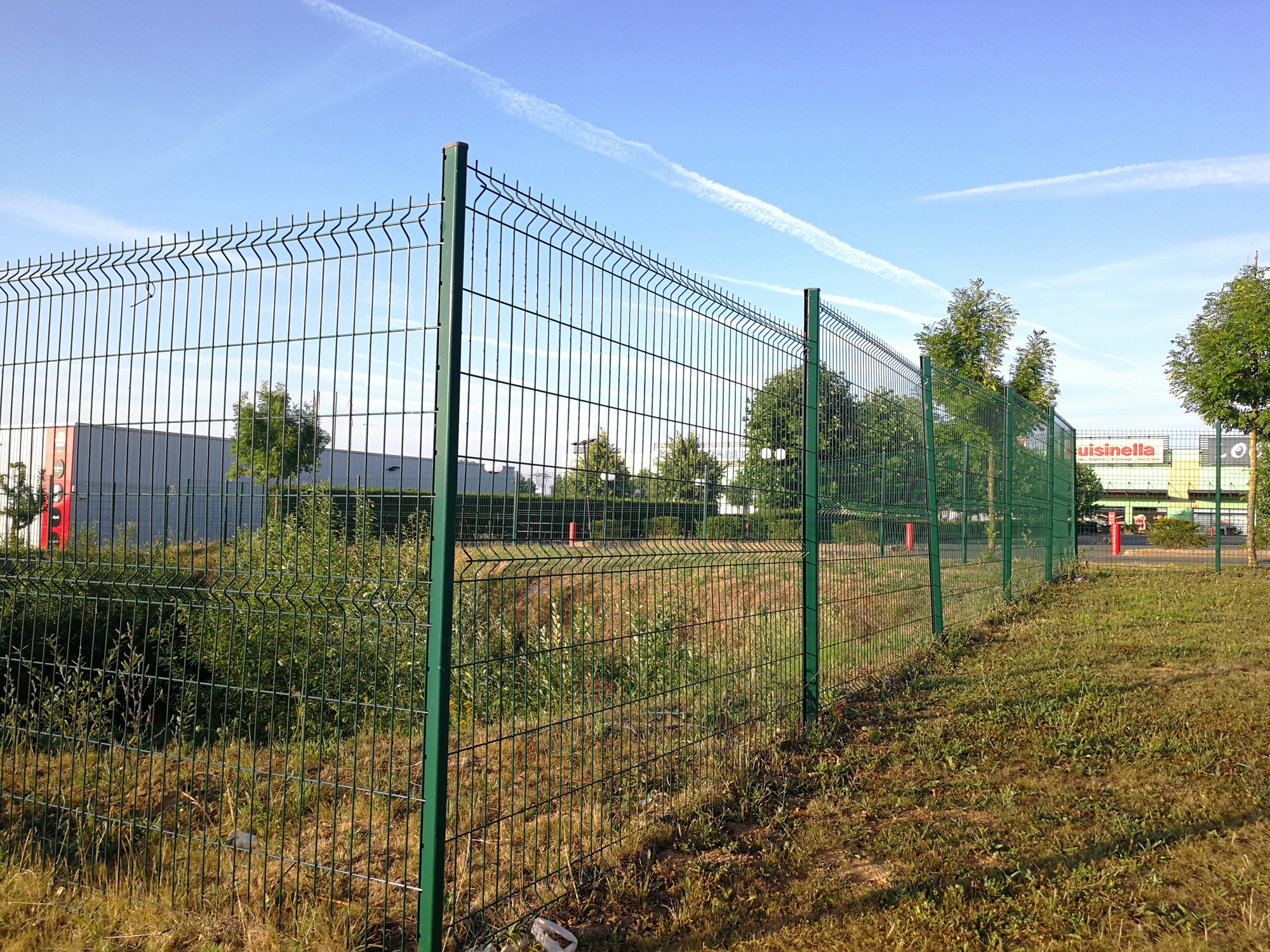
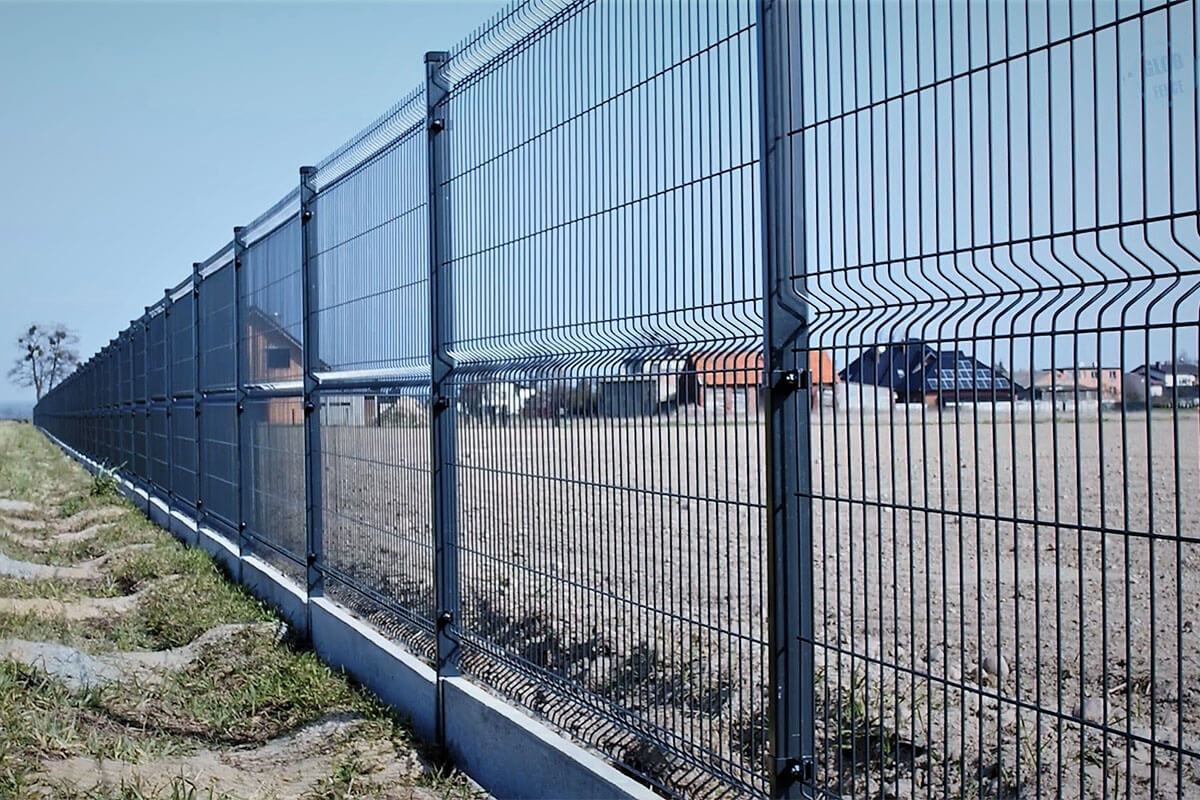
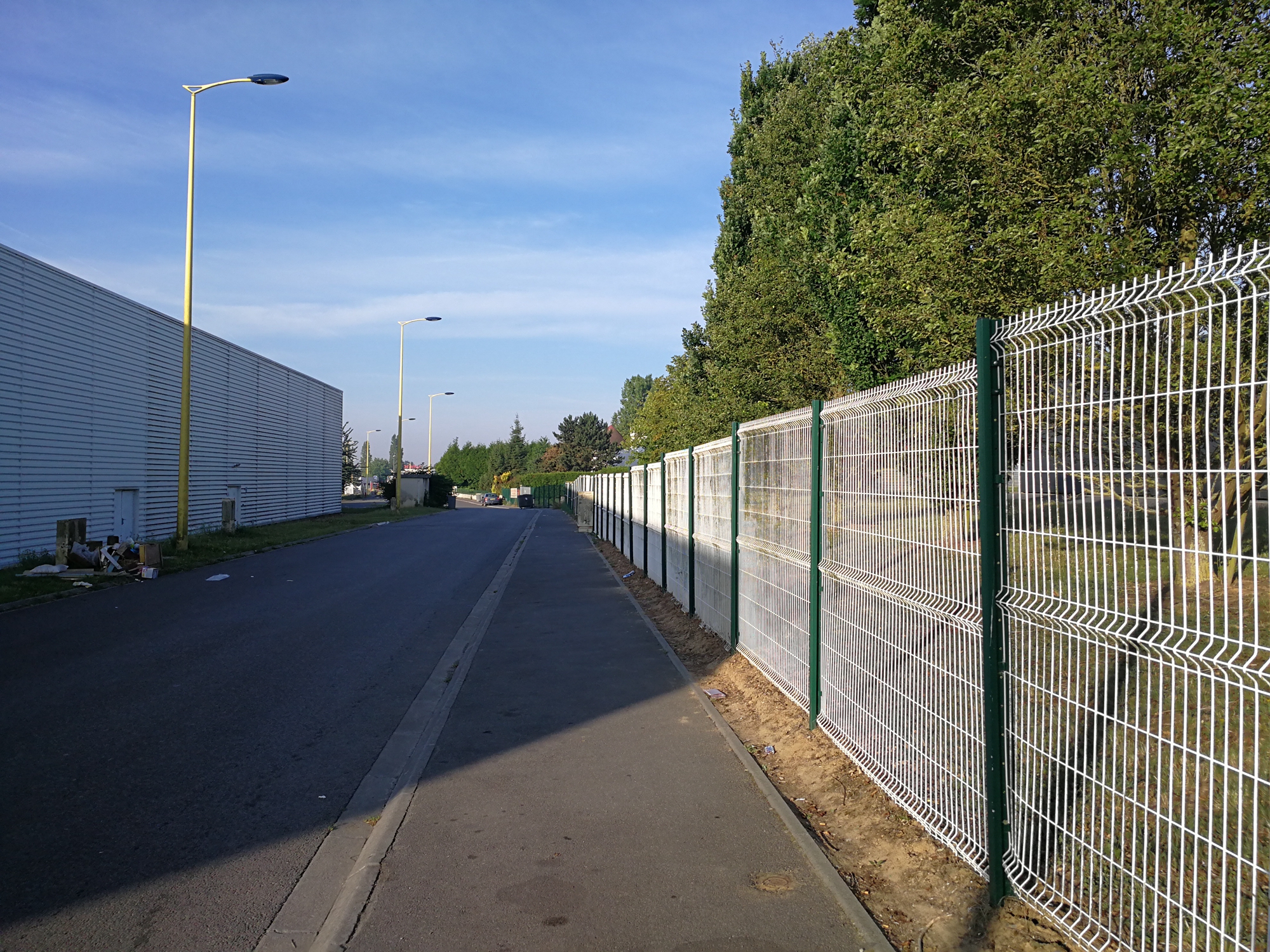
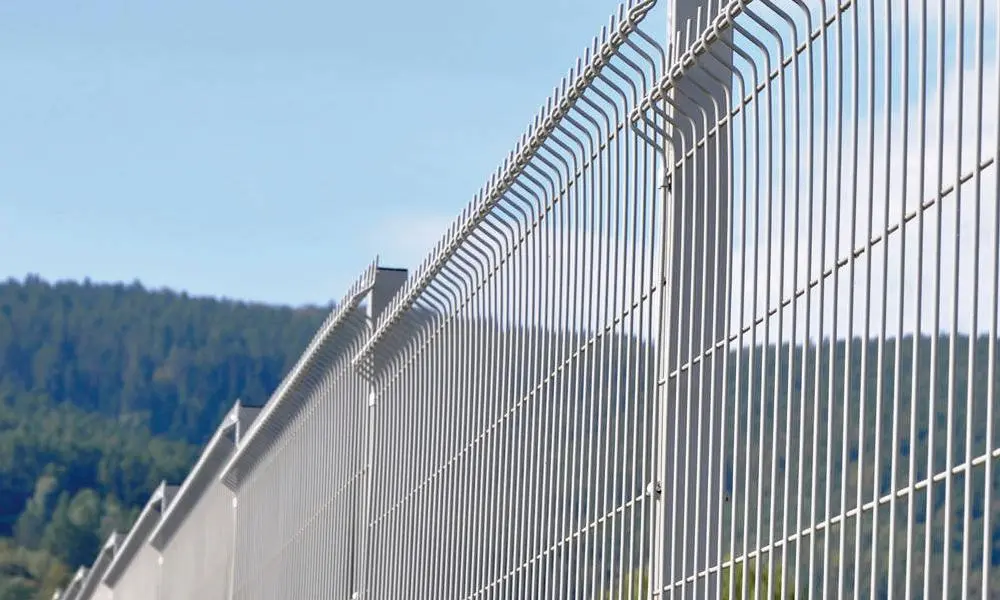
Unlike a simple flat wire mesh panel, a 3D Fence features V-shaped bends along the panel surface. These bends add rigidity to the structure without requiring an excessively heavy steel construction. The result is a fence that looks clean and modern while providing reliable boundary protection.
At Giant Fence, we manufacture welded mesh fencing systems for different project requirements and outdoor environments. We believe choosing the right fence is not just about buying a panel. It is about finding a solution that works well for the site, the local climate and the expected service life.
What Is a 3D Fence and How Does It Work?
A 3D Fence is a welded wire mesh fencing system with horizontal V-shaped bends incorporated into the panel. These bends are also commonly called V-bends or reinforcing folds.
The basic structure consists of welded steel wires, vertical and horizontal mesh sections, support posts and connecting accessories. Depending on the design, the panels can be supplied with different wire diameters, mesh openings, heights and surface treatments.
So, what makes the V-bends useful?
They increase the panel's structural rigidity and help it maintain its shape after installation. This means a 3D Fence can achieve good overall stability without relying entirely on thicker wires or heavier materials.
Another advantage is its open mesh structure. It allows people to see through the fence, keeps the boundary looking less enclosed and makes it easier to monitor activities on both sides.
For many projects, this combination of strength and visibility is exactly what they need.

Why Is 3D Fence So Widely Used for Perimeter Protection?
There are several reasons why more project owners, contractors and fencing distributors choose 3D Fence. It is not necessarily the strongest solution for every security requirement, but it works particularly well for projects where practical protection, appearance and cost need to be considered together.
1. Stronger Structure Without Excessive Weight
The V-shaped bends are one of the most important features of a 3D Fence.
They improve the rigidity of the welded mesh panel and help reduce unwanted bending during normal handling, transportation and use. Compared with a flat welded mesh panel using otherwise similar specifications, the reinforced structure can provide better overall stiffness.
For projects covering hundreds or even thousands of metres, this is important. Buyers can obtain a practical fencing structure without automatically moving to a much heavier and more expensive system.
Of course, actual strength still depends on wire diameter, mesh size, panel dimensions, steel quality and post configuration. The V-bends are part of the design, not a replacement for proper material selection.
2. Good Visibility Without Making the Area Feel Closed
Not every perimeter needs a completely solid barrier.
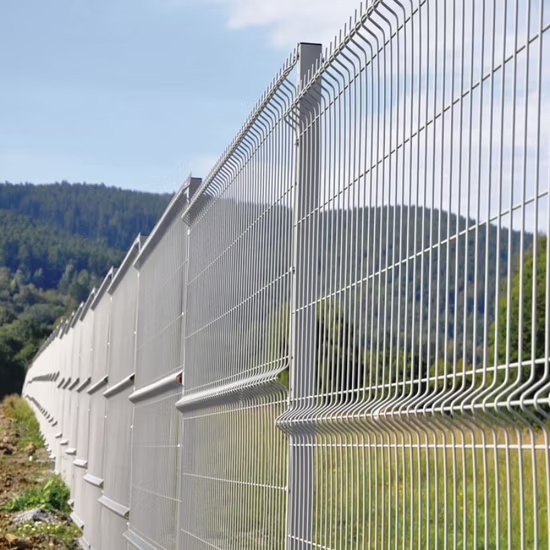
Factories, schools, residential communities, sports grounds and public facilities often need to maintain clear visibility while defining their boundaries. A 3D Fence works well in these situations because its welded mesh structure allows light and air to pass through.
Security personnel can also observe activities around the site more easily than with a solid wall or opaque fencing system.
For residential projects, the open design has another advantage: it creates a clear boundary without making gardens, shared spaces or outdoor areas feel too enclosed.
3. A Clean Appearance for Different Applications
A fence is not only a security product. It is also part of the overall appearance of a property.
With its regular mesh pattern and V-shaped reinforcing bends, 3D Fence has a relatively simple and modern appearance. Green, black, grey and other powder-coated finishes can be selected to match surrounding buildings and landscapes.
This makes it suitable for a wide range of projects, from private gardens and housing developments to commercial buildings and industrial parks.
4. Convenient Transportation and Installation
For contractors and distributors, installation efficiency can make a real difference to the total project cost.
3D Fence panels are prefabricated in standard or customized dimensions. They can be connected to posts using suitable clamps, brackets, bolts or other fixing systems.
Since the panels are supplied as ready-made sections, there is generally less on-site fabrication compared with fencing systems that require extensive assembly.
For large projects, the panel width, post spacing, fixing method and packaging should all be considered before production. Getting these details right helps reduce installation difficulties and unnecessary site adjustments.
Where Can 3D Fence Be Used?
One reason for the popularity of 3D Fence is its flexibility. It can be adapted to different site requirements by changing the panel height, wire diameter, mesh opening, post design and surface treatment.
Here are some common applications.
Residential Areas and Housing Communities
For residential developments, a fence needs to provide boundary protection without making the community look too industrial.
3D Fence offers a neat appearance, good visibility and several color options. It can be used around housing communities, private gardens, apartment complexes, playgrounds and shared outdoor spaces.
Matching pedestrian gates and vehicle gates can also be supplied to create a more complete boundary system.
Factories and Industrial Parks
Industrial sites often have long perimeter boundaries that need to be clearly defined and reasonably easy to maintain.
3D Fence is a practical option for factory boundaries, warehouses, storage yards and commercial facilities. Different heights, wire specifications and additional security accessories can be selected according to the site's actual risk level.
For higher-security areas, a standard 3D Fence may not be sufficient on its own. In such cases, buyers can consider taller panels, additional security features or a more specialized fencing system, such as 358 anti-climb fencing.
Schools, Sports Grounds and Public Facilities
Schools and sports facilities usually need fencing that provides separation while maintaining visibility.
The open mesh design makes 3D Fence suitable for school boundaries, playgrounds, tennis courts, sports fields and public recreational areas.
Smooth finishes, appropriate panel heights and suitable fixing accessories are particularly important in locations frequently used by children and the general public.
Construction Sites and Infrastructure Projects
Construction sites, utility facilities and infrastructure projects often require practical perimeter fencing that can cover large areas.
3D Fence can be used to define site boundaries, control access and separate working areas. For projects with more demanding security requirements, the specification can be adjusted to suit the application.
What Should You Check When Choosing a 3D Fence?
Two 3D Fence panels may look almost identical in a product photo, but their actual performance can be quite different.
If you are comparing suppliers, it is worth looking beyond the panel height and quoted price. Several technical details deserve attention.
Wire Diameter and Mesh Opening
Wire diameter directly affects the material strength and rigidity of the panel. Common specifications include 4.0 mm, 4.5 mm and 5.0 mm, although other options are available depending on the project.
Mesh opening also matters. Smaller openings can make it more difficult to pass objects through the fence, while larger openings may provide a more open appearance and can help optimize material usage.
The right combination depends on the required security level, installation conditions and budget.
Panel Height and V-Bend Design
Panel height should be selected according to the purpose of the fence.
A residential boundary may only require a moderate height, while industrial sites and restricted facilities may need taller panels.
The number and position of V-bends also affect the panel design. Buyers should confirm the actual panel drawing rather than relying only on a general product description.
Posts and Fixing Accessories
A good fence panel still needs suitable support.
Post dimensions, wall thickness, post spacing and fixing methods all influence the stability of the complete fencing system.
For example, a panel designed for a particular clamp system should be checked against the corresponding post profile and fixing accessories. Mixing incompatible components can create installation problems, even when the panels themselves are manufactured correctly.
Surface Treatment and Corrosion Protection
This is one of the most important points, especially for outdoor fencing.
A 3D Fence may be installed in a dry inland area, a humid region, an industrial zone or close to the sea. These environments do not create the same corrosion conditions, so using exactly the same coating specification for every project is not always a sensible choice.
At Giant Fence, our welded mesh fencing products are manufactured in accordance with UNE-EN-10223-7:2013, with controlled requirements covering steel wire materials, coating weight and welding processes.
For corrosion protection, we also refer to the atmospheric corrosivity classification in ISO 9223:2012 to help match coating solutions to different environments.
The general approach is:
C1–C3: Low to medium corrosivity environments. These typically include many inland locations with relatively mild atmospheric exposure. Standard galvanized or galvanized-plus-powder-coated solutions may be considered according to the actual site conditions.
C4–CX: High to extreme corrosivity environments. These may include coastal areas, heavily polluted industrial zones and locations exposed to more aggressive atmospheric conditions. More demanding corrosion protection systems should be considered.
The coating solution should be selected according to the actual environment, rather than simply choosing the most expensive option.
Under ideal service conditions, with no external coating damage and proper installation, different coating systems can achieve their corresponding theoretical durability periods. However, these periods should not be treated as guaranteed service lives. Actual performance is influenced by atmospheric exposure, installation quality, maintenance and any damage during transportation or use.
If your project is close to the coastline or located in an industrial environment, it is always worth discussing the corrosion category and coating specification with your supplier before confirming the order.
How Does Giant Fence Manufacture 3D Fence?
Consistent quality does not come from the final inspection alone. It starts with the materials and continues through every production stage.
At Giant Fence, our 3D Fence manufacturing process focuses on several important steps:
1. Steel Wire Selection
The incoming wire is checked against the required material specifications. Wire diameter and material consistency are important for ensuring stable production.
2. Wire Straightening and Cutting
Steel wires are straightened and cut to the required dimensions to prepare for panel production.
3. Automatic Mesh Welding
Horizontal and vertical wires are welded together to form a uniform mesh panel. Welding quality and mesh dimensions are controlled during production.
4. V-Bend Forming
The welded panel passes through the bending process to create the required V-shaped reinforcing sections.
5. Surface Treatment
Depending on the project specification, panels can receive suitable galvanizing and powder coating treatments. The selected process and coating requirements are confirmed before production.
6. Inspection and Packing
Finished panels are checked for dimensions, mesh opening, wire diameter, welding quality and surface appearance. Posts and accessories are also matched with the approved specifications before packing and shipment.
For overseas projects, packaging deserves just as much attention as production. Suitable metal pallets, wooden pallets and protective wrapping can help reduce the risk of damage during transportation.
Is 3D Fence the Right Choice for Your Project?
In many cases, yes. But the best fencing solution depends on what you are trying to protect.
If you need an economical boundary for a large area, Chain Link Fence may also be worth considering. If the project requires a higher level of anti-climb protection, 358 Security Fence may be more appropriate.
However, if you are looking for a combination of structural rigidity, visibility, a neat appearance and relatively straightforward installation, 3D Fence is certainly worth considering.
At Giant Fence, we do not believe every project should use the same standard specification. A residential development, an industrial warehouse and a coastal facility may all need different wire diameters, panel heights, post structures and corrosion protection systems.
That is why we recommend confirming the application and site environment before finalizing the product.
Planning a 3D Fence project?
Share your required fence height, total length, application, installation conditions and project location with Giant Fence. Our team can help you review the specifications and recommend a suitable 3D Fence system, including panels, posts, gates and fixing accessories.
A well-designed fence should not only look good when it is installed. It should continue doing its job for years to come.
Frequently Asked Questions About 3D Fence
Q1: What is the main advantage of 3D Fence?
A1: Its V-shaped reinforcing bends improve panel rigidity, while the welded mesh structure maintains good visibility. It offers a practical balance between strength, appearance and installation efficiency.
Q2: Is 3D Fence suitable for industrial applications?
A2: Yes. It is widely used for factories, warehouses, industrial parks and commercial boundaries. The panel height, wire diameter, mesh opening and security accessories can be adjusted according to the site's requirements.
Q3: What wire diameter is commonly used for 3D Fence?
A3: Common options include 4.0 mm, 4.5 mm and 5.0 mm. The appropriate diameter depends on panel dimensions, security requirements and project specifications.
Q4: Which surface treatment is best for outdoor 3D Fence?
A4: There is no single coating solution suitable for every location. Galvanized and powder-coated systems can be considered for different environments. The selection should take the atmospheric corrosivity category under ISO 9223:2012 into account, particularly for coastal and industrial projects.
Q5: How long can a 3D Fence last outdoors?
A5: Its durability depends on the steel quality, zinc coating, additional surface treatment, local environment, installation and maintenance. Under ideal conditions without external damage, different coating systems can achieve their corresponding theoretical durability periods. Actual service life may vary.
Q6: Can 3D Fence panels be customized?
A6: Yes. Panel height, width, wire diameter, mesh opening, V-bend configuration, post dimensions and coating options can be customized according to project requirements.
Q7: Can Giant Fence supply a complete 3D Fence system?
A7: Yes. Giant Fence can supply matching welded mesh panels, posts, clamps, fixing accessories and gates, helping customers source the main components from one manufacturer.