


Knot Type
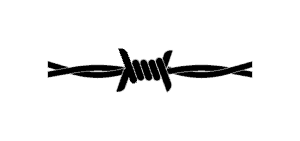
The most familiar knot that we all recognize is the barbed-wire knot. It consists of two wire strands twisted together and starred with either 2- or 4-point barbs at intermittent distances.
The second type is the hinged-joint knot. This is formed by wrapping the vertical stay wire pieces around the line wire at each intersection.
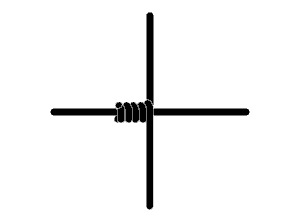
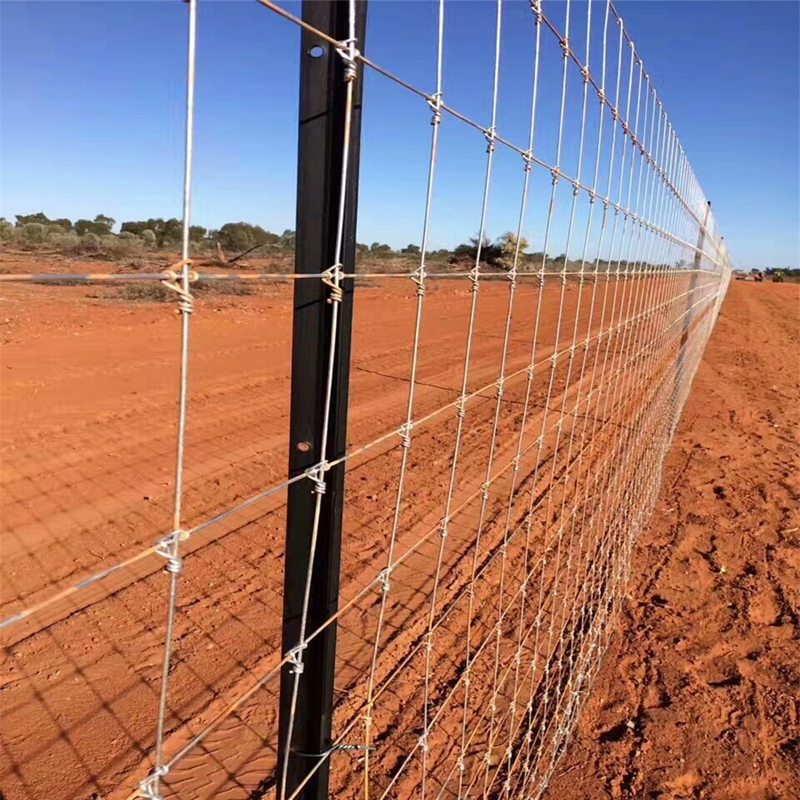
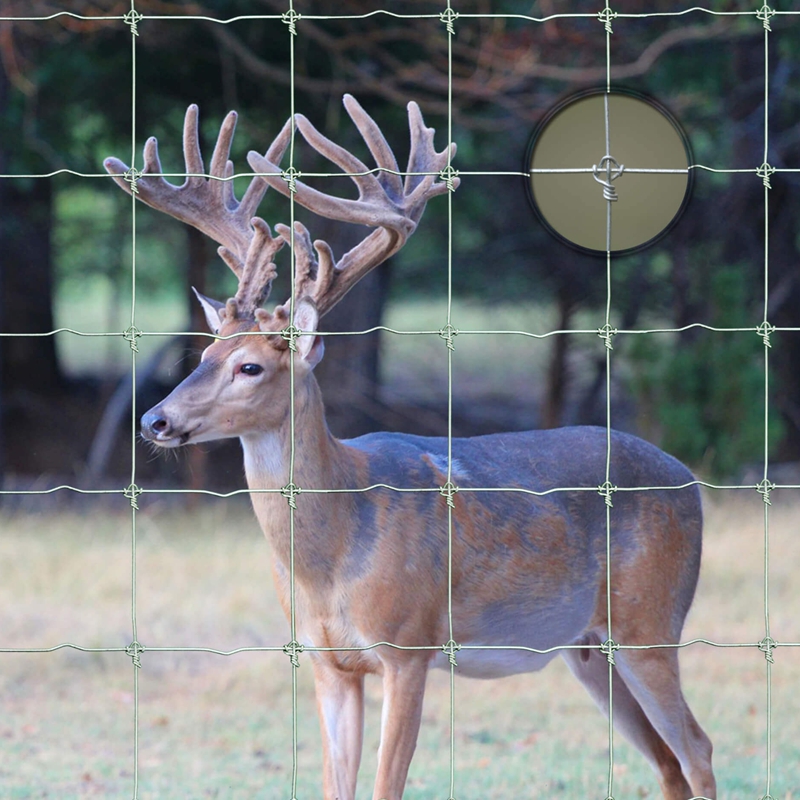
Lastly, the fixed knot utilizes a separate piece of wire that’s tightly wound and knotted around the line wire and stay wire.
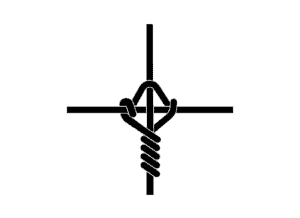
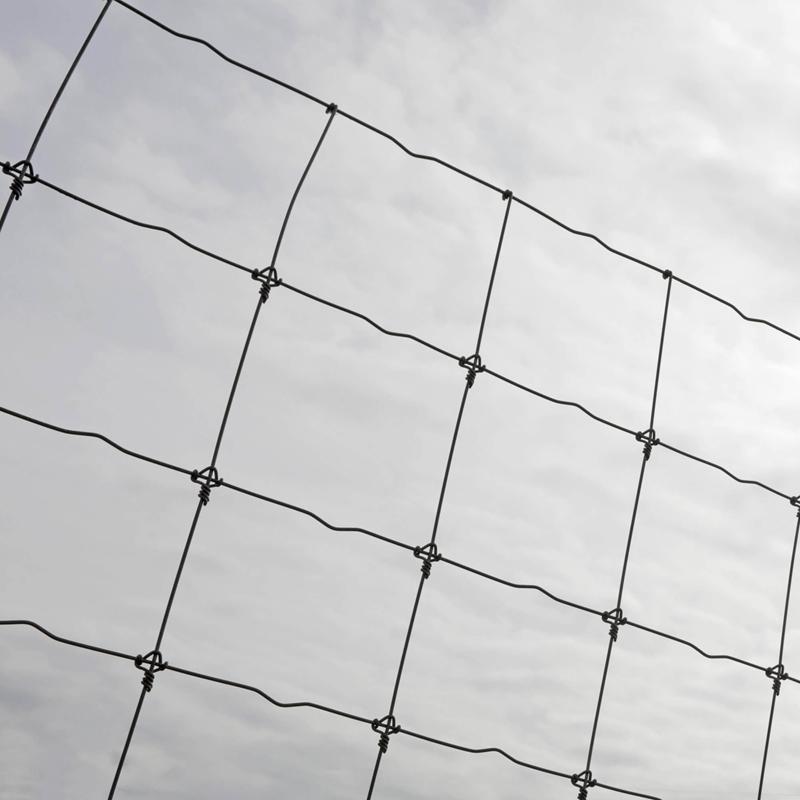
Of these options, Tejas’ choice is the fixed knot fence. It is considered the premium option, and tests have proven it has the highest vertical strength, moving and loosening less under pressure.
Gauge
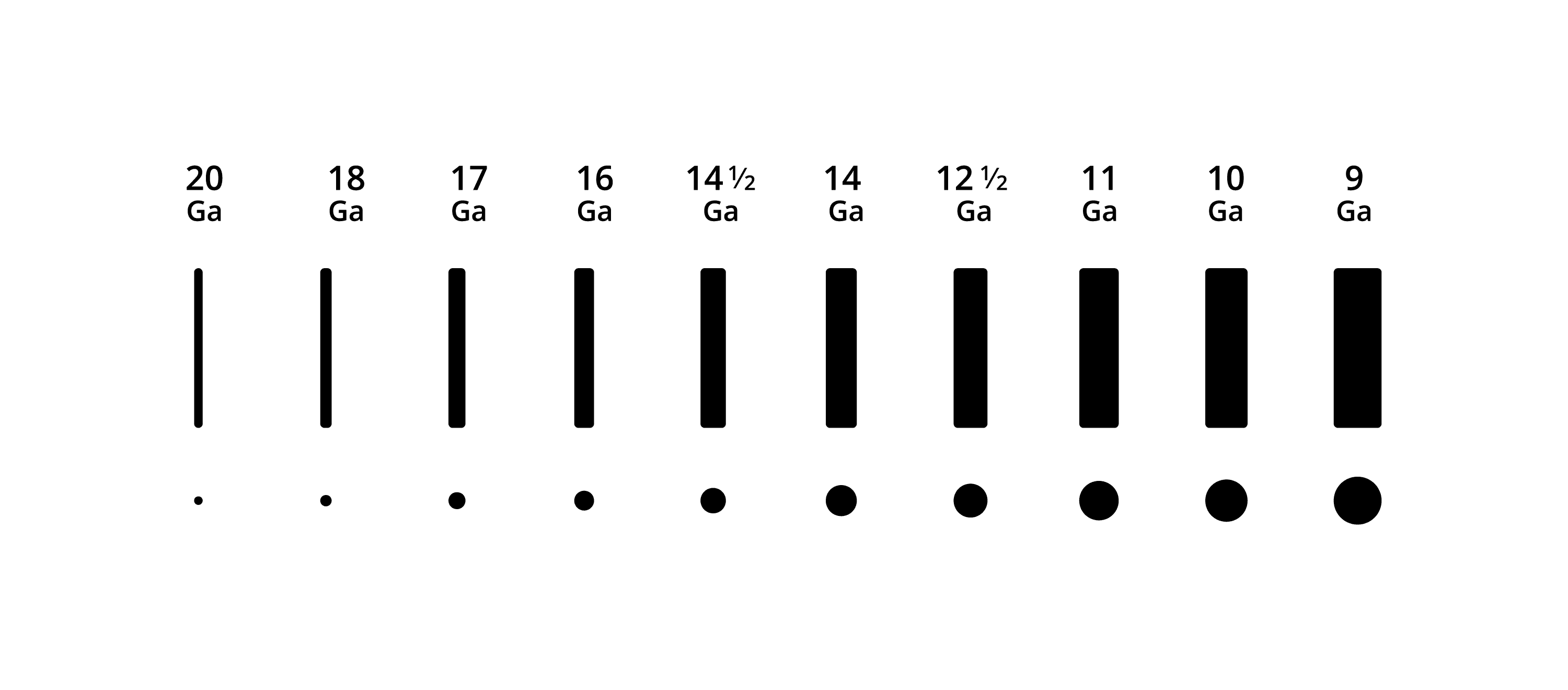
Size of wire is expressed as gauge, which signifies its thickness or diameter. As the gauge number increases, the wire size decreases. Basically, the bigger the number, the smaller the wire. A lower-gauged (thicker) wire is best used for heavy animals that press against the wire. A higher-gauged (thinner) wire is sufficient for small, lightweight animals.
Galvanized Coating
The galvanization process includes dipping the manufactured product in hot molten zinc, or in some cases, zinc and aluminum. Thickness of the galvanized coating is ranked by class, indicating its life expectancy.
Class 1 is the industry standard and has 0.28 ounces of zinc coating per sq. foot. Class 3 is applied at 0.80 ounces per sq. foot. This coating weight is three times greater than Class 1. Class 40 (zinc-aluminum) coating provides the highest degree of protection available on the market. It is designed for fence installations in highly corrosive areas. The zinc-aluminum hybrid base coat extends the life of the wire by up to two times that of Class 3 galvanized wire.
Tejas’ choice? In most cases, Class 3 galvanized. As reported, it can last three times longer than Class 1, effectively lengthening the lifespan and reducing overall cost of ownership. Plus, it requires very little maintenance, and landowners spend less time worrying about the durability and integrity of the fence. That said, for highly corrosive coastal areas where salty sea breezes can increase corrosion, Tejas recommends Class 40 zinc-aluminum coating.
Fixed Knot Fence Mesh Spacing
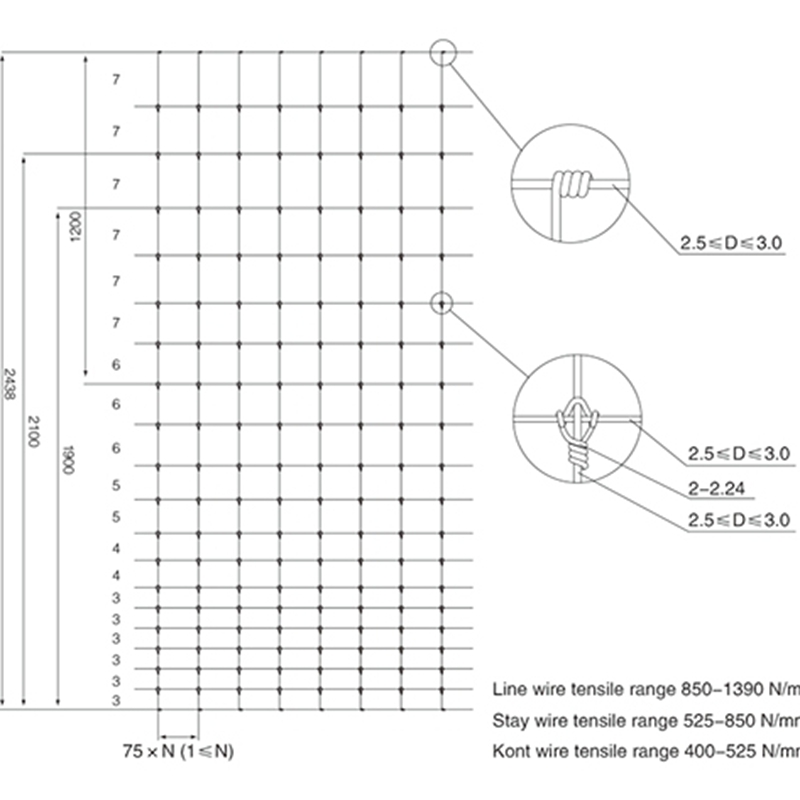
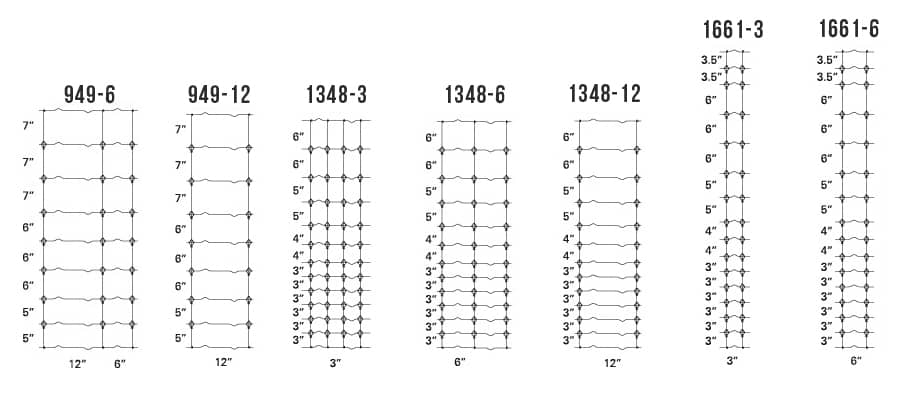
High-tensile, fixed-knot fences are available in a variety of heights and configurations. Mesh designs are available in 3- to 12-inch vertical stay wire spacing with 3-inch minimum and 5-inch maximum horizontal wires in the two bottom courses. Selection depends on specific goals for the enclosure.
Most manufacturers use a standard numbering system to designate their woven-wire designs. Generally, the first digit represents the number of horizontal wires. The second and third digit expresses the height of the fence (in inches). The fourth and fifth digit reveals the vertical stay wire spacing (in inches).
About Packing