


TL;DR: Choosing a reliable welded wire mesh fence manufacturer means verifying the complete fencing system, not just the mesh panel price. For repeat B2B orders, buyers should standardize wire diameter, mesh opening, panel dimensions, welding quality, coatings, posts, connectors, and export packaging. Approved drawings, first-article samples, and batch inspection criteria help reduce installation problems and costly inconsistencies between shipments.
For international fence distributors, importers, and engineering contractors, inconsistent product specifications can be more expensive than a slightly higher factory quotation.
A distributor may purchase 500 fence panels for one project and reorder the same specification several months later. If the second shipment has different mesh dimensions, post connections, or coating colors, the panels may not fit the existing system.
The same problem affects contractors supplying multiple residential, commercial, or industrial sites.
Selecting a professional welded wire mesh fence manufacturer requires understanding manufacturing processes, technical specifications, quality-control methods, and the total costs of international procurement.
This guide explains how to standardize welded mesh fencing, evaluate manufacturing quality, compare product configurations, and prepare purchasing requirements that support repeatable bulk supply.
Key Takeaways for B2B Welded Mesh Fence Buyers
-
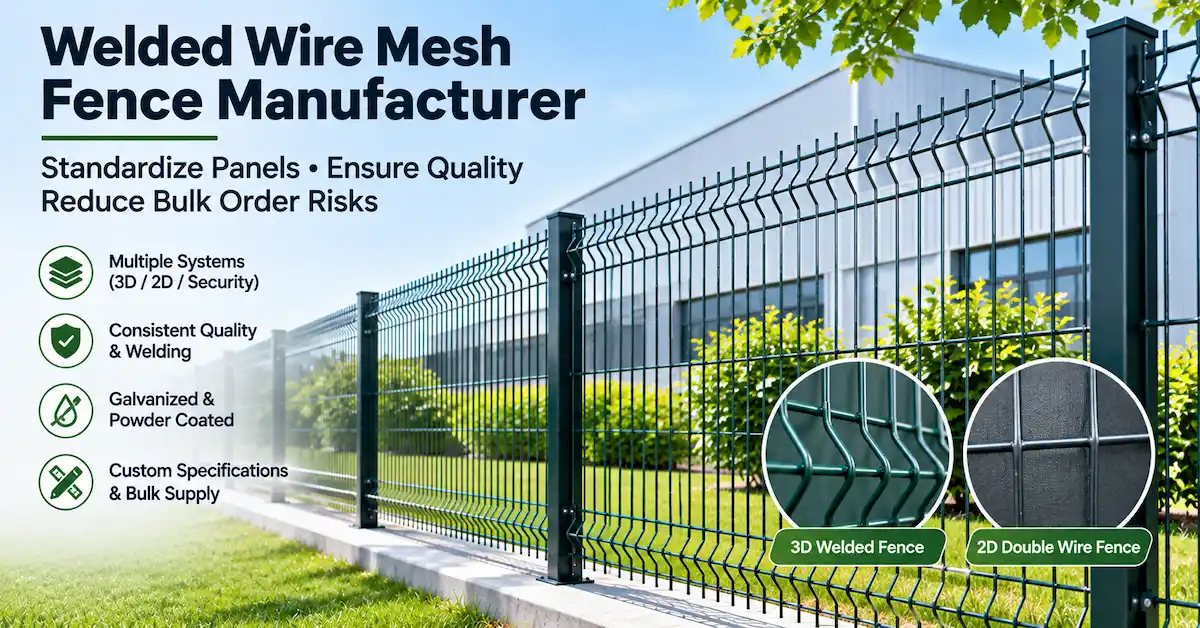
Standardize specifications: Use approved drawings to define wire diameter, mesh opening, panel dimensions, posts, and accessories.
-
Compare complete systems: A panel-only quotation cannot be compared directly with a quotation including supports and fixings.
-
Inspect welding quality: Consistent mesh geometry does not automatically prove adequate weld integrity.
-
Control corrosion protection: Identify the galvanizing and coating process instead of relying on generic rust-resistance claims.
-
Verify batch consistency: Repeat shipments should match approved reference samples and revision-controlled documents.
-
Plan export packaging: Pallet dimensions, protective separators, identification, and loading affect delivered quality.
-
Measure landed cost: Include material, freight, damage, missing components, and installation implications.
What Is a Welded Wire Mesh Fence?
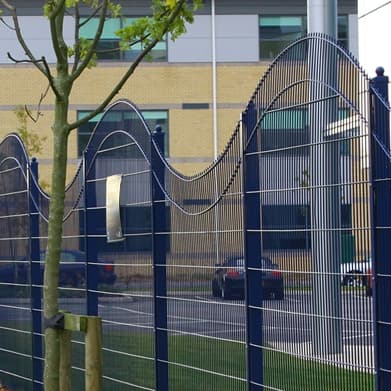
A welded wire mesh fence consists of steel wires arranged in a regular grid and joined at their intersections, usually through electrical resistance welding.
The resulting mesh may be manufactured as rigid fence panels or, for suitable lighter constructions, supplied in rolls.
The correct form depends on its intended application.
Welded mesh fencing is used for perimeter boundaries, residential communities, commercial properties, public facilities, industrial sites, and other areas requiring controlled separation.
Welded Fence Panels vs. Rolled Welded Wire Mesh
These product forms should not be treated as interchangeable.
| Product Form | Construction | Typical Application | Key Procurement Concern |
|---|---|---|---|
| Rigid welded mesh fence panels | Welded steel panels with defined dimensions | Permanent perimeter fencing | Panel rigidity, posts, connections |
| 3D welded mesh panels | Welded panels with reinforcing V-bends | Residential and commercial boundaries | Bend geometry and system compatibility |
| 2D double-wire panels | Flat mesh with paired horizontal wires | Industrial and public perimeter projects | Wire configuration and support details |
| Rolled welded wire mesh | Lighter welded mesh supplied in rolls | Suitable light fencing or separation uses | Roll dimensions, wire, mesh and support method |
| Reinforcing welded mesh | Welded reinforcing steel intended for concrete | Concrete construction | Structural material requirements |
Important: Reinforcing mesh is not automatically suitable for perimeter fencing, and a lightweight mesh roll is not equivalent to a rigid security fence panel.
Buyers should define the product's intended use before requesting prices.
Giant Fence specializes in welded mesh fencing systems, including 3D and 2D panels. Its broader fencing product directory also identifies other welded wire mesh products.
Which Welded Mesh Fence System Is Best for Your Market?
Distributors often serve several customer groups with different requirements.
Instead of purchasing many unrelated specifications, a supplier and distributor can develop a manageable product range covering their most common applications.
Welded Mesh Fence System Comparison
| Fence System | Main Structural Feature | Typical Buyer | Main Selection Factor |
|---|---|---|---|
| 3D Welded Fence | Single-wire mesh with V-bends | Residential distributors | Appearance, panel rigidity, cost |
| 2D Double Wire Fence | Flat mesh with paired horizontal wires | Contractors and industrial buyers | Steel configuration and support design |
| 358 Security Mesh | Narrow mesh openings | Security project suppliers | Intrusion-resistance requirements |
| Roll Top Welded Fence | Formed rounded panel edges | Public-space contractors | Edge design and application |
| General Welded Mesh Panel | Project-specific welded grid | Commercial or construction buyers | Mesh, dimensions, intended use |
No single welded mesh fence is optimal for every project.
For example, a residential distributor may prioritize attractive 3D panels with matching gates. An industrial contractor may prefer a particular 2D system because its approved specification requires paired horizontal wires.
A high-security installation may demand specialized mesh geometry, connections, and supporting evidence beyond conventional perimeter fencing.
For a detailed comparison, see Giant Fence's 2D double-wire fence vs. 3D fence guide.
Technical Specifications Every Wholesale Buyer Should Standardize
The first step toward reliable repeat orders is creating a master product specification.
This document should identify what the manufacturer must produce and how the buyer will verify it.
Welded Mesh Fence Specification Matrix
The following examples reflect Giant Fence's published 3D and 2D product families. They are not universal specifications for all welded wire mesh products.
| Specification | 3D Welded Mesh Fence | 2D Double Wire Fence |
|---|---|---|
| Panel structure | V-bend welded wire mesh | Flat, double-horizontal-wire mesh |
| Published wire options | Commonly 4–6 mm | 6/5/6 mm or 8/6/8 mm |
| Published panel height | Approximately 0.8–2.4 m | Approximately 0.83–2.4 m |
| Published mesh options | 50 × 100 / 50 × 200 mm | 50 × 100 / 50 × 200 mm |
| Surface treatment | Galvanizing, powder coating, or PE coating options | Galvanizing and powder coating options |
| Support system | Compatible formed, rectangular, round, or other posts | Compatible posts and clamps |
| Customization | Subject to approved product design | Subject to approved product design |
Specifications must be confirmed for the selected model.
Wire Diameter and Material Consistency
Wire diameter influences material consumption and panel rigidity.
However, a nominal diameter does not establish the mechanical performance of the complete fence.
Buyers should clarify whether the reported dimension refers to the steel wire before coating or the finished coated wire.
Material grade, manufacturing tolerances, weld integrity, and supporting components also influence performance.
Mesh Opening and Panel Geometry
A mesh described as 50 × 200 mm must have a clear dimensional definition.
Depending on the manufacturing specification, measurements may refer to different reference points.
Buyers should confirm:
-
Horizontal and vertical opening dimensions.
-
Accepted measurement method.
-
Permitted dimensional tolerances.
-
Finished panel width and height.
-
Panel flatness or bend geometry.
-
Edge-wire configuration.
These details become especially important when replacement panels must fit earlier installations.
Post and Connector Compatibility
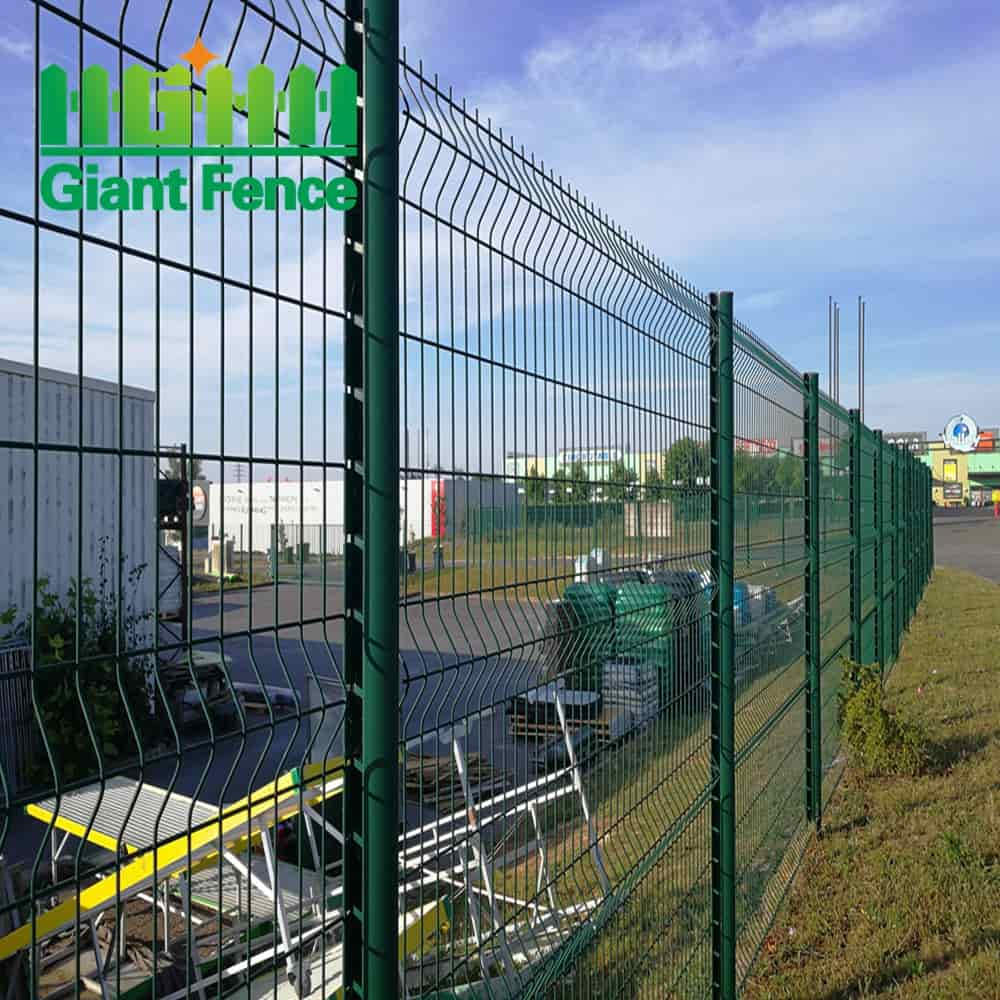
A standardized panel is only useful if matching posts and connectors remain compatible.
Square, rectangular, and specially formed post systems may use different fixing arrangements.
Giant Fence provides options such as 3D welded fencing with rectangular posts and 2D double-wire fencing with square posts.
The dimensions and connections for one system should never be assumed interchangeable with another.
How Does Manufacturing Quality Affect Bulk Fence Orders?
A dependable welded wire mesh fence manufacturer should be able to explain how its production process controls critical product characteristics.
Giant Fence, operated by Hebei Giant Metal Technology Co., Ltd., publishes manufacturing capabilities involving wire welding, panel bending, post production, surface treatment, and quality inspection.
Its company timeline also references the introduction of Schlatter welding equipment.
These capabilities provide a basis for supplier evaluation, but actual order quality still needs to be confirmed against an approved specification.
Step 1: Raw Material Preparation
Steel wire must match the required material and dimensional specifications.
Incoming material controls may include wire diameter, material identity, surface condition, and documentation.
Step 2: Resistance Welding
Wires are welded together to create the required mesh.
Important quality characteristics include intersection integrity, weld consistency, mesh spacing, and panel distortion.
A visually uniform panel does not guarantee adequate weld strength.
Where required, buyers should specify an appropriate weld test method and acceptance criteria.
Step 3: Panel Forming and Cutting
Depending on the product, panels may be cut, straightened, or formed with reinforcing bends.
These processes must preserve the required geometry and installation dimensions.
Step 4: Post and Accessory Manufacturing
Posts, brackets, clamps, and compatible components are prepared according to approved assembly drawings.
Connection locations and dimensions should be checked before finishing.
Step 5: Surface Protection
Applicable galvanizing and coating processes are completed according to the product specification.
The production sequence may vary with the selected coating system.
Step 6: Final Assembly Checks
Representative panels should be assembled with the intended posts and connectors.
This helps identify dimensional and connection problems before the entire order is shipped.
Which Quality Standards Are Relevant?
Technical standards help importers define measurable requirements rather than relying on vague terms such as "premium quality."
Two references are particularly relevant:
EN 10223-7:2012 — Steel Wire Welded Panels for Fencing. This standard addresses characteristics, coatings, properties, and tolerances for applicable welded steel wire fencing panels.
EN 10223-4:2012 — Steel Wire Welded Mesh Fencing. This addresses relevant welded mesh fencing supplied as rolls or panels within its scope.
For corrosion protection, additional standards may be appropriate depending on the material and process.
ISO 9223:2012 classifies atmospheric corrosivity, while ISO 1461:2022 concerns batch hot-dip galvanized coatings on fabricated steel and iron articles within its scope.
These references should not be treated as automatic proof of product compliance. The supplier must provide relevant evidence for the actual purchased configuration when required.
How to Verify Welding Quality and Batch Consistency
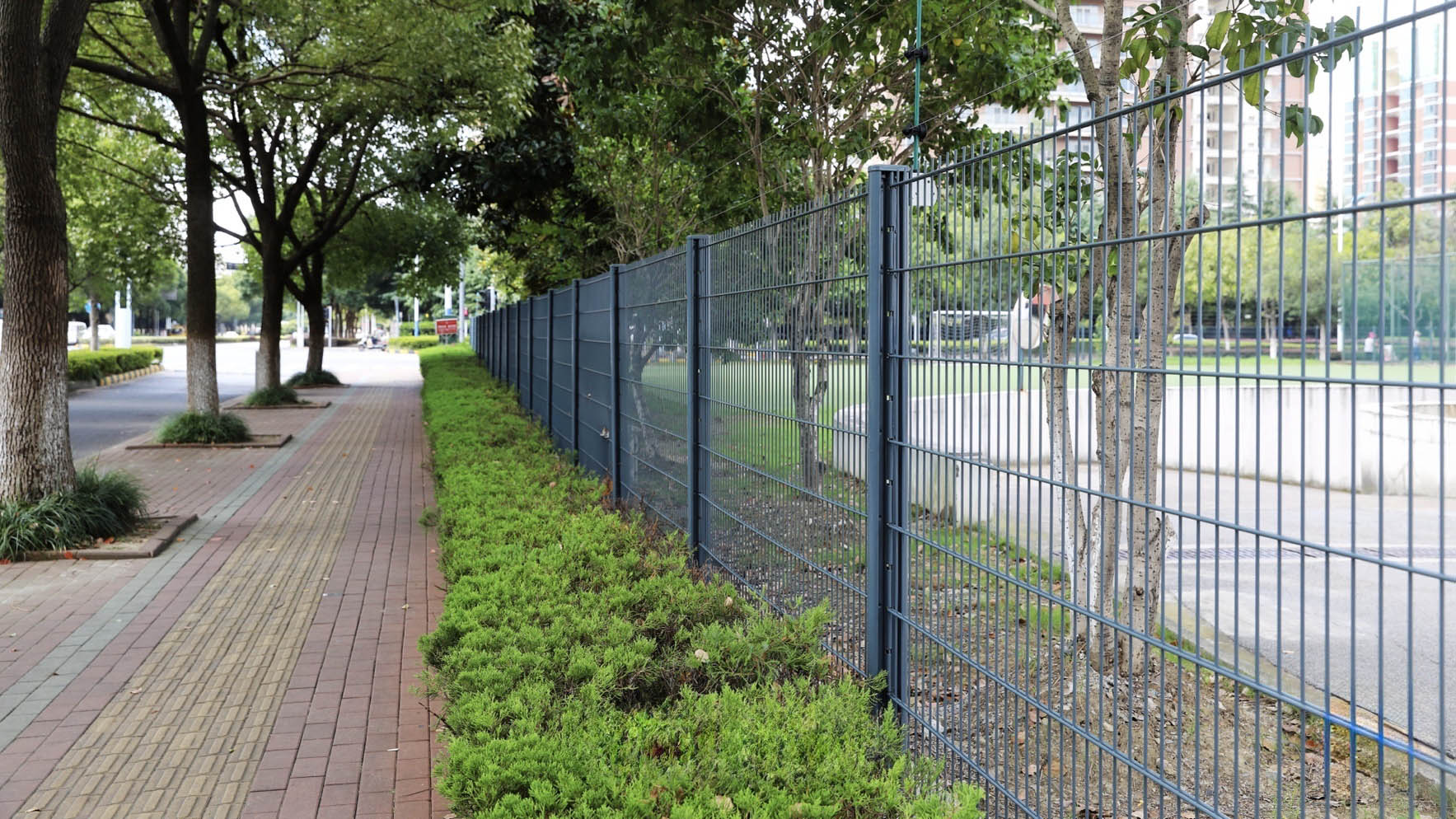
For international distributors, quality consistency between separate purchase orders is often as important as the quality of the first shipment.
A reference sample should be connected to an approved drawing and identifiable product specification.
Recommended Manufacturing Inspection Checklist
| Inspection Item | Acceptance Evidence | Main Risk |
|---|---|---|
| Wire diameter | Measured against approved specification | Undersized material |
| Mesh geometry | Recorded opening dimensions | Incorrect panel fit |
| Weld integrity | Agreed visual and mechanical checks | Weak intersections |
| Panel dimensions | Height, width and tolerance records | Installation mismatch |
| Formed geometry | Bend position and panel shape | Inconsistent finished panels |
| Post profiles | Section and wall-thickness checks | Incompatible components |
| Coating | Agreed inspection and coating records | Premature deterioration |
| Trial assembly | Panel, post and clamp compatibility | On-site rework |
| Packaging | Quantity, protection and labels | Shipment damage |
First-Article Approval
Before mass production, buyers can require a first-article inspection.
This may include one representative panel, its matching post, and the required connection components.
The sample should be compared with the approved drawings.
In-Process Inspection
Sampling during production can reveal problems before they affect an entire batch.
The sampling method, acceptance limits, and treatment of rejected components should be agreed before manufacturing.
Final Shipment Inspection
Verify the finished goods, component quantities, product labels, coating condition, packaging, and loading documents.
A supplier's management-system certification supports company qualification, but it does not replace product-specific inspection records.
Galvanized vs. Powder-Coated Welded Mesh Fencing
Outdoor fencing requires corrosion protection suitable for its environment.
A welded mesh fence installed in an ordinary inland residential area may have different exposure requirements from a fence near the coast or in an industrial atmosphere.
Pre-Galvanized Steel Wire
Some welded mesh products are manufactured using steel wire coated before welding.
Buyers should check the condition and protection of the finished welded intersections and any processed edges.
Galvanizing After Fabrication
For suitable fabricated components, hot-dip galvanizing after manufacturing can provide zinc coverage to the completed steel assembly.
The process and required standards must be compatible with the product's construction.
Powder Coating
Powder coating provides color and can contribute to corrosion protection when correctly specified.
For architectural projects, RAL color coordination may be important across panels, posts, and gates.
Combined Coating Systems
Compatible zinc and organic coating systems may provide complementary protection.
However, buyers should confirm coating preparation, process compatibility, inspection methods, and expected exposure.
Do not accept a guaranteed outdoor lifespan based only on a salt-spray test result.
Environmental exposure, installation damage, maintenance, and coating specifications all influence actual performance.
Multi-Site Procurement Example: Standardizing 550 Meters of Fencing
Consider a hypothetical distributor supplying welded mesh fence panels to three separate commercial projects.
For preliminary estimating, assume each project is represented by one uninterrupted straight fence run.
| Project | Fence Length | Nominal Bay Spacing | Initial Bay Count |
|---|---|---|---|
| Project A | 225 m | 2.5 m | 90 |
| Project B | 175 m | 2.5 m | 70 |
| Project C | 150 m | 2.5 m | 60 |
| Total | 550 m | — | 220 |
Under these simplified assumptions, each independent straight run requires one more regular post than its number of bays.
Initial regular post quantity = 220 + 3 = 223 posts.
This is a preliminary estimating example, not an actual Giant Fence customer project or a structural design.
Actual quantities must account for gate openings, corners, terminal conditions, slopes, installation pitch, and special sections.
Why Standardization Matters
Suppose all three projects use the same approved panel construction and connection system.
The distributor can simplify inventory management by consolidating the purchasing specification.
Potential benefits include:
-
Fewer unique panel and connector types.
-
Easier comparison of repeat shipments.
-
More consistent replacement stock.
-
Simplified installation documentation.
-
Clearer supplier quality requirements.
However, the projects may still require different structural posts or foundations because of their local conditions.
Standardization should apply only where the technical requirements are genuinely compatible.
How Can Export Packaging Reduce Product Damage?
Welded fence panels are large, relatively thin products with exposed edges and coated surfaces.
Inadequate packaging can result in bending, scratches, coating damage, or missing accessories.
A manufacturer should discuss packaging as part of the technical quotation.
Recommended Export Packaging Requirements
Panel Protection: Suitable stacking methods and separators to protect coatings and reduce movement.
Edge Protection: Appropriate protection against transport and handling damage.
Pallet Stability: Packaging designed for handling, lifting, and container transport.
Accessory Identification: Clearly labeled clamps, brackets, bolts, and other small components.
Shipment Traceability: Package numbers, product codes, quantities, and relevant drawing references.
Why Packing Lists Matter
If panels and posts arrive without clear identification, contractors may spend significant time matching components.
For phased projects, packages can be organized by delivery lot or installation zone where agreed.
Buyers should request packing details and loading photographs when these are part of the purchase requirements.
How to Calculate the True Cost of Imported Welded Mesh Fencing
Comparing manufacturer quotations solely by panel price can be misleading.
Two suppliers may quote the same nominal panel height but include different wire diameters, coating processes, posts, and accessories.
Complete Cost Comparison
| Cost Component | What Buyers Should Compare |
|---|---|
| Mesh panels | Wire specification, dimensions, quantity |
| Posts | Material, section, wall thickness |
| Connections | Clamps, brackets, fasteners |
| Surface treatment | Galvanizing, powder coating, inspection |
| Gates | Matching entrance systems |
| Export packaging | Protection and package configuration |
| Freight | Shipping volume, weight, destination |
| Import costs | Duties, customs fees and local transport |
| Installation | Labor, equipment and civil works |
| Quality risk | Damage, shortages and replacement |
A practical purchasing model is:
Total Landed System Cost = Product Cost + Packing + Freight + Import Charges + Local Delivery
For installation budgeting, include site labor, foundations, and required equipment separately.
Illustrative Damage-Risk Comparison
Assume a distributor imports 1,000 panels.
If 2% arrive damaged, that represents 20 panels.
If improved packaging reduces the damage rate to 0.5%, the quantity falls to five panels.
The difference is 15 panels.
This is a hypothetical calculation, not a verified Giant Fence performance result.
The financial value depends on replacement costs, local handling, delays, and contractual responsibilities.
It illustrates why export packaging should be considered in total procurement economics.
How to Evaluate a Welded Wire Mesh Fence Manufacturer in China
Factory selection should involve evidence of manufacturing capability, product quality, and commercial reliability.
Supplier Qualification Matrix
| Evaluation Area | What to Request |
|---|---|
| Company identity | Registered company information and address |
| Manufacturing capability | Relevant equipment, processes and factory records |
| Product range | Available welded mesh fencing systems |
| Technical documentation | Drawings, materials and specifications |
| Quality management | Inspection process and supporting records |
| Customization | Confirmed manufacturing feasibility |
| Sample approval | Representative product and matching components |
| Export experience | Applicable packing and shipping arrangements |
| Commercial terms | Incoterms, quantities and payment conditions |
| Delivery planning | Order-specific production and shipment schedule |
Why Consider Giant Fence?
Giant Fence operates under Hebei Giant Metal Technology Co., Ltd., based in Anping County, Hebei Province, China.
The company focuses on welded mesh fencing systems, with published manufacturing operations covering wire welding, panel forming, post production, surface treatment, and quality inspection.
Its main fence products include 3D welded mesh panels, 2D double-wire panels, and matching components.
For distributors and contractors, this creates opportunities to discuss coordinated fence-system supply rather than purchasing unrelated panels and accessories.
You can review the Giant Fence manufacturing background and technical resource center when evaluating its capabilities.
Actual production schedules, model availability, and testing requirements should be confirmed for each order.
OEM and Custom Welded Mesh Fence Manufacturing
International markets may require different panel specifications, colors, installation systems, or packaging arrangements.
A manufacturer should review each customization request against its production capabilities.
Common requirements include:
-
Nonstandard panel dimensions.
-
Different wire diameters or mesh openings.
-
Alternative post profiles.
-
Custom connection arrangements.
-
Specified surface finishes.
-
RAL color coordination.
-
Matching gates and accessories.
-
Private-label packaging or product identification.
For repeat OEM orders, revision-controlled drawings are essential.
A panel manufactured according to an outdated specification may be incompatible with the customer's current stock even if its product name remains unchanged.
Document approvals should therefore identify drawing revision, product code, and confirmed components.
Welded Wire Mesh Fence RFQ Checklist
Before requesting a bulk quotation, prepare the following information.
| RFQ Category | Information Required |
|---|---|
| Buyer details | Company, country, destination |
| Product type | 3D, 2D, or other welded mesh fence |
| Application | Residential, industrial, public facility |
| Panel dimensions | Height, width, installation pitch |
| Wire specification | Diameter, material, tolerance |
| Mesh geometry | Opening dimensions and direction |
| Posts | Profile, section, length, connection |
| Accessories | Clamps, brackets, bolts, caps |
| Coating | Galvanizing and finishing requirements |
| Gates | Type, quantity, dimensions |
| Inspection | Required checks and acceptance criteria |
| Quantity | Panels, meters and delivery schedule |
| Packaging | Protection, pallets and identification |
| Commercial terms | Destination, Incoterm and shipping requirements |
| Customization | Drawings, colors, labeling and other details |
For distributors planning multiple shipments, include expected repeat-order requirements.
Need a reliable welded wire mesh fence manufacturer for bulk orders? Submit your specifications, project quantities, and destination through the Giant Fence contact page to discuss available configurations and a project-specific quotation.
Frequently Asked Questions
1. What is the difference between a welded wire mesh fence manufacturer and a wire mesh supplier?
A manufacturer produces welded mesh products using its manufacturing equipment and processes. A supplier may manufacture, distribute, or source products from other companies. Buyers should verify which operations are performed in-house and who controls quality.
2. Is welded wire mesh fencing suitable for industrial perimeters?
Yes, suitably specified welded mesh panels can serve many industrial boundary applications. However, the selected system must meet project requirements for structural support, access, security, and environmental exposure.
3. What is the difference between 2D and 3D welded mesh fencing?
3D panels use reinforcing bends, while 2D double-wire panels use a flat mesh structure with paired horizontal wires. The correct choice depends on the specific application, approved design, and total project cost.
4. Can welded fence panels be customized?
Many manufacturers can discuss nonstandard dimensions, mesh openings, coatings, and post systems. Availability depends on equipment, tooling, order quantities, and technical feasibility.
5. How can buyers check weld quality?
Specify agreed inspection methods, weld acceptance criteria, sampling procedures, and supporting records. Visual inspection alone may not establish the mechanical integrity required by a project.
6. What coating is best for outdoor welded mesh fencing?
The appropriate coating depends on atmospheric corrosivity, product construction, appearance requirements, and maintenance conditions. Galvanizing and compatible additional coatings may be considered for the relevant application.
7. How can distributors maintain consistent quality between orders?
Use approved drawings, reference samples, controlled product codes, inspection requirements, and documented revision procedures. Repeat orders should clearly identify the required specification version.
8. What is the typical MOQ for wholesale welded mesh fencing?
MOQ depends on the manufacturer, product configuration, customization, and production schedule. Confirm the minimum quantity for the actual product rather than assuming a universal amount.
9. What should importers inspect before shipping?
Check panel dimensions, wire diameter, welding, coating, post compatibility, accessories, quantities, packaging, and required documentation against the approved order.
10. How can I obtain an accurate welded mesh fence quotation?
Provide the panel specification, quantity, post system, accessories, coating requirements, project drawings, destination, and delivery terms. A complete RFQ helps the supplier prepare a more comparable and technically relevant quotation.
Conclusion
Selecting a reliable welded wire mesh fence manufacturer requires more than comparing initial panel prices.
For fence distributors, international importers, and engineering contractors, consistent specifications, dependable welding quality, compatible posts, suitable corrosion protection, and effective export packaging are essential to successful bulk procurement.
A standardized product range can simplify repeat ordering, reduce compatibility problems, and make inventory management more efficient across multiple projects.
However, standardization must always respect the actual engineering and installation requirements of each site.
The most effective procurement strategy combines clear technical drawings, agreed inspection criteria, complete bills of materials, and transparent commercial terms.
Giant Fence, operated by Hebei Giant Metal Technology Co., Ltd., provides welded mesh fencing systems and related manufacturing capabilities for overseas B2B customers.
Ready to source welded mesh fencing for your next project or wholesale order? Share your technical specifications, drawings, estimated quantities, coating preferences, and shipping destination with the Giant Fence team to discuss a coordinated fencing solution and customized bulk quotation.